









World War II was arguably the most devastating war in history. Some official reports put the death toll at close to 60 million, though the actual number of casualties may be much higher. Not all of those killed were in combat—more than 45 million were civilians, as ordinary people around the world bore the brunt of a war that later became renowned for its exceptional scale and brutality.
10. The Chichijima Incident
Cases of cannibalism persisted throughout the war, particularly on the Eastern Front, where the fighting was particularly brutal. Most were driven by necessity, as during the Siege of Leningrad, when thousands of people resorted to eating human flesh due to hunger and extreme cold.
However, in some rare, horrific cases, cannibalism was also practiced simply for fun. One particularly infamous case was the Chichijima incident, in which eight American airmen were captured, tortured, and killed with bamboo poles. Four of the men were then eaten by Japanese officers. According to their testimony during postwar trials, the meat was cooked with soy sauce and vegetables—one officer even believed it was good for their stomachs. In a fascinating twist, there was actually a ninth airman who managed to evade capture: a 20-year-old pilot named George H.W. Bush. .
According to later records and witness accounts, this was not an isolated incident. The Chichiyama incident was just one of many instances of cannibalism committed by Imperial Japanese forces in the Pacific theater of war, often against prisoners of war and occupied civilians.
9. The Gardelegen Massacre
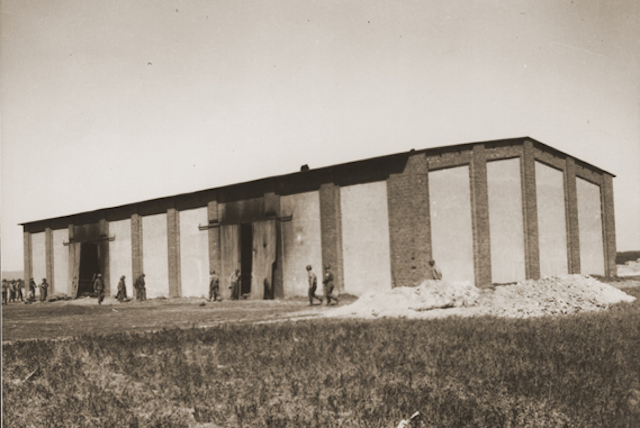
While Nazi atrocities continued throughout the war, some of the most horrific massacres occurred in its final stages. As the Red Army and Western Allied forces invaded Germany, massive efforts were made to conceal evidence of the crimes, either by killing thousands of prisoners still living in concentration camps or forcing them on long death marches to camps located closer to Berlin.
Gardelegen was one such camp, approximately 90 miles west of Berlin, where over 4,000 prisoners arrived from across Germany. On April 13, 1945, more than 1,000 of them were brought to a barn, barricaded inside, and set ablaze with gasoline and flamethrowers. Almost all the victims, most of them Poles, were burned alive or shot, with the exception of six survivors, rescued by advancing Allied troops just two days after the massacre.
8. Kaunas pogroms
Anti-Jewish pogroms in Kaunas, Lithuania, began almost immediately after Germany invaded the USSR on June 22, 1941, ushering in a horrific chapter of the Holocaust that is now largely forgotten. Unlike the industrialized, almost indifferent methods used in German death camps, the violence in Lithuania and other eastern territories was far more personal, often taking the form of beatings with blunt weapons and violent public executions.
The most infamous incident was the Letkys Garage massacre, which began on June 27, when approximately 60 Jewish men were beaten to death with crowbars by local Lithuanian nationalists. According to an eyewitness account by a German photographer, the main perpetrator was a man nicknamed the "Merchant of Death," as the crowd, consisting of German soldiers and local Lithuanians, applauded and cheered throughout the incident.
7. Bengal Famine
The Bengal famine of 1943 was one of the greatest disasters of the war, claiming the lives of over 3 million people in the Indian state due to widespread hunger and disease. Many factors contributed to this, particularly the military events of 1942. When British strongholds in Singapore and Myanmar fell to Japan, food exports from there ceased, coupled with crop diseases and natural disasters that reduced the overall harvest.
Some later studies, however, suggest that the famine was not caused by a lack of supplies, as the 1943 harvest was still sufficient to feed the entire local population of Bengal. Food reserves were being actively diverted from the province to support the war effort in the Middle East or were hoarded in special wartime warehouses, creating shortages and inflation for the local population. Fearing a Japanese invasion, the provincial government confiscated vast quantities of rice and thousands of fishing boats throughout Bengal, crippling the region's food transportation system.
6. Odessa massacre of 1941.
The Ukrainian city of Odessa was occupied by Nazi-backed Romanian troops on October 16, 1941, after more than two months of fierce fighting against Soviet forces. On October 22, one of the occupied buildings was detonated by a remote-controlled mine, possibly planted by the Red Army before the occupation. The explosion killed 67 people, including the Romanian military commandant and several Romanian and German officers.
In retaliation, Romanian soldiers and SS death squad members, allied with local ethnic German groups, carried out a bloody massacre of the local Jewish population, beginning a dark chapter of the Holocaust that is now rarely discussed. More than 30,000 Jewish citizens of Odessa were herded into barracks, prisons, and makeshift camps and murdered on October 22 and 23. Many were locked in warehouses and burned alive—according to eyewitnesses, the smell of burning bodies lingered in the air for 24 hours.
The Odessa massacre of 1941 was just one of many crimes committed by Romanian troops on the Eastern Front. Approximately 410,000 people were killed in Odessa and the adjacent Transnistria region throughout the war, often as a result of forced starvation, exhaustion, and extreme cold.
5. Warsaw

The Warsaw Uprising began on August 1, 1944, when members of the Polish Home Army resistance launched a coordinated attack against the Axis occupying forces through Warsaw. In response, Hitler issued the Warsaw Order that same day, directing his forces in Poland to the complete destruction of the city and the extermination of its population.
What followed was the complete and utter destruction of one of Europe's most prosperous cities before the war, as every building in the city was systematically razed to the ground by Nazi troops. Despite some initial successes, the uprising was ultimately crushed. Many Warsaw residents were burned alive in the ensuing massacre, and many more were lined up and machine-gunned.
The violence took a particularly ugly form in the Okhota district, where the collaborationist Russian National Liberation Army (RONA), composed of captured Russian soldiers and former prisoners, systematically killed everyone they could find. Many women were raped and then publicly burned alive, as the violence claimed the lives of at least 10,000 people.
4. Siege of Leningrad
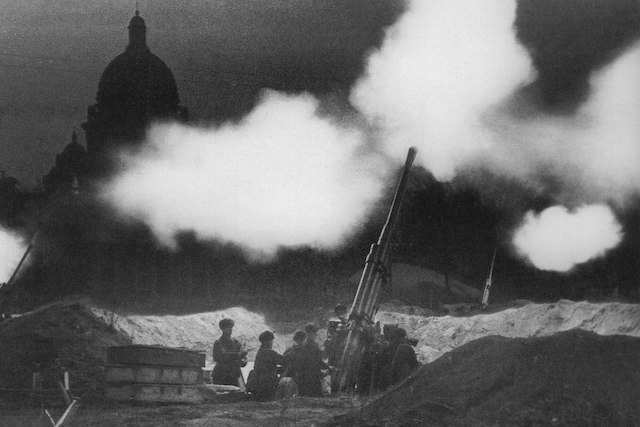
When German and Finnish forces laid siege to Leningrad (now St. Petersburg) on September 8, 1941, they expected little resistance. This was still the initial phase of the Axis advance deep into Russia, as the Red Army was retreating with heavy losses along the entire front. A swift capture of the city—at the time one of the crown jewels of the Bolshevik Empire—would have boosted the troops' morale and also provided the Axis forces with a strategic point from which to launch further attacks.
However, they had no idea that this would prove to be the most grueling and protracted battle they had ever fought. It was the longest and perhaps most devastating siege of a civilian population in history, lasting a total of 872 days. The city was constantly bombed by German artillery and Luftwaffe bombers, often using incendiary munitions that set parts of the city ablaze.
With the onset of the harsh winter of 1941-42, famine escalated into an epidemic, as the city lost over 100,000 people monthly due to severe food shortages. Local police arrested over 2,000 people for cannibalism, although the actual number was likely much higher.
Leningrad was finally liberated by the Red Army on January 27, 1944. By the time it ended, the city's population had been reduced from 2.5 million to 800,000, making it one of the deadliest sieges in history.
3. The Fall of Singapore
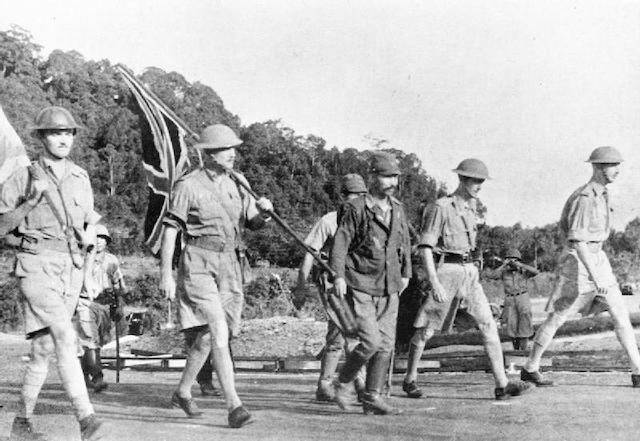
The British stronghold of Singapore fell to Japan on February 15, 1942, in what remains the largest surrender of British forces in history. Over the next two weeks or so, Imperial Japanese forces conducted a systematic campaign to exterminate the city's Chinese population and other people deemed undesirable to Japan's war effort.
Between 5,000 and 50,000 people were killed during the purge, now remembered as the Sook Ching, which translates as "cleansing through cleansing," among Singapore's Chinese community. Anti-Chinese sentiment among Japanese soldiers was fueled by the grueling battle in China, as approximately 10-20 percent of the local Chinese population was killed by machine guns, beheadings, bayonets, explosions, and other violent methods during the massacre.
2. Bombing of Hamburg

On July 24, 1943, at around 1:00 a.m., British and American bombers began a horrific bombing campaign against the second-largest German city at the time, Hamburg. Armed with explosives and numerous newly developed incendiary bombs, Operation Gomorrah marked a terrifying turning point in the war. It was the first of many Allied operations targeting civilian centers and other non-military targets in German and Japanese cities—a strategy that would be repeated on a larger scale in Dresden, Tokyo, and ultimately Hiroshima and Nagasaki.
The raids continued for over a week, subjecting Hamburg residents to a level of terror never experienced before. The worst of it occurred on July 27, when the bombs created a massive firestorm that burned thousands alive in a matter of hours. Street temperatures reached 1,400 degrees Fahrenheit, and winds exceeded 170 mph, burning approximately 16,000 buildings, home to over 450,000 people. British pilots flying above even reported turbulence and a strong stench of burning flesh from the storm. By the time it ended, at least 37,000 people had died, as over 9,000 tons of bombs had fallen on Hamburg in just a few days.
1. Aktion T4
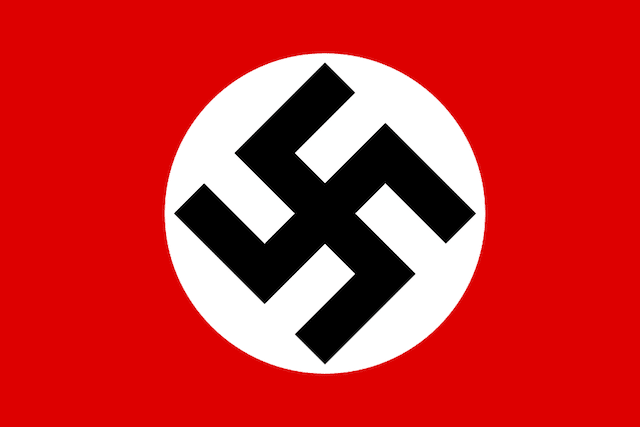
In 1933, the German government passed the Law for the Prevention of Hereditarily Diseased Offspring, which made sterilization mandatory for anyone with conditions considered genetic at the time. Between 1933 and 1939, more than 360,000 people with conditions such as schizophrenia, epilepsy, and even alcoholism were sterilized in camps converted from prisons, hospitals, schools, and other buildings across Germany.
This was only the beginning of a long and horrific process to eliminate what the Nazis considered undesirable afflictions from the German gene pool, which ultimately led to the T4 program. Implemented immediately after the outbreak of war in 1939, it was a mass euthanasia program conducted at six facilities in Germany and Austria using methods that were later replicated on a much larger scale during the Holocaust. Initially, T4 involved only infants and toddlers, though it was soon expanded to include adults with disabilities and mental illnesses. Although the program was officially ended in 1941, killings continued throughout the war years, claiming the lives of approximately 250,000 people by its end.