








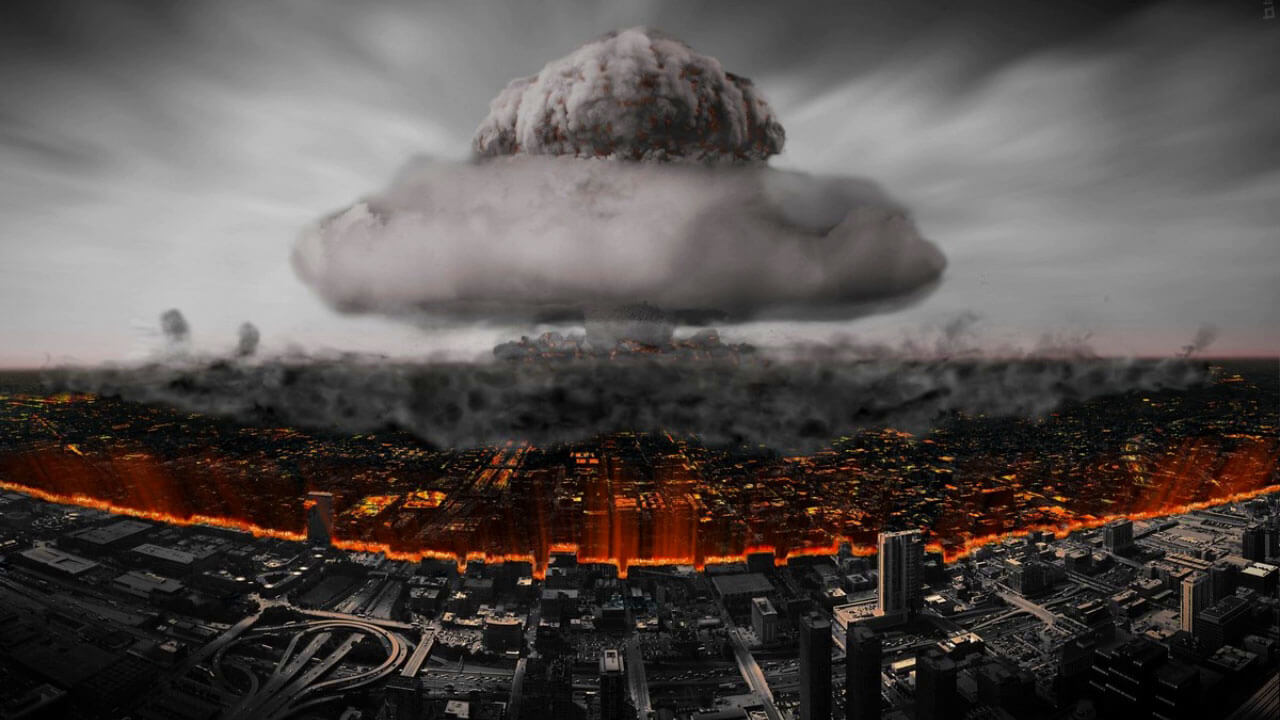
The high tensions between the United States and North Korea, India and Pakistan, and a number of other countries have raised questions about the likelihood (or, at worst, the inevitability) of a global military conflict.
Let's take a look at the top 7 likely reasons why World War III could theoretically start.
7. Food shortages
 Amid economic recession and rising inflation, food costs in developing countries have reached unprecedentedly high levels. According to various estimates, residents of the world's poorest countries spend between 501 and 701% of their income on food.
As things unfold, those below the poverty line receive less and less food, while those at the other end of the needs pyramid accumulate more and more resources.
According to the report "The State of Food Security and Nutrition in the World 2018," 821 million people worldwide, or one in nine people, are hungry. And over 150 million children under five are stunted due to malnutrition.
In addition, rapid population growth, climate change, which many agricultural crops are not prepared for, and declining groundwater levels, as well as many other factors, also play a role in this problem.
6. Conflict between major powers
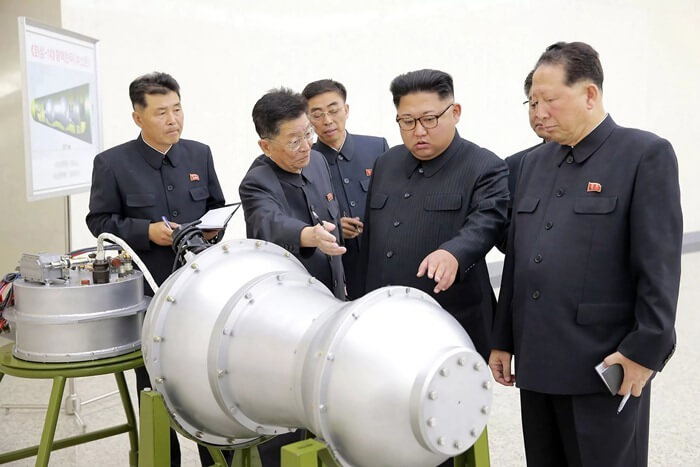 According to analysts at the American military magazine The National Interest, World War III will begin in one of the locations where the interests of the world's largest powers clash. These locations include:
- The South China Sea contains a number of disputed islands claimed by China.
- Ukraine. Recent events involving Ukrainian Navy ships attempting to transit the Kerch Strait from Odessa to Mariupol have led to increased tensions between Russia and the United States. The British newspaper The Daily Express even suggested that the Russian-Ukrainian crisis could escalate into an open military confrontation between the countries.
- The Persian Gulf. A military conflict between Kurds, Turks, Syrians, and Iraqis could break out there at any moment.
- The Korean Peninsula. Although tensions in the region have eased somewhat over the past year, North Korean leader Kim Jong-un remains unpredictable.
5. Lack of water
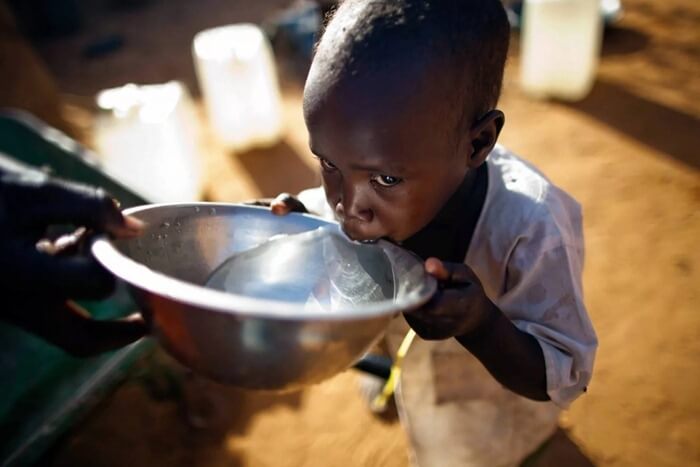 About 751 tp3 of the planet's surface is water, but only 2.81 tp3 of it is fresh. Of these 2.81 tp3 of the surface, only 11 tp3 of it is readily accessible to Earth's population.
And if we are to believe scientists who predict that in the next 100 years, the planet's temperature will rise by 3.7-4.8 degrees compared to pre-industrial levels, we can assume that the value of water as a key resource for life will only increase.
By 2026 in the worst case, or by 2031 (under the most optimistic forecast), the average global temperature will rise by 1.5 degrees Celsius due to global warming.
Therefore, the struggle for freshwater resources may be one of the causes of World War III.
4. Lack of non-renewable resources
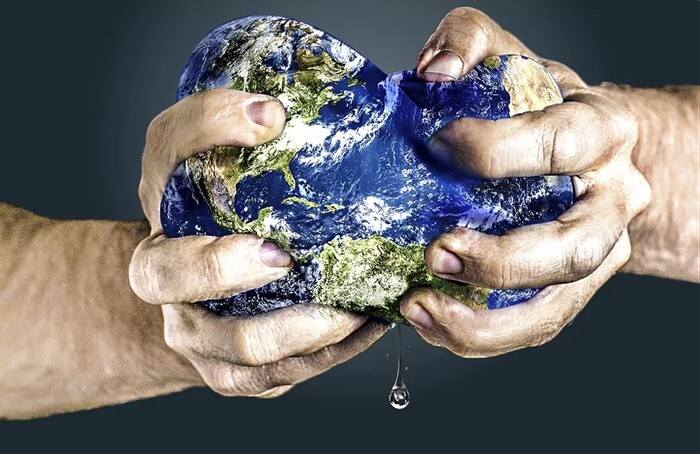 Non-renewable energy sources around the world, such as coal, oil, and natural gas, are disappearing at an alarming rate. For example, according to a statement made by Russian Ministry of Natural Resources and Environment Minister Sergei Donskoy in 2016, Russia's proven oil reserves will only last for 57 years. What will happen when the shortage of "black gold," "blue fuel," and other non-renewable resources is felt globally? Strong countries will likely try to replenish their reserves at the expense of weaker ones.
However, no one knows exactly how oil is formed, so it may be considered a renewable resource. Similarly, there is no reliable information about the Earth's oil reserves.
In Russia, for example, data on oil reserves hasn't been officially published since Soviet times. This allows businessmen and politicians to manipulate the figures depending on the current economic situation.
3. Diseases
 We live in an interconnected world, and the question isn't whether a deadly disease outbreak will occur, but when it will happen. And, more importantly, whether the world will be prepared.
The fact that it may not be ready was demonstrated by the outbreak of the deadly Ebola fever in Guinea in 2014, which spread beyond the country's borders, affecting not only nearby states in West Africa (Liberia, Sierra Leone, Nigeria, Senegal, Mali), but also the United States and Spain.
This case is unique because this is the first time such an epidemic has occurred in West Africa, and local doctors simply had no experience in dealing with it.
Of course, the zombie apocalypse depicted in Resident Evil is unlikely to threaten humanity. However, attempts to prevent an epidemic by regulating the movement of tens of thousands of people and depriving them of access to the outside world is not a step in the right direction.
Such discrimination, instead of treating illness, could lead to unbridled violence and aggression for the right to life and health. Previously unknown diseases, as well as the availability or lack of medical treatments, could potentially lead to a catastrophic world war.
2. Information technology
 Did you know that the World Wide Web is a product of military development? The development of the internet began back in the 1960s, when the US Department of Defense implemented a project to link individual computers installed in various defense organizations. This was done to make communication lines less vulnerable in the event of a nuclear war. If some nodes were damaged,
Therefore, the boom in information technology is crucial for understanding the mechanisms of relations between nations. Information has become a powerful tool for waging wars, both virtual and real. And those who possess all the information are in power.
The question of what information should remain confidential and what should be shared is a subject of serious debate today. If confidential information is revealed to the world, and this information leads to global scandals (as in the case of Wikileaks), then we may already have World War III. And it is being fought in cyberspace.
1. Arms race
 Growing investment in weapons, especially nuclear weapons, poses a potential threat to peace and future generations. Billions of dollars are spent annually on maintaining the world's most powerful armies and modernizing military equipment.
Although weapons of mass destruction are generally created to deter a potential enemy, they have been used in the past. You've probably already guessed that I'll use the atomic bombings of Hiroshima and Nagasaki as an example.
Trying to "keep arms with arms," countries are entering into a frantic arms race that can only end in a few generations of missiles being sent flying across the globe. After that, it will be completely irrelevant who started World War III first. After all, it will end the same for everyone.