








Many technologies now considered obsolete were once considered the best. With the advent of newer, more advanced technologies, many older ones have become obsolete. Although they are no longer in high demand compared to their more expensive counterparts, many still prefer older technologies for various reasons. We've compiled a list of ten popular, yet outdated, technologies that are still widely used and popular.
1. Fax machines: Invented in 1843, they are still used in healthcare and law enforcement due to regulatory issues, concerns about digital security, and simple resistance to change. Currently, at least 11,620 fax machines are in use in the UK's National Health Service.

«"Fax," short for "facsimile," refers to the telephonic transmission of scanned printed materials, such as text and images. Fax was invented by Scottish inventor Alexander Bain in 1846 by reproducing graphic symbols in a series of laboratory experiments. However, the first commercial use of fax was achieved by Giovanni Caselli, using the pantelegraph, between Paris and Lyon in 1865.
The fax machine underwent several modifications between the late 1800s and early 1900s, thanks to advances in technology developed by Giovanni Caselli. Its popularity peaked in the 20th century, when offices around the world used this versatile device for business transactions and material exchange. However, its popularity began to decline in the late 1990s with the advent of the internet.
Fax, considered obsolete in the 21st century, remains the preferred method of communication in healthcare and law enforcement due to regulations, concerns about digital security, requirements for "identity documents," and resistance to change. (source)
2. Payphone: A popular device in the 20th century, it is still in use today because it is required by law to provide one so people can call emergency services. About a fifth of the 100,000 payphones in America is located in New York.

In 1876, Alexander Graham Bell invented the telephone, and the first public pay phone was installed by William Gray in a bank in Hartford, Connecticut, in 1889. At that time, coin-operated pay phones operated on the "postpay" principle. "Prepay" systems were introduced in Chicago in 1898.
At the beginning of the 20th century, there were approximately 81,000 payphones in the United States alone. Three years later, the first coin-operated street phone was installed in Cincinnati. Payphone use peaked in the 1990s, when 2.6 million such phones were installed in America.
In the 2000s, the popularity of payphones began to decline with the advent of mobile phones. However, they remain in use, as they are mandatory for emergency calls, although their numbers have declined sharply. (source)
3. Pager: Invented in 1921, pagers are still used in approximately 85% hospitals, as hospitals can be areas without cell service and to protect patient data. Pagers are also used by nuclear engineers, firefighters, and paramedics in critical situations when cell phone networks are down.

Once considered a status symbol, pagers reached their peak popularity in the 1980s and 1990s. The first pager was used by the Detroit Police Department in 1921. After its commercial introduction in 1949, the pager was adopted by New York Jewish Hospital, and many doctors signed up for the service for a fee.
In 1964, Motorola introduced the compact consumer pager, the Motorola Pageboy I. An estimated 61 million pagers were in use by the 1990s. By 2001, Motorola ceased pager production and focused on mobile phones.
Despite the dramatic decline in pager adoption, they remain the preferred method of communication for people working in critical areas or in the event of a network failure. (source)
4. Floppy disks: Invented in the 1960s, they are still used in the aviation industry, ATMs, medical equipment, the US Air Force, and for backing up data from MS-DOS computers due to their virus resistance. After 2000, they began to be used, in particular, with older industrial computer equipment.

IBM's Alan Shugart invented the 8-inch floppy disk drive in 1967. In August 1981, it was upgraded to a 5.25-inch drive and used in the first IBM PC. The drives became widely known as "floppy disks" due to their flexible plastic casing, which provided protection from dust.
In 1996, an estimated five billion standard floppy disks were in use, but their use began to decline with the advent of CD-ROMs, DVDs, USB drives, and online storage. In May 2016, the US Government Accountability Office reported that old IBM Series/1 minicomputers running on 8-inch floppy disks were still being used to coordinate the US Air Force and its nuclear silos.
They are still used as firmware for updating ATMs, medical equipment, some components of the aviation industry, and as a backup for equipment running MS-DOS, due to their reliability and resistance to virus attacks. (source)
5. Since 1897, cathode ray tubes (CRTs) have remained the preferred display technology over LCDs and LEDs. Their widespread adoption is due to their high resolution, communications capabilities, medical diagnostics, and heating solutions for commercial and industrial applications. Approximately 46% households still own at least one CRT device.
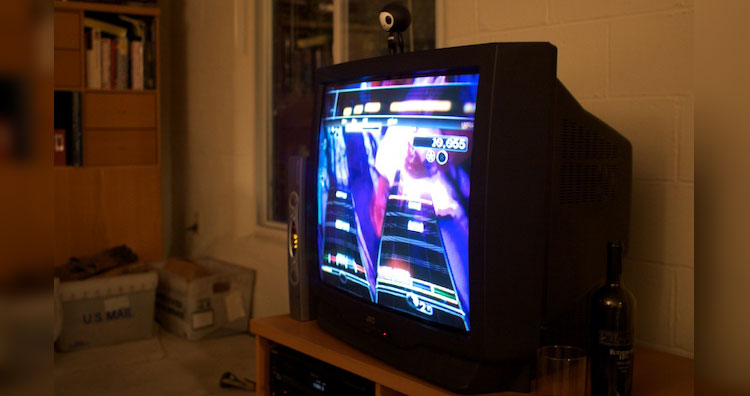
The cathode ray tube (CRT), a specialized vacuum tube, was invented by German scientist Karl Ferdinand Braun in 1897. The screen emits visible light when a beam of electrons hits it.
In 1966, Sony released the first CRT television, which boasted exceptionally vibrant colors and superior contrast. However, with the advent of LCD displays and flat-panel televisions, CRT televisions' popularity began to decline, as the former offered superior image quality and clarity.
Although its use in the consumer industry is almost obsolete, it is still preferred in medical imaging, industrial heating systems, and among professional arcade game players due to its superior image quality compared to LCD displays. (source)
6. Since 1959, COBOL has been the oldest programming language currently used for legacy applications deployed on mainframes, handling large batch and transactional tasks. It remains the preferred language and is used in 70% of the world's business transactions.

COBOL (Common Business — Orientation Language ) is considered the oldest programming language, having appeared in the 1950s. It is a programming language widely used in business and administrative settings. It runs on both mainframes and personal computers.
However, in the 1980s, many small businesses migrated from mainframes to personal computers using COBOL, but incurred enormous costs during this transition. In the 1990s, COBOL was deemed obsolete as many businesses migrated to newer technologies.
This programming language has been used in government and commercial data processing for decades due to its stability and ability to support legacy systems. Millions of banking transactions are processed daily using COBOL programs. (source)
7. Walkie-talkies, widely used by the American military during World War II, were effective for exchanging information over short and medium distances. They are still used by police, military personnel, and public event organizers for security purposes.
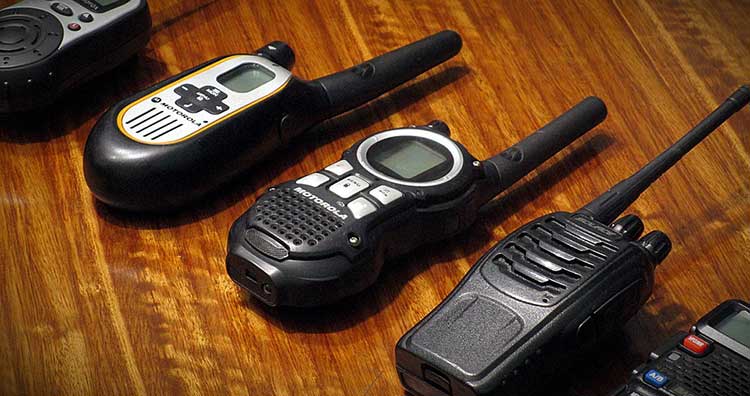
The walkie-talkie was invented in 1937 by Canadian Don Hings for his company, CM&S. Originally called a "packet," this radio was widely used during World War II, providing two-way communication. He later created the famous C-58 package, which included a series of antennas, scramblers, and filters to mask combat noise and ensure clear communications.
The term "walkie-talkie" was coined by journalists to introduce the technology to the public. During the war, British, German, and American forces used two-way radio systems to communicate with tank units and field artillery.
Over the years, they have been significantly reduced in size and remain a favorite among police, military, and critical infrastructure personnel because they continue to operate when cellular networks are down or unavailable. (source)
8. Newspapers, which originated in the 17th century, exist because they are difficult to replicate through television, radio, or online news outlets. An estimated 30 million Americans live without internet access and prefer to read newspapers.

Newspapers began to be published in the 17th century, and the first newspaper was printed in 1665 in England. In 1704, a weekly newspaper began to be published in the United States. Boston News-letter . After that newspaper It gained popularity and was first published by James Franklin in 1719.
In the early 19th century, newspapers were printed in huge quantities thanks to rising literacy and technological advances such as high-speed rotary printing, communications, and transportation. Moreover, they enjoyed immense popularity due to their wide news coverage at a reduced price.
In the 21st century, the largest players in the newspaper market began publishing online publications for convenient and free access. Although they have been supplanted by television, radio, and online news, they remain the preferred, traditional choice for people wishing to live without the internet. (source)
9. AOL was founded in 1985 and remains popular with rural Americans who lack access to high-speed internet, which can be expensive and unreliable. Approximately 2.1 million people use AOL dial-up internet annually.

America Online is a search engine and online portal based in New York City. In 1993, AOL acquired its own email addresses, which users used to access the internet. By 2000, AOL had become the largest internet service provider in America, valued at $125 billion, with 34 million loyal users worldwide, and the company was expected to continue growing.
However, in 2002, the company's stock began to plummet, and the brand was slow to respond to change. As a result, it was overtaken by broadband companies and new players like Google.
The company was acquired by Verizon in 2015 and continues to see limited profits from its dial-up internet business, as many rural Americans still lack access to high-speed internet and prefer AOL's dial-up connection due to its low cost. (source)
10. Released in 2001, the Windows XP operating system is still used by many organizations because they rely on specialized software that is incompatible with later versions of the operating system. The company owns approximately 281,000,000 shares of Windows XP in many countries.

Windows XP is a personal computer operating system developed by Microsoft and released on October 25, 2001. After its release, it dominated the computing industry, running on approximately 90% PCs, while the rest used Linux and Mac operating systems.
It was popular for its graphical user interface, virtual memory management, multitasking, and utility support. It was also a popular operating system for servers and mobile phones. As of January 2019, 2,181 PCs running Windows were still running Windows XP.
Although Microsoft ended extended support for Windows XP in 2014, it remains widely used by many users who prefer the simpler user interface compared to newer versions. Furthermore, Windows XP runs smoothly even on PCs with less RAM, and the cost of upgrading to a newer version is high. (source)