









In the past, we've explored the origins of some popular and idiomatic idioms, but for every true story, there's a false one, which sometimes becomes more popular than the truth. So today, we're putting on our debunking hats and setting about correcting a few myths about language and communication, from false abbreviations to false word origins, and even a few misconceptions about nonverbal communication.
10. Gentlemen only, ladies are not allowed

An acronym is a type of abbreviation that takes the initial letters of a series of words and pronounces them as a single word, like NASA or NATO. And here's a fun fact: if the letters in the new word are pronounced individually, rather than as a single word, like FBI or KFC, it's an initialism, not an acronym.
But let's get back to our main point: there's a belief that the word "golf" is also an acronym meaning "gentlemen only, no ladies allowed." This sounds plausible, as women were traditionally discouraged from playing the sport, but it's not only false but also based on an old joke that's been repeated so often that people have come to accept it as truth.
As a rule, English abbreviations are a relatively recent practice, dating back only a century and a half or so. Therefore, if a word is older, it's likely not an abbreviation, and the word "golf" has been around for at least 600 years. The earliest written reference to it dates back to an act of King James II in 1457, when he effectively banned it because he believed it discouraged people from practicing archery.
As for the actual origin of the word, it's a bit murkier. Some say it comes from a Scottish word, others from Dutch. We just know it's not an acronym.
9. Blair Mountain Rednecks

Another word of uncertain origin is "redneck," used derogatorily as a synonym for "hillbilly" or "redneck." On the one hand, the word "hillbilly" has a rich origin, tying it to the Battle of Blair Mountain, a notorious and brutal event that to this day represents the largest labor uprising in American history. On the other hand, history isn't entirely accurate.
In August 1921, approximately 10,000 West Virginia miners clashed with lawmakers and strikebreakers who were trying to prevent their attempts to unionize. This was part of a larger series of labor conflicts that occurred in the late 19th and early 20th centuries, known as the Coal Wars.
The striking miners wore red bandanas around their necks and became known as the "Redneck Army," and the men themselves eventually became known simply as rednecks. It's a compelling story, and everything in it is true, except that it's the origin of the word "redneck," which dates back even further than the Battle of Blair Mountain.
As we said at the outset, we're not sure where the word "redneck" comes from, but we do know that the Oxford English Dictionary contains usages of it dating back decades before the labor uprising, even going back to the late 19th century.
8. Turning "crap" into "crap"«

While we're on the topic of bogus word origins that have stuck simply because people like the story behind them, let's talk about the words "crap" and "shit," supposedly named after the inventor of the flush toilet, Thomas Crapper. .
This is a two-pronged myth. The first misconception is that Thomas Crapper invented the flush toilet. He didn't. It's true that he was a genuine plumber who later opened his own company and that he held several plumbing-related patents, but none as ambitious as the flush toilet system. Sir John Harrington was the first to describe a flush toilet back in 1596, but he never actually built one. Then Alexander Cummings was the first to receive a patent for it in 1775. Both of them were working centuries before Thomas Crapper, who ran his company in the late 19th century.
As for the word "shit," it's even older and may come from medieval Latin, Old French, or even Dutch, as they all have similar-sounding words. The connection between "shit" and Thomas Crapper was established in 1969 by writer Wallace Rayburn, who wrote the satirical book "«"Flushed with pride"» , so it looks like this is another case of people taking a joke and accepting it as fact.
7. Spanish lisp«
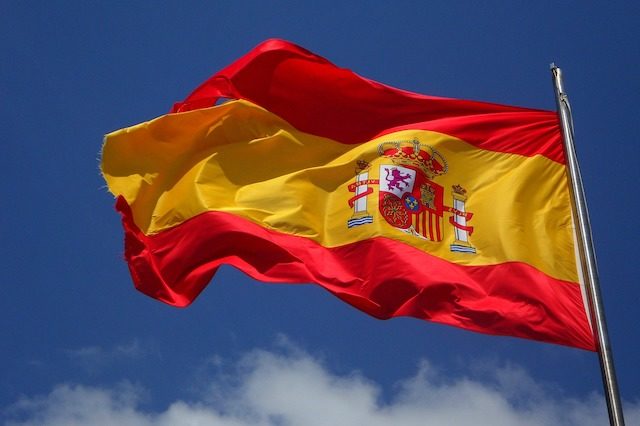
This is a myth most people will encounter if they study Spanish long enough. The story goes that there was once a Spanish king, commonly called Ferdinand, who spoke with a lisp. Wanting to curry favor with the king, his courtiers began imitating him, and before you know it, the entire country spoke like him, giving birth to the so-called Spanish lisp.
Once again, we have a myth that needs to be debunked on two fronts. First, the very existence of the Spanish lisp. Lisp is a speech defect, and suggesting that an entire nation could suffer from a collective verbal disorder is nonsensical. There are some differences in the pronunciation of some European Spanish and Latin American Spanish words, but these are simple differences in language, just like the differences between British and American English.
Then there's the story of the lisping king. No such Spanish monarch has ever been identified. The closest we have is courtesy of the 14th-century historian Pedro López de Ayala, who wrote of King Peter the Cruel of Castile and León that he spoke "with a slight lisp." However, there's no evidence of anyone ever imitating him, let alone the entire kingdom.
6. Start spreading the NEWS

Let's move on to another fake acronym, the word "news," which, oddly enough, has not one but two false explanations. Some say it means "north, east, west, and south" because it brings you information from all over the world. Others say it actually means "notable events, weather, and sports.".
In fact, neither is true. "News" doesn't mean anything. It's simply the plural of "new," and it dates back to the 14th century. The plural form was used to refer to "new things," inspired by the French wordnovels and German neues.
5. California Code 420

Many groups of people have their own languages, codes, and other ways of secretly communicating with each other. This can be anything from a complex cipher to a simple link understood only by a select few. Nowadays, everyone and their grandmother knows that "420" is a term used to describe marijuana smoking. It has become so pervasive in pop culture that April 20th is even an unofficial holiday dedicated to marijuana.
But there was a time when the term was far more mysterious. After all, it was supposed to be a secret. The most plausible origin of this story traces back to a group of high school students named "The Valdos" who attended San Rafael High School in California in 1971. "420 Louie," as it was originally code, referred to their plan to meet at 4:20 PM in front of the school's statue of Louis Pasteur to unwind with a quick Doobie, or whatever kids called it back then. Eventually, the term was shortened to "420," and it became widely used by their extended circle of friends. This happened to several members of the Grateful Dead, who further spread the term's use among their legions of fans, known as Deadheads.
It was only almost two decades later, in 1990, that the magazine High Times told the story of "420" to the world... except they were mistaken because they claimed "420" referred to California's police code for smoking marijuana... which is not true. Or, alternatively, the state's penal code for smoking marijuana. Which, again, is not true. This particular penal code, which exists, pertains to the unlawful obstruction of a person's access to a public place. It wasn't until 1997 that some of the former Waldos contacted High Times, to clarify the situation, but by that time the myth had already become firmly entrenched.
4. Freezing monkey balls

We've already covered a few incorrect word origins, but what about idioms? If, for example, you find yourself shivering in sub-zero temperatures, you might exclaim, "Cold enough to freeze a brass monkey's balls off." It's a great expression, and it even has a great origin story. During the Age of Sail, brass monkeys were metal trays with indentations used on ships to stack cannonballs in a pyramid shape. However, when it got really cold, the brass would shrink more than the iron cannonballs, causing the cannonballs to fall all over the deck.
Unfortunately, while this is a compelling story, it doesn't hold up to scrutiny. First, ships didn't store their cannonballs on deck, where they could rust. They had special lockers for them. Even if they did, they certainly wouldn't have stacked them in a precarious pyramid shape, which would likely collapse if they passed over even the slightest wave. And even if they had done all this for some reason, physics would still have spoiled the party, because the difference between the coefficients of expansion of brass and iron is negligible, not enough to make a monkey's balls tumble.
3. Save our syntax

When it comes to nonverbal communication, Morse code is undoubtedly one of the most well-known systems. We've all heard of it, and while most of us probably don't know how to use it, we do know one key phrase: dot dot dot, dash dash dash, dot dot dot – SOS.
It's been the international distress signal for over a hundred years. Of course, we now have faster and easier ways to signal for help, but SOS remains ingrained in the public consciousness. But what does it mean? "Save our souls" is the most common response, though "save our ship" is a close second. But the truth is, SOS doesn't mean anything, and that was the point. It was a simple, elegant, and unmistakable code sequence. It was specifically chosen so that it could be transmitted without pause and repeated every few seconds without the possibility of being misinterpreted as another message.
2. Baptized at Ellis Island.

In 1892, the United States opened its first federal immigration station at Ellis Island in New York Harbor, where over the next six decades, more than 12 million immigrants were processed. Unfortunately, these immigrants lost something very important to them during their passage through Ellis Island—their names. Immigration officials often changed their names to something more American-sounding: Schmidt became Smith, Noblinsky became Noble, Weber became Weaver, and so on. In other cases, they did so because they couldn't communicate with immigrants who didn't speak English, or even simply because they couldn't write foreign names. And just like that, with the stroke of a pen, a person's entire identity was erased. It's a widely circulated story that has been recounted in the media numerous times, most famously in Part II. «The Godfather» . But is this true?
Of the millions of people, it's certainly possible that some could have been changed due to some error, but this was certainly not common practice, and government records prove that people left Ellis Island under the same names they entered. Many immigrants subsequently decided to change their names to better fit in.
Contrary to popular belief, Ellis Island employed interpreters in all major languages to communicate with immigrants who didn't speak English. And even if they weren't available, it didn't matter. Officials didn't need to speak to immigrants to find out who they were—they had the ship's manifest, which already had everyone's names written down. Inspections at Ellis Island were primarily aimed at ensuring immigrants had documents and had passed medical examinations.
1. Turning the bird over in the Middle Ages

We'll conclude our list with the myth of the origin of the most famous and widely recognized gesture in the world—the middle finger. It's said to have first been used as a taunt by English soldiers after fighting the French at the Battle of Agincourt in 1415. The middle finger was a powerful and formidable weapon, feared throughout Europe. The French were greatly favored by victory in this battle, and according to the myth, they intended to cut off the middle fingers of all captured English soldiers so they could no longer draw the longbow.
History buffs know that the English gave the French a good beating at the Battle of Agincourt. To add insult to injury, they all waved their middle fingers as the French army retreated, showing that their fingers were still firmly attached to their hands.
There are two problems with this story. The first is practical: no one would pay ransom to archers who couldn't shoot a longbow. As harsh as it may sound, archers weren't very high in the military hierarchy, and archers who could no longer fight were practically useless. If the French had truly intended to cut off their fingers, they would have known the English wouldn't want them back.
The second problem is historical. There's ample evidence that the middle finger has been a rude gesture for much longer than medieval England. The Roman historian Tacitus wrote that Germanic tribesmen taunted Roman soldiers with the middle finger. And even before them, the philosopher Diogenes used the same gesture on the orator Demosthenes, back in Athens in the 4th century BC. So it seems that people have been insulting each other with the middle finger for thousands of years.