








Have you ever had a moment when you wondered if a certain tool or invention existed, only to be disappointed to discover that someone else had thought of it first? Or worse, you have a non-existent idea, and it takes someone forever to bring it to life? This sort of thing has been happening for centuries, and not just in the world of invention. Even scientific ideas can be conceived by someone at some point, but it takes someone else to actually prove it and bring it to life. And sometimes the gap between the one conceiving the idea and the one proving it correct or feasible can be years.
10. Black holes were proposed as early as 1783.
Everyone knows what a black hole is these days, at least a basic understanding. However, the concept remains quite mind-boggling, and many of the basics can be confusing to the layperson, even with some scientific knowledge. How can something be so powerful that light can't escape it? Where do things go when they're sucked into a black hole? Can it ever fill up?
Today, science can answer some of these and many other questions, while the nature of black holes remains a mystery. This is all the more fascinating considering that the idea of a black hole was first proposed back in 1783. John Mitchell , a priest and scholar from England.
Mitchell proposed the idea of a star with suchenormous gravity, that even light couldn't escape from it. His science wasn't entirely foolproof, but the concept was worth the money. Only in In 1971 , nearly 200 years later, the first real black hole was identified, confirming Mitchell's idea.
9. Muslim doctors were 500 years ahead of Louis Pasteur in germ theory.

If there's one thing people are well aware of these days, it's germs. Whether you wear a mask when going out in public or not, we all know that viruses and bacteria are everywhere, and avoiding them can keep us healthy.
Most people attribute the germ theory to Louis Pasteur as a result of his experiments in the 1860s, which showed that bacteria cause food spoilage. And while being the father of germs isn't always a good thing, it seems to have worked to his advantage.
Now, if we go back a significant amount of time to 1369 and around, a man named Lisan ad-din Ibn al-Khatib, often referred to simply as Ibn al-Khatib , and another one named Ab? Ja'far Amad ibn Ali ibn Muhammad ibn Hatimah Al-Anar, known as Ibn Hatim , put forward the idea that diseases, and especially plague, are caused microorganisms .
Hatima said that "tiny bodies" entered the human body and caused diseases, but hundreds of years had to pass before his theory was confirmed and science could show that these tiny bodies, invisible to the naked eye, were real things. .
8. Naked mole rats were predicted before they were officially discovered

Theories related to equations or scientific processes are one thing when it comes to science, but how often do you hear about the existence of an entire life form being predicted before that life form is officially discovered? That's what happened with the naked mole rat.
In the 1970s, an entomologist Richard Alexander predicted He hypothesized the existence of mole rats based on what he already knew about the eusocial structure of insect colonies, such as termites or bees, which have a single queen and many subordinate colony members. He predicted that if such a mammal existed, it would be underground and would exist in an easily expandable nest near food. This meant it was most likely a rodent, as few other mammals live underground. It would likely consume roots and tubers, as there would not be enough larvae and insects to sustain the colony.
He predicted that the animal would have to live in Africa because the climate and soil would be most beneficial to such a creature, preventing predators from reaching it while offering the most likely food to sustain such a species.
In 1978 , when Alexander read lecture , Someone familiar with the diggers was present, and although unfamiliar with their social structures, he assumed that this was precisely what Alexander was describing. And, as it turned out, his conception of their eusocial society was correct. He had almost accurately predicted it.
7. Arthur C. Clarke predicted communications satellites years before they were invented.
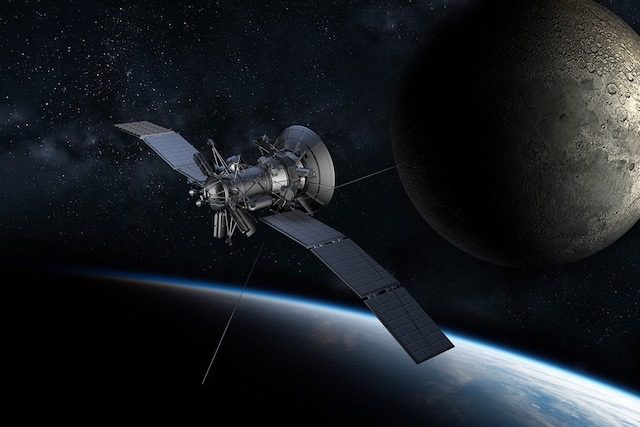
Satellites are ubiquitous these days, and as of 2022 in orbit around our planet located 4852 of them , which do everything from transmitting cell phone signals and GPS to spying and weather tracking. It's far away from Sputnik , the first satellite launched into space in 1957. In 1962 Telstar was launched , the first communications satellite. Its purpose was to test whether satellites could even be used to create a worldwide communications network. But just two years later, in 1964, science fiction writer Arthur C. Clarke predicted that not only would it work, but that we would be able to contact instantly with other people anywhere in the world, even if we don't know where they are. This is, of course, a pretty accurate description of how the Internet and cell phones have connected the world.
Sure, it's a little impressive, considering he said it when the satellites were in their infancy, but it wasn't his first bite at the apple. Back in 1945 It has already been proposed to use artificial satellites to transmit information to Earth faster and cheaper than using traditional wired communications.
6. Neptune was discovered mathematically before it was seen through a telescope.

As a child, you may have been tempted to question the usefulness of certain lessons, especially those taught in math class. "When are we ever going to use this in real life?" is a common refrain among those who dislike math. But never forget that an entire planet in our solar system was discovered not by telescopes or satellites, but by pure mathematics.
The planet Uranus was discovered in 1781, but it was noticed to have an unusual orbit. John Couch Adams and Urbain Jean Joseph Le Verrier were able to use mathematics to deduce that another planet must be there., orbit-changing Uranus, and predicted not only its existence, but also its location and mass. Using his calculations, Johann Gottfried Galle first saw Neptune. in 1846 .
5. Darwin predicted that spiders would "inflate" the Earth's electric field.

The internet loves bizarre animal stories and will essentially recycle the same ones every few years. For example, the story of how certain species of spiders can fly on electric fields . They call it hot air balloon , and you can read about it every several years .
The science was proven by scientists in Bristol in 2018, but it was actually Charles Darwin who first put forward the idea based on observations he made back in in 1832 . At the time, he was 60 miles offshore on a ship and noticed that thousands of tiny spiders had somehow invaded. His theory was that they had somehow flown there using their webs.
The reality is that spiders climb to a high point and point their hind ends upward. They release strands of silk into the air, and the thin threads move along the ground's electrical field. The long-held theory that they relied on wind has been disproved, as this occurs even when there is no wind at all, and wind in any case cannot explain its speed or origin.
4. Computer viruses appeared in the 1940s

There are few things more annoying than getting a virus on your computer after visiting completely innocent websites that you didn't even delete from your history. The first virus to infect a computer was called Creeper, And it was a test to see if the malware could actually replicate and spread. And it could! But Creeper also politely deleted itself from computers as it spread. That was 1971. Three years later, the Rabbit virus spread, created with malicious intent. It may have been the first true virus.
But the origin of viruses in a theoretical sense goes back much earlier, to 1949 . It was then that John von Neumann suggested that such a thing was possible. His work was like a thought experiment, presenting the idea.
3. Atomic theory goes back to Greek philosophy

In 1955, Erwin Müller invented microscope , which allowed people to see actual atoms for the first time in history. Considering the state of atomic theory at the time, this was remarkable. The atom had been split before, but no one had ever seen it before. Even more astonishing was how far back in time one would have to go to get to the original.
Ancient Greek philosophers developed the idea of atoms based on a fairly simple observation. You can cut anything in half. Then cut that thing in half. And so on, and so on. So all things were made of smaller things, and the idea was that eventually you'd hit the smallest thing. The atom. Uncut .
Democritus He proposed the idea of atoms in the 5th century, and, remarkably, many of his theories turned out to be quite sound. Atoms were unique to the material they comprised, they moved in empty space and sometimes clung to one another, and changes in their arrangement led to changes in matter. He may not have understood all the fundamentals, but given the time period, his insights were incredibly insightful.
2. The Greek philosopher Anaxagoras correctly understood how eclipses work.
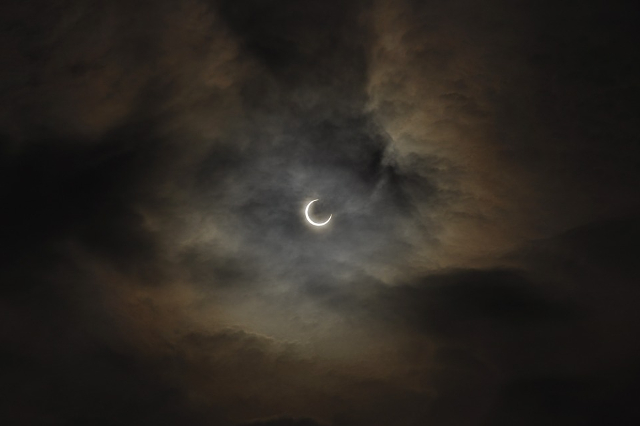
Few things in nature produce as powerful an impression as an eclipse, but it was only with the advent of modern astronomy that we were able to fully see and understand what happens during an eclipse. There was a time in the distant past when ancient civilizations believed that everything, from dragons to the formidable deities, is responsible for eclipses.
Long before anyone understood science, the Greek philosopher Anaxagoras proposed a radical idea. What if the moon passed in front of the sun? This was 2,500 years ago, at a time when both the moon and the sun were deities, mind you, and not a ball of flaming gas and a rock orbiting our world. The idea was essentially heretical.
Anaxagoras was committed to the idea that the moon was a rock. He even described mountains on it. But when the prevailing view was that the moon was actually a god, his more scientific approach led to his arrest and eventual exile from Greece. This was actually a lenient outcome, as his theories had initially earned him a death sentence.
1. Islamic thinkers theorized evolution centuries before Darwin
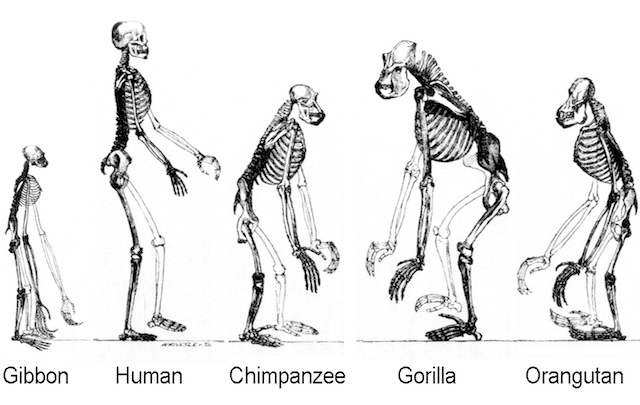
Charles Darwin will forever be synonymous with evolution and natural selection, but it's important to remember that these ideas didn't just emerge out of nowhere. He made several important observations, but his work followed many others spanning several centuries.
It was 1837 when Darwin's famous work was widely disseminated. Just 1,000 years earlier, Al-Jahiz had theorized natural selection, adaptation, and environmental factors as sources. differences between species . He noticed that animals struggled to survive, and the strongest or fittest would succeed. And Al-Jahiz was just one of them. many scientists , who had similar ideas hundreds of years before Darwin came on the scene.
It's generally accepted that Darwin didn't plagiarize from these thinkers and, in fact, would never have heard of them. But this demonstrates that ideas can be discovered independently, and that sometimes recognition of a discovery is as much a matter of luck as skill.