








There are many truly successful people in the world, but things didn't always come easy for them. Some had to endure hardship and overcome difficulties to achieve recognition for their work and contribution to society. Here are ten success stories that began with setbacks, but the people involved didn't give up until they achieved their goals.
1. Abraham Lincoln failed in almost all of his endeavors before becoming president of the United States in 1860. In 1832, he lost his job, then ran for state legislature and was defeated. He lost his job again, his fiancée died, and he suffered a nervous breakdown. He then won the presidential election in 1860.
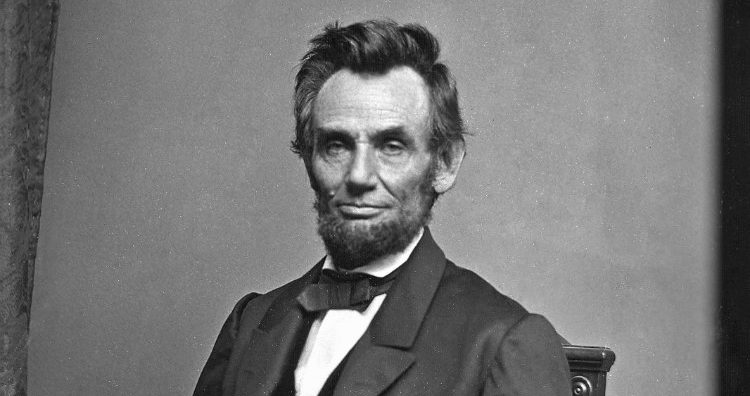
Abraham Lincoln co-owned a store in New Salem that went bankrupt in 1833, and he spent years paying off its debts. His fiancée, Ann Rutledge, died in 1835. In 1838, he ran for local office but was defeated, and he also lost his run for Congress in 1843. Later, in 1842, he married Mary Todd, but they lost three of their four children to various illnesses. The loss of their children deeply affected them, and Lincoln suffered from clinical depression.
In 1846, he was elected to Congress but lost the election in 1848. In 1849, he was denied the position of land inspector. Then, between 1854 and 1858, he was twice defeated for the U.S. Senate and also failed to receive the vice presidential nomination. He made another attempt and won the presidential election in 1860. He was assassinated on April 15, 1865. (source)
2. J.K. Rowling, author of the bestselling Harry Potter series, was kicked out by her husband after the birth of their daughter, left unemployed, and living on unemployment benefits. Her first Harry Potter book was rejected by 12 publishers. Today, her fortune is in the millions.

At the age of 28, J.K. Rowling was kicked out by her husband two months after the birth of their daughter. Despite graduating from the University of Exeter, she was unemployed seven years after completing her studies. With a daughter to support and no source of income, after their divorce in 1993, she fell into clinical depression and contemplated suicide.
The idea for the Harry Potter books came to her while working as a secretary at Amnesty International. She eventually lost that job because she spent most of her time daydreaming and writing stories. At one point, she was living on unemployment benefits and going without food almost every night to feed her daughter. The first Harry Potter book was rejected by 12 publishers before Bloomsbury Publishing acquired it in August 1996. Things improved after she received her first check for £2,500 for the first Harry Potter book. Today, the author's net worth is estimated in the millions. (source)
3. Steven Spielberg has dyslexia and was bullied in school for his inability to read. He wasn't diagnosed until he was 60. His application to the University of Southern California's School of Cinematic Arts was rejected three times. Today, Spielberg's net worth is in the billions.

When Steven Spielberg was a child in the 1950s, dyslexia was undiagnosed. His inability to read made him a target for bullying at school.
Steven Spielberg's teachers considered him a lazy student who didn't do the required work. They didn't notice his reading problems. He accepted this and became fascinated with filmmaking. Spielberg applied to the University of Southern California's School of Cinematic Arts but was rejected due to his low grades. He persisted and applied twice more, only to be rejected again.
This film director is now worth over a billion dollars and has produced such successful films as , like "E.T."« , «Indiana Jones» and others. (source)
4. Soichiro Honda was rejected by Toyota after his first presentation of piston ring samples. His piston design was ridiculed by colleagues. His factory was destroyed three times, but was rebuilt each time. Today, Honda employs over 10,000 people.
Soichiro Honda opened a small workshop in 1938 and developed a piston ring design. He submitted a working prototype to Toyota, but it was rejected because it didn't meet their standards. He didn't give up and returned to his studies. After two years of refinement, he finally received a contract with Toyota.
Soichiro built a factory to fulfill his contract with Toyota, but it was twice destroyed by bombs during the war. He rebuilt it, but it was again destroyed by an earthquake. After the war, gasoline shortages arose, forcing people to walk or ride bicycles. He invented a small engine for his bicycle, but due to a shortage of materials, he was unable to meet the demand from his neighbors.
He wrote letters to 18,000 bicycle shop owners asking for help, and received support from 5,000 of them. Soichiro continued working on bicycle engines until the Super Cub became a success. Honda now employs over 10,000 people in Japan and the United States. (source)
5. Walt Disney was fired from his newspaper for lack of creativity. His first company, founded in 1921, went bankrupt. The idea of creating Mickey Mouse was rejected by MGM because a talking mouse was considered too scary.

Walt Disney founded his first animation company in 1921, but it went bankrupt, and at one point he couldn't even pay his rent. In 1926, he created a cartoon character called "Oswald the Rabbit." He tried to negotiate higher pay for the character from Universal Studios, but they lured Disney's artists away. They also bought the rights to the character.
In 1927, he was told by MGM that his Mickey Mouse idea would never work because the idea of a talking mouse was terrifying. In 1933, the distributors rejected the cartoon.« The Three Little Pigs» , believing that it didn't have enough characters. The cartoon later became a success. The famous cartoon «Pinocchio» lost almost a million dollars in its first release. (source)
6. Vincent van Gogh suffered from depression and mental illness, spending time in psychiatric hospitals. He committed suicide, considering himself a failure. The artist was considered a failure even in his lifetime. His works are worth millions today.
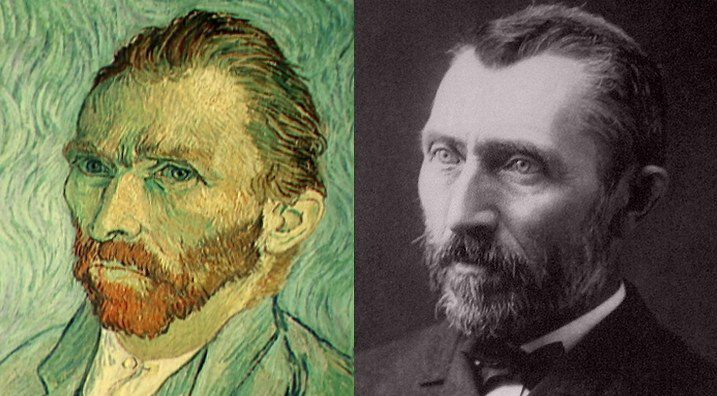
During his lifetime, Vincent van Gogh was considered insane. He was prone to psychotic episodes and delusional states. Born into a middle-class family, he worked as an art dealer in his youth. He began painting in 1881, supported financially by his younger brother.
The artist spent time in psychiatric hospitals and, in a fit of rage, cut off part of his left ear. His depression worsened, and on July 27, 1890, he shot himself in the chest and died two days later.
Van Gogh was considered a failure in life and only achieved fame after his suicide. His paintings are now worth millions of dollars. (source)
7. Jim Carrey was born into a poor family. As a teenager, he worked in a factory to support his family. He also had undiagnosed dyslexia, which made it difficult for him to study and left him with few friends.

Hollywood actor Jim Carrey grew up poor. As a teenager, he had to work eight-hour shifts at a factory to support his family. He dropped out of school at 16 because he found it difficult to balance his studies and his factory work.
Jim Carrey began performing stand-up comedy at age 15, and his father strongly supported his talent. He once wrote himself a post-dated check for $10 million. His big break came with the film «Dumb and Dumber» , and he finally got his money's worth. Jim Carrey became the face of comedy in Hollywood and even the highest-paid actor, earning over $20 million per film. (source)
8. Colonel Sanders went bankrupt at age 65 when his restaurant began losing customers and he was forced to sell it. He spent two years sleeping in his car, and restaurant owners refused to sell him his chicken recipe 1,009 times.

Colonel Sanders lived a fairly successful life. He had a thriving restaurant business, but it suffered after the construction of Interstate 75. The highway diverted traffic from Route 25, where his restaurant was located. When Colonel Sanders noticed business was failing, he sold the restaurant at auction and used the proceeds to pay off his debts.
At age 65, after receiving his first pension of $105, he began searching for restaurants to sell his chicken recipe. Colonel Sanders was rejected 1,009 times and slept in his car for two years before finding a restaurant owner who would buy his recipe.
Nine years later, his chicken was sold in 600 restaurants in Canada and the United States. He sold Kentucky Fried Chicken for $2 million. (source)
9. Ferdinand Alexander Porsche was expelled from industrial design school for lack of talent. Porsche's design director rejected his ideas, and he was forced to outsource the design.
Ferdinand Alexander Porsche decided not to follow in the footsteps of his father and engineer grandfather. He chose to study design instead of engineering. The Porsche 911 designer was expelled from industrial design school in his first year because his talent was not recognized. He then began working for his father at Porsche.
The company's design director also rejected his design ideas, so he turned to an outside contractor and commissioned the creation of a Porsche 911 prototype. This car remains a bestseller to this day. (source)
10. Oprah Winfrey grew up poor, was raped at ages nine and thirteen, ran away from home, and gave birth to a son at 14, who died shortly afterward. Nevertheless, she became the world's first African-American female billionaire.

Oprah Winfrey was born into a poor family in Mississippi to a single mother, who raised her throughout her teenage years. At age nine, she was raped when she left her grandmother's house to live with her mother. The sexual abuse continued from the ages of ten to fourteen.
At fourteen, her mother kicked her out of the house, and she moved in with her father. It was then that she realized she was pregnant. Two weeks after giving birth, she lost her son. Oprah and her father were able to turn the situation around, and he ensured that she became an excellent student.
When she moved to Chicago to become a talk show host, she faced the notion that she couldn't compete with Phil Donahue. But she proved her bosses wrong and surpassed him in the ratings. (source)