








At a certain point, numbers begin to lose their meaning. The human mind has trouble processing large numbers and the vastness of large numbers, and what they represent becomes too vague and fuzzy for us to comprehend. This is one of the reasons why guessing the number of jelly beans in a jar is such a reliable game. People will make huge mistakes with large numbers. But a huge amount of all sorts of things, and not just jelly beans, surrounds us all the time. And many things exist in astonishing quantities.
10. Beetles make up about a quarter of all identified life on Earth.
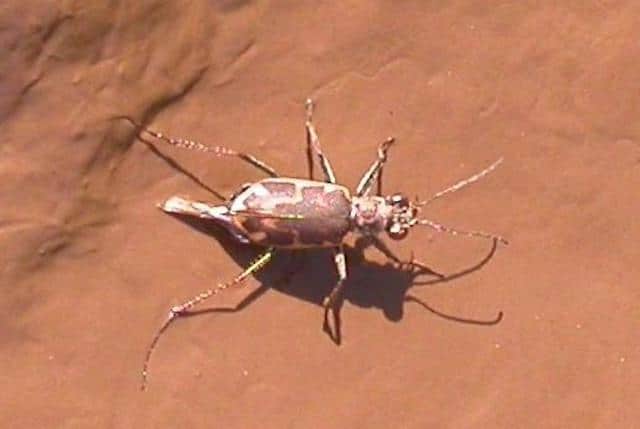
In 2011, scientists estimated that there were approximately 8.7 million different species living on Earth. Of these, approximately 1.5 million have been identified and named. Of these, beetles account for 25%. This means that of the 1.5 million species, between 350,000 and 400,000 are simply beetles.
From an evolutionary perspective, this makes sense. Most beetle species have existed since the Jurassic period, meaning they have succeeded in part because they are so adaptable and well-suited to living in any environment. They have, so to speak, hit the evolutionary jackpot.
9. There are over 120,000 types of rice.
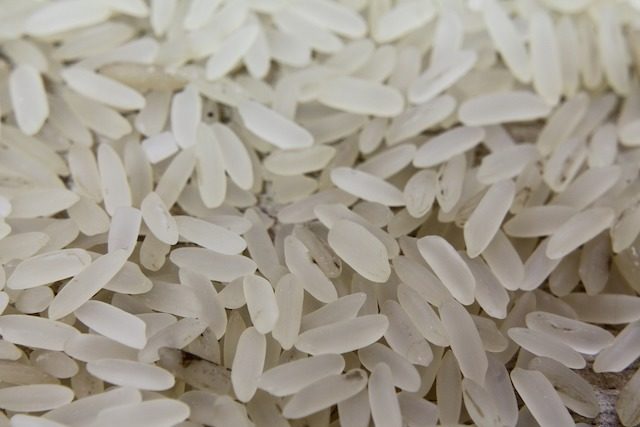
You can make a strong case that rice is the most popular food in the world. In 2021/2022, 520 million metric tons of rice were consumed worldwide. Americans eat about 20 pounds of rice per person each year. If that seems like a lot, compare it to Asia, where the average person eats 220 pounds per year. So, it goes without saying that rice is eaten in abundance. But the sheer diversity of rice is even more remarkable.
Most of us are familiar with foods like Arborio rice, jasmine rice, basmati rice, and a few others. However, there are over 120,000 varieties of rice worldwide. The International Rice Genebank contains the genetic material of 132,000 different rice varieties and related genera. This means you could eat a new variety of rice every day for over 360 years. If you wanted to fit all this into your life, you'd probably need to sample about six different varieties a day, which would only require you to work for 60 years.
8. Sign language is not universal; there are hundreds of variations.

Communication is the cornerstone of civilization, and there are over 7,000 spoken languages in the world. This means that sometimes communication can be difficult if we're not all on the same wavelength.
Some people may think this isn't so important for people with hearing loss, since sign language can bridge the international language gap, allowing people from any culture to communicate. However, this isn't the case. While not as diverse as spoken languages, there are still over 300 types of sign languages used worldwide. .
Interestingly, the differences in sign language don't align with the lines of spoken language. American Sign Language differs from Auslan Sign Language in Australia and British Sign Language in the UK, even though verbal communication in these three places is largely carried out in the same language.
7. There are more than 1800 types of cheese.
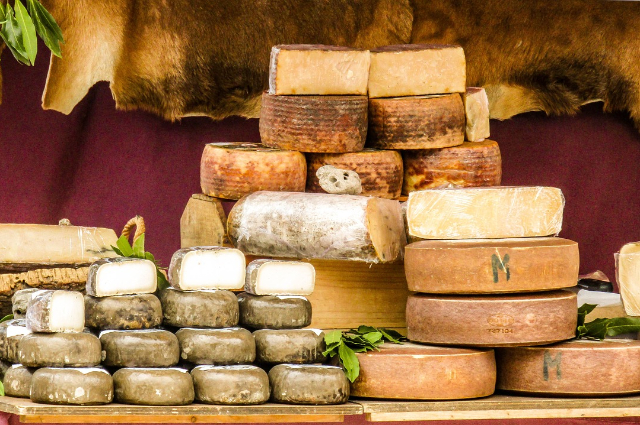
If you're a cheese lover, you probably already know and enjoy the abundance of varieties. Most grocery stores offer dozens of varieties, from Cheddar to Emmental, Gouda, Havarti, and many more. But even specialty cheese shops, which carry hundreds of varieties, can't show the full picture. More than 1,800 varieties can be found worldwide. .
You can search for them in databases by country of origin, the milk used to make them, or even the texture of the finished product.
6. There are about 7,500 varieties of apples.

Google "best apples for pie," and you'll find countless articles offering dozens of different options. This has likely been an ongoing debate since apple pie was invented. There are countless options, chosen by people for various reasons, from sweetness to tartness, firmness, and more. But in all these articles, you'll likely find, at most, a few dozen different apples. And that's a bit odd, considering there are actually 7,500 different apple varieties. .
Of course, most of us know no more than a couple dozen, which is why the selection is so limited, even though 2,500 of these numerous apples are grown in the US alone. Consumers are simply accustomed to a limited selection, and introducing new varieties usually takes time and some marketing before people get on board. Furthermore, while America grows a huge variety of apples, many are grown only in limited areas or on small farms, so the entire supply of apples can be extremely limited. Without large farms providing space for new crops, most people will likely never have the chance to try them.
5. There are more than 30 types of screwdrivers

Have you ever been working on a project with someone and they asked you for a screwdriver? And then you have to ask, what type of screwdriver are they talking about? Some are pretty well known, like Phillips, slot, or Robertson. But what do you call a six-pointed star? That's some kind of Torx, though there are subtypes. And those hourglass-shaped ones? That's a clutch.
There are over 30 types of screws and drives in common use, although some are obviously more popular than others. Wikipedia has a page that lists most of them if you ever come across one and don't know what you're looking at.
Why are there so many types? Some are proprietary. Some, like Torx, prevent the cam from falling out. Tri-wing allows you to apply more force. Phillips itself was designed to handle screwdrivers better than previous types.
4. There are more than 350 forms of pasta
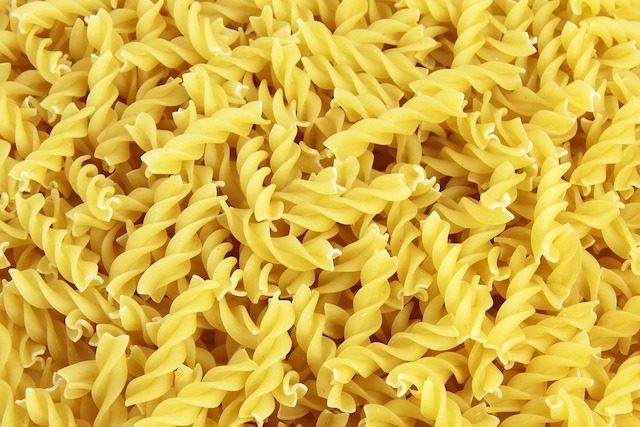
Americans eat nearly 6 billion pounds of pasta a year. It's safe to say it's a popular food item. And one of the fun things about pasta is that you can change the shape and change the dish, even though the ingredients are technically the same. Certain pasta shapes are better suited to certain fillings, sauces, or dishes. Some are just plain fun to eat.
Spaghetti and macaroni are two extremely popular varieties, along with penne, rigatoni, fettuccine, and many others. How many, exactly? Over 350. You can find many of them in online databases, but they're still not exhaustive. Even the Wikipedia page on pasta doesn't cover that many, though it lists more than most.
Part of the problem is that many pasta shapes are variations on previously existing ones—for example, spaghettini is simply a thinner version of spaghetti. And other types are given different names from region to region, so keeping track can be difficult. Not to mention new pasta shapes, like those you might find in jars of Scooby-Doo pasta at the grocery store.
3. There are 15 types of electrical outlets in the world.

One thing people will always tell you if you're planning to travel internationally is to buy an adapter for your electronics, because plugs in Europe, Asia, or wherever you are are different. And the way it's explained makes it sound like there are only two types of plugs in the world, and that's it. But in reality, there are about 15 types of electrical outlets in common use around the world, depending not only on where you are but also on what they're used for.
In America alone, there are several types, even if we don't always think about it. There's Type A with the standard two prongs, and Type B with a third prong for the ground wire. Both are typically 120V. You'll also find larger outlets with 3 and 4 prongs for appliances like clothes dryers.
When you go international, you get Type C, which is ungrounded and found in Europe, Asia, and South America and is rated for up to 240V. Type D is from India, H is from Israel, and Type L is from Italy and Chile.
2. There are 19 types of ice

If someone asked you what kind of ice you like, you'd likely distinguish between cubed and crushed. But science recognizes 19 types of ice. The 19th type was created in a lab back in 2021. These tetrahedral crystals require ultra-low temperatures and very high pressure.
Various other types of ice exist in conditions you wouldn't find outdoors on a winter day. They can be produced in laboratories or discovered in space on other worlds under extreme conditions. They require extreme temperatures and pressures, and they form distinct crystalline structures that distinguish them from the ice we know here on Earth. Ice 17, for example, can be produced at room temperature by forcing water between 1-nanometer-thick layers of graphene under pressure of approximately 10,000 atmospheres.
1. There are several types of twins

Chances are, most people either know twins or have at least encountered twins at some point in their lives. Fraternal and identical twins exist, and many parents like to make a big deal out of dressing them alike or giving them the same name when they can, at least when it comes to identical twins.
Fraternal twins are also known as dizygotic twins. This occurs when two eggs are released and fertilized at the same time, resulting in two babies growing together in the womb. Identical twins are monozygotic twins. This occurs when a single fertilized egg divides into two, essentially creating the same genetically identical individual growing up in the womb twice.
However, these two types of twins are not the only ones, and it has been suggested that a number of other types of twins may also occur.
Mirror-image twins occur when the egg splits late, more than a week after conception. The twins will develop as mirror images, so instead of being identical at 100%, they will be identical but opposite. Therefore, a mole on the left cheek of one twin will be on the right cheek of the other.
Semi-identical twins are so rare that only two cases have been identified in the past where one egg is fertilized by two sperm. Technically, this should be impossible. But it isn't. After fertilization, the egg separates its three sets of genetic material into two subsets, each developing separately. The result in one case was twins, a boy and a girl, who developed as identical twins but shared genetic material only at 84%.
Superfetation is another condition in which something technically impossible still occurs. In this case, a woman becomes pregnant, and then becomes pregnant again. Your body is supposed to prevent this naturally, but in some cases, when assisted pregnancy was used to increase the chances of pregnancy, the body's natural defenses were bypassed, resulting in a twin pregnancy. Technically, the babies aren't twins, but pregnancy, for obvious reasons, works much the same way.
Superfertility occurs when twins are born to two different fathers. This is more common in animals, but can also occur in humans if a woman releases two eggs within a short period of time and has sex with two different men to impregnate both during the same cycle. This can result in the twins appearing significantly different.
In addition, other potential twin types have been proposed.