








Sometimes it's hard to find uniqueness in the world. Millions of people probably have the same hairstyle as you, or like the same movies, or eat the same favorite foods. The animal kingdom is no different. But for every trait or characteristic, there will always be one thing, one creature, that first exhibited or utilized it. And there are some other characteristics that are so unique that only one living creature can lay claim to them.
10. A supposedly extinct rodent appeared to take a photo, then disappeared again.
The Colombian red-crested tree rat is quite cute for a jungle rat, but few people can confirm this in real life. This animal was first discovered in 1898 and wasn't seen again until 1913. That was also the last time anyone saw it for almost a century.
After nearly a hundred years, it seemed the rat had likely become extinct, and it was presumed extinct. Researchers searching for specimens of this creature had little luck finding any evidence.
In 2011, a pair of volunteers were photographing wildlife when a rat suddenly appeared and remained in sight for two hours, allowing them to photograph it before it disappeared back into the forest. This even allowed them to get close enough to capture detailed, close-up images. It hasn't been seen since.
9. The walnut has a movable anus.
The sea nut, also known as the wart comb jelly, is an animal that seems specifically designed to be laughed at by immature people. This small, translucent, and extremely rare species of jellyfish has the only known example in nature of what scientists have dubbed a "transient anus." This means exactly what it sounds like: the animal has a vagrant anus.
Because waste accumulates inside a walnut's body, it must be eliminated, just like any other animal. But unlike the rest of us, a walnut doesn't have a hole for this. Instead, the pressure pushes the waste anywhere—literally anywhere on the creature's body—and then forces it out, like poking a finger into plastic wrap. Once the waste is expelled, the hole closes, and the next time it's expelled, it'll likely pop out somewhere else.
8. A troop of baboons in Kenya became peaceful and taught others to do the same.

In the primate world, baboons aren't usually considered the most cold-blooded animals. They have a reputation for being aggressive. And that's precisely why this group of animals made international news back in the 1980s. Not for their aggression, but for the way they managed to reverse their behavior.
A severe tuberculosis outbreak struck a baboon troop in Kenya. The disease's primary victims were the most aggressive males—the ones most prone to violence and aggression, the ones we humans might call alphas. There were other males in the troop, but they weren't as strong and therefore less aggressive. So, a funny thing happened: the violent ones died out. The remaining females, young baboons, and gentle, docile males simply continued their pacifist troop.
Instead of a new, aggressive leader taking control, the remaining baboons were generally kind and caring toward each other. Grooming prevailed over violent attacks. Even more strikingly, while scientists studied the troop for another 20 years, even when the pacifist males died out and new males either became more dominant or even joined them from other troops, the behavior persisted. The troop remained generally calm, passive, and caring toward its members.
The researchers agreed that the group should be able to teach outsiders this kinder way of life when they joined, although they didn't know how to do this.
7. Sea sponges can recover after being destroyed
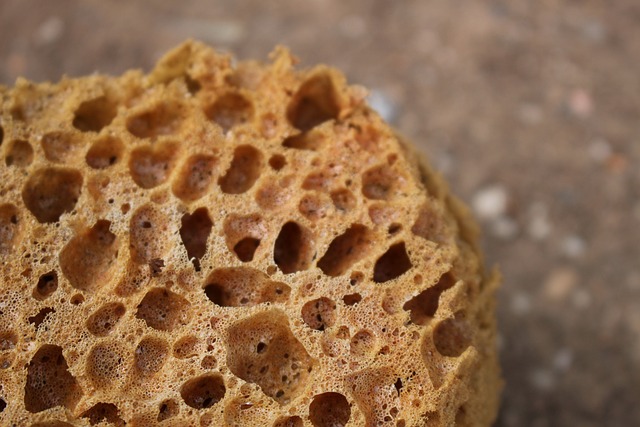
Some things are true for most living things. Most of us enjoy food, water, and air, even if we extract them from water to survive. Not so many things like fire. And most of us don't like being confined to individual cells because it's truly uncomfortable. However, if you're a sponge, at least you can overcome this. No other organism can.
The sponges can be taken apart down to individual cells, and over time they will reassemble into a single organism, like a simple version of the T-1000 from Terminator 2 .
You can even watch a time-lapse video of sponges in laboratories being strained and pulled apart. Their cells will recombine and form new sponges that can continue to live their lives.
6. The fish parasite doesn't need oxygen at all.
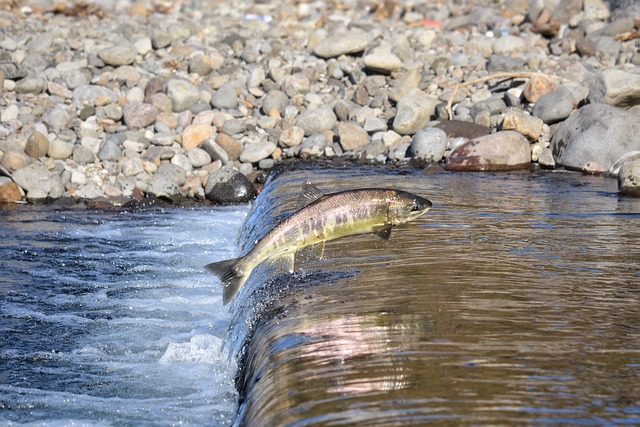
In the last post, we mentioned that most living organisms thrive on oxygen. Even sea creatures use gills or other means to extract oxygen from water to sustain their lives. But a parasite known asHenneguya salminicola, The rhinoceros is distinguished by its complete lack of oxygen requirements. Scientists have discovered that it is the only living animal that cannot breathe oxygen and therefore has no need for this element.
The parasite infects salmon and trout, causing a condition called tapioca disease. The parasites form white nodules on the fish's flesh. They are very small—only 10 cells make up one parasite, smaller than most cells in the human body. They lack mitochondria, so they don't convert sugar and oxygen into energy. Scientists aren't sure what powers the parasite's cells, though they suspect they steal some of their hosts' energy.
5. Praying mantises are the only creatures with one ear.

In the insect world, praying mantises stand out as some of the coolest creatures on Earth, especially orchid mantises. And the female mantis's penchant for eating the males' heads after mating, and sometimes even during it, also captures the imagination of many. While interesting, it's not technically unique. Many spiders also eat their partners. But praying mantises have one unique claim to fame: the cyclops ear.
For a long time, it was believed that the praying mantis was deaf because it had no ears. But scientists were looking in the wrong place. The only ear capable of hearing the ultrasonic calls of bats is located inside the praying mantis's thorax, smack dab in the middle of its chest. There's only one ear, and that seems to be all the insect needs, given its central location.
Praying mantises' hearing is so good that they can detect a pursuing bat in mid-air and bank, then dive like a fighter jet straight to the ground, gaining speed as they do so to avoid the predator.
4. A species of deep-sea snail makes armor out of iron.
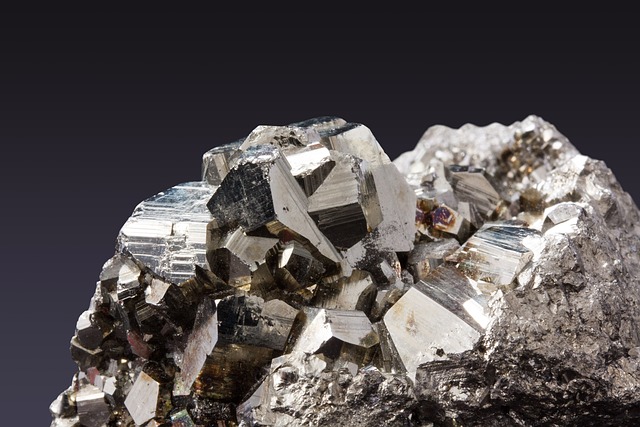
There are a few animals in the world that we typically think of as armored. Turtles, armadillos, crabs, and snails usually come to mind. But these, of course, aren't armor in the human sense, but simply a kind of shell or carapace, strong and durable, providing a certain degree of protection. With the possible exception of one species of snail. Scaly snails use actual iron to make their shells, and they're the only animals to do so.
The snails live near thermal vents in the Indian Ocean. The water temperature around these vents reaches 400 degrees Celsius, four times hotter than boiling water. They use the minerals emitted from these vents to form their shells. While some use iron sulfide, others use pyrite, fool's gold, and gregite. From this material, they form their shells, as well as the plates that cover their soft feet.
Common snails have a two-layer shell. One is a calcium carbonate inner layer that helps dissipate heat. These iron snails have this. The next layer, or outer shell, is more durable, helping absorb damage and protect the snail from predators.
These deep-sea snails have a third layer, and this is where metal comes in. Iron or other elements form a coating of nanoparticles on the shell. If a predator tries to crush the snail, these particles help absorb damage and also dull the attacker's claws or teeth. It's so effective that the military is even studying how it works in hopes of creating new types of armor.
3. One species of skink has lime green insides.
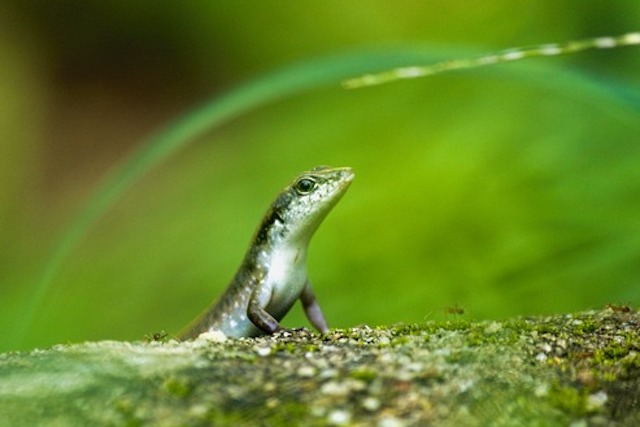
For a character like Spock from«Star Trek, To make him seem a little more alien than just a guy with pointy ears, the producers gave him green blood. In older science fiction, you'll find few things more unusual than the color green. After all, little green men were a cliché. They're not something we're used to in life, except for plants and lizards on Earth. But when lizards on Earth turn green, some of them go all out. Like the skink, for example. Skinks are so green that they're the only animals in the world that also turn green on the inside.
The inside of a certain species of skinks of the genusPrasinohaema Bright green. Bright green blood, bright green organs, even bright green bones. It's unlike anything else you'll find in nature. It comes from a compound called biliverdin, which is highly toxic to most life forms. It's typically a waste product from the breakdown of red blood cells. Humans produce something similar, called bilirubin. If we can't eliminate it, it leads to jaundice and yellowing of the skin.
The compound isn't actually a defense mechanism, as birds still eat lizards. And it's not camouflage, as not all lizards are green on the outside. Therefore, researchers speculate, though this hasn't been proven, that it might protect against parasites.
2. The Pyrenean ibex is the only species to have become extinct twice.
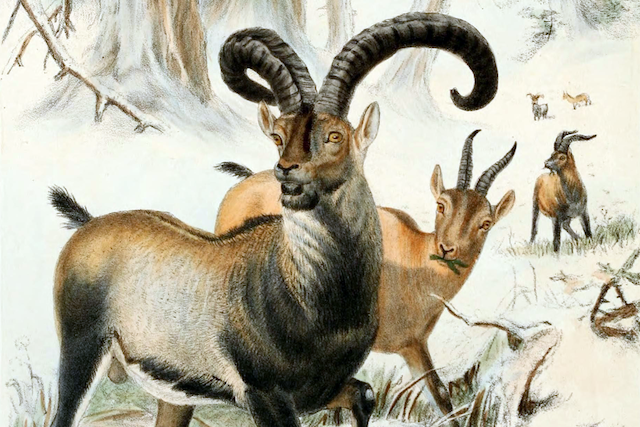
Is the Pyrenean ibex the unluckiest animal in history? Perhaps. Sure, there are many creatures that could lay claim to that title, but luck is a somewhat diffuse and malleable attribute, so by some standards, you could definitely say nothing else is unlucky. So how do we measure luck? In this case, we do it by considering death. The Pyrenean ibex has suffered more deaths than any other species in history because it is the only species to have experienced total extinction not once, but twice.
As their name suggests, these antelope-like animals once called the Pyrenees Mountains home. Their numbers dwindled throughout the 20th century, and by 1997, only one remained. That individual's body was discovered in 2000, crushed by a fallen tree. Thus, the millennium began with the first extinction of the Pyrenean ibex.
The last ibex's genetic material was collected long before her death. A team of scientists began cloning her and inserted her genetic material into the egg of a goat from which their own had been removed. They created 57 embryos and implanted them into another species of ibex. Only seven of the animals became pregnant, and only one of them was able to give birth.
In 2003, the Pyrenean ibex's decline ended when a new cub was born. However, the celebration was short-lived, as the cub suffered from a severe respiratory illness. It survived for about 10 minutes, and then the species went extinct again.
1. Hagfish are the only animals that have a skull but no spines.
Hagfish have a somewhat infamous reputation online due to their unusually phallic appearance and the fact that they produce copious amounts of incredibly thick mucus as a defense mechanism. Numerous hagfish can turn vast swaths of ocean water into nothing more than a salty jelly mold, ensnaring and potentially suffocating predators.
While these are unique features, they're not the most unusual about these creatures. Hagfish are the only animals with a skull in their head but no vertebral column connected to it. Without vertebrae, they technically can't be considered vertebrates. They also lack jaws, and their skeleton is made of cartilage, not bone.