








Nature constantly surprises us in countless ways. Just when we think we know it all, it delivers an unexpected surprise that forces us to come to terms with it. From ultraviolet vision to absolute immortality, these 11 animals prove that nature is the ultimate innovator and engineer. Read on to learn more about these 11 animals with extraordinary abilities you wish you had.
1. The axolotl, an aquatic salamander, lives in Lake Xochimilco in the Valley of Mexico. Named after the Aztec god Xolotl, this magnificent beast possesses superb regenerative abilities. The axolotl can regenerate any part of its body, including its brain, eyes, spinal cord, limbs, heart, and more, within a matter of months.
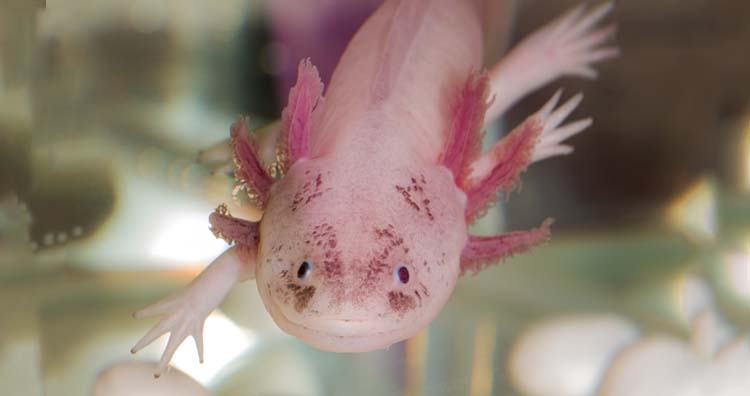
Once, when the Aztec god Xolotl tried to escape a sacrifice, he transformed himself into an axolotl. This aquatic salamander lives underwater and has one of the most complex genomes, comprising approximately 32 billion base pairs.
But that's not the most incredible thing about this organism. The axolotl has an astonishing ability to regenerate the brain, spinal cord, eyes, limbs, heart, and even testicles. It does this by converting cells around the damaged area into stem cells. These stem cells then develop into bones, skin, and veins, recreating the lost part. (source)
2. Numerous centipede Harpaphe haydeniana (also known as the "cyanide centipede"), found in large numbers along the trails of the Pacific Northwest, releases hydrogen cyanide as a defense mechanism when threatened. This substance is toxic and lethal to birds and rodents.

These flat-backed millipedes, belonging to a group of arthropods that evolved over millennia ago, are widespread in the forests of the Pacific coast of North America. Easily recognizable by their dark yellow keels, the almond-scented millipedes can reach lengths of up to two inches.
When threatened, the centipede curls up into a spiral and releases a chemical called hydrogen cyanide (hence its other name, the "cyanide centipede"), which is toxic and deadly to birds and rodents.
The centipede synthesizes mandelonitrile and stores it in cyanogenic glands. When threatened, the molecule breaks down, releasing hydrogen cyanide gas, which is then immediately released. However, the poison has absolutely no effect on the centipede. Not only are they immune to it, but they are also capable of converting it into harmless chemicals. (1, 2, 3)
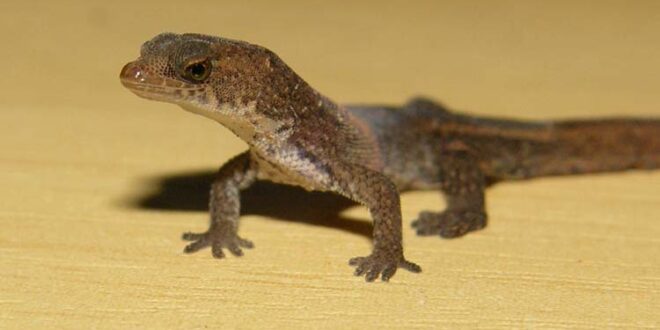
3. The Brazilian dwarf gecko is only 24 millimeters long, so small it can drown during a heavy rainstorm. But it has found a way to stay afloat and literally walk on water. This tiny lizard has "superhydrophobic" skin that repels water, which is what enables it to do this.

The Brazilian dwarf gecko, native to the tropical forests of Brazil, is one of the smallest vertebrates on Earth. At just 24 millimeters (0.94 inches) long, it fits easily on the tip of a finger. Yet this tiny creature is blessed with an amazing ability from Mother Nature.
Thanks to their "superhydrophobic" skin, dwarf geckos can repel water to stay afloat. This ability, combined with surface tension and powerful foot strikes, allows geckos to sprint through water at speeds of one meter per second. (1, 2, 3)
4. Cardinalfish sometimes spit fire to hide from predators. This phenomenon occurs when the fish eats a group of ostracods, which emit bioluminescence to protect themselves from being eaten.
How often does it happen that two completely different organisms, fleeing predators, produce a magnificent natural phenomenon? The answer: extremely rare. Cardinal fish prey on ostracods—tiny ocean creatures that emit an intense bioluminescent glow when disturbed.
The light effect is caused by a combination of two chemicals, luciferin and luciferase, secreted by ostracods. When a cardinalfish swallows them, they emit this light, causing the fish to spit them out to escape. This creates the effect of the cardinalfish spitting fire. (1, 2)
5. Mimic octopuses take the art of camouflage to a whole new level. Instead of simply mimicking their surroundings, these creatures can mimic the behavior and appearance of other marine organisms, such as lionfish, jellyfish, rays, and many others.
Found in the shallow, sandy waters of the Indo-Pacific, the mimic octopus takes its mastery of camouflage to a whole new level. This approximately 60-centimeter-long cephalopod was discovered in 1998 on the island of Sulawesi in Indonesia.
While all octopuses use their chromatophores to blend into the background, these newly discovered cephalopods are capable of mimicking more than 15 different species. This is achieved thanks to their lack of a skeleton.
For example, when a mimic octopus is attacked by a damafish, it burrows into the seabed, waving only two tentacles in opposite directions, mimicking the movements of a sea snake, the damafish's natural predator. They can also mimic the coloration and body contours of a wide range of animals, including lionfish, jellyfish, mantis shrimp, sea anemones, shrimp, crabs, and others. (1, 2, 3)