








The Babylonian Empire, one of the most influential and enduring civilizations of the ancient world, flourished in the region that is now part of modern-day Iraq. Renowned for its rich history, innovative achievements, and legendary rulers, Babylon left a lasting legacy that continues to captivate historians and archaeologists today. At the height of its power, the empire was a center of trade, culture, and scientific advancement, laying the foundation for future civilizations. From the Hanging Gardens to the Code of Hammurabi, the Babylonian Empire's contributions to law, architecture, and society are unparalleled. Here are 22 fascinating and informative facts about the Babylonian Empire that highlight its significance in human history.
- The Babylonian Empire reached its peak during the reign of King Nebuchadnezzar II, who ruled from 605 to 562 BC.
- Babylon, the capital of the empire, was located on the banks of the Euphrates River and was famous for its impressive walls and buildings.
- The Hanging Gardens of Babylon, one of the Seven Wonders of the Ancient World, are believed to have been built by Nebuchadnezzar II for his wife Amytis of Media.
- The Babylonians developed one of the oldest writing systems, cuneiform, which they carved on clay tablets.
- They made significant advances in mathematics, including the development of the sexagesimal (base 60) number system, which gives 60 minutes in an hour and 360 degrees in a circle.
- The Code of Hammurabi, one of the oldest deciphered texts of significant length in the world, was a set of laws established by King Hammurabi to regulate Babylonian society.
- The Ishtar Gate, one of the eight gates of the inner city of Babylon, was built around 575 BC and dedicated to the goddess Ishtar.
- The Babylonians were renowned for their advances in astronomy; they could predict lunar eclipses and identify planets visible to the naked eye.
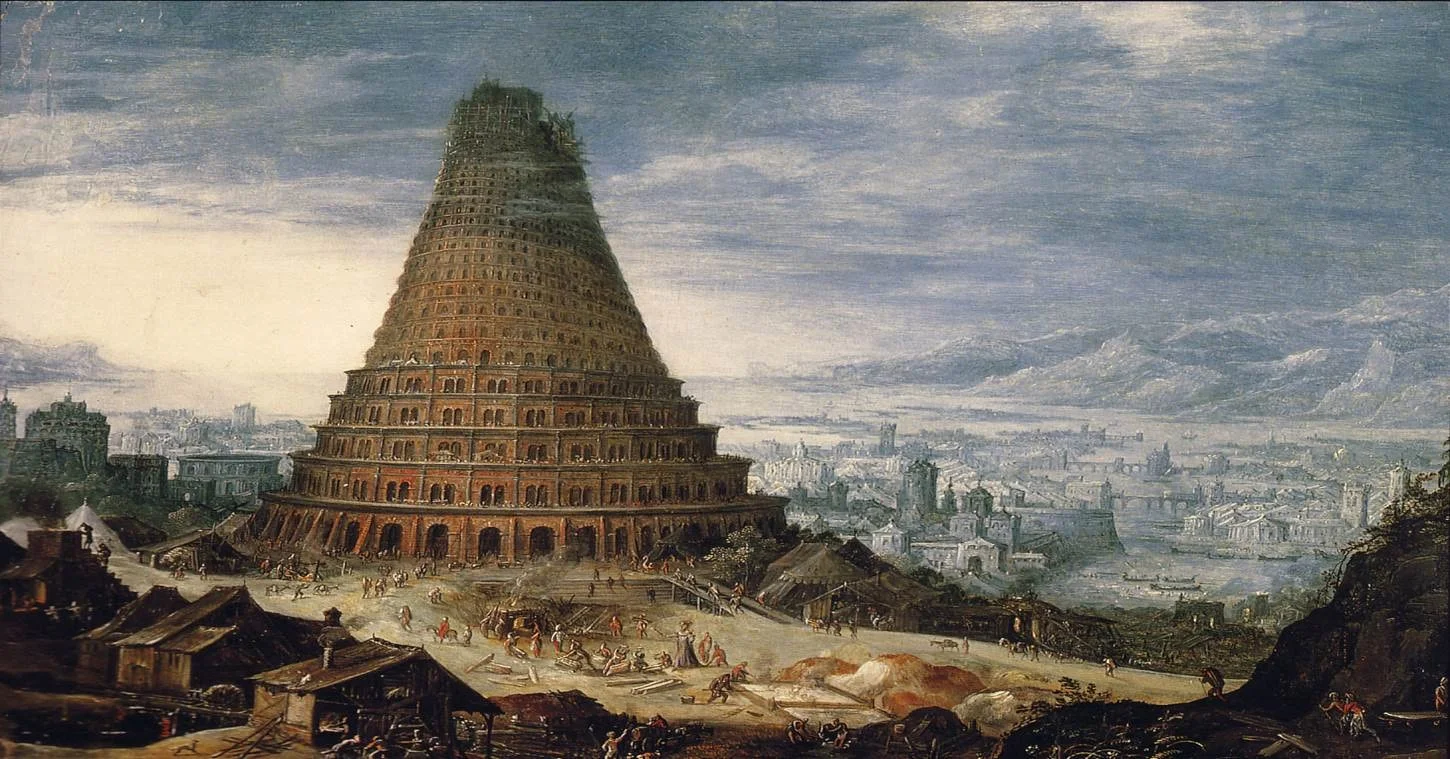
- The empire was famous for its ziggurats – massive terraced structures that served as temples to the gods.
- The Babylonian calendar was based on the lunar cycle and is considered the predecessor of the Hebrew and Greek calendars.
- Due to its position as a key trading centre between East and West, the empire was a melting pot of cultures.
- Babylonian religion was polytheistic, with a pantheon of gods, each of whom played a role in the natural world and society.
- The Epic of Gilgamesh, one of the oldest literary works, originated in ancient Mesopotamia and was passed down from generation to generation through the Babylonian oral tradition.
- The fall of the Babylonian Empire occurred in 539 BC when it was conquered by the Persian king Cyrus the Great.
- «The Prophecy of Marduk is a Babylonian story that recounts the adventures of a statue of the god Marduk and reflects the political situation in Mesopotamia at the time.
- Babylonian society was divided into several classes, from the ruling class and priests to merchants, artisans and slaves.
- The Babylonians were pioneers in the use of irrigation to improve agriculture in the arid region of Mesopotamia.
- Some scholars believe that the Tower of Babel described in the Bible was modeled after the real ziggurat in Babylon.
- Nebuchadnezzar II is credited with building the Etemenanki, a ziggurat dedicated to Marduk that may have served as the basis for the story of the Tower of Babel.
- The Babylonian Empire played a decisive role in the development of trade, creating trade routes that connected it with distant lands.
- In 2019, the city of Babylon was declared a UNESCO World Heritage Site in recognition of its outstanding universal value.
- Despite its ancient origins, Babylon's legacy continues to be felt in modern law, language, architecture, and astronomy.
The Babylonian Empire's contribution to civilization is vast and enduring. From legal codes and architectural marvels to advances in mathematics and astronomy, Babylon's influence is still felt today. As a center of learning, culture, and power, Babylon not only dominated the ancient world but also laid the foundations for future generations. Its legacy serves as a reminder of humanity's capacity for greatness and the enduring nature of our collective history.