








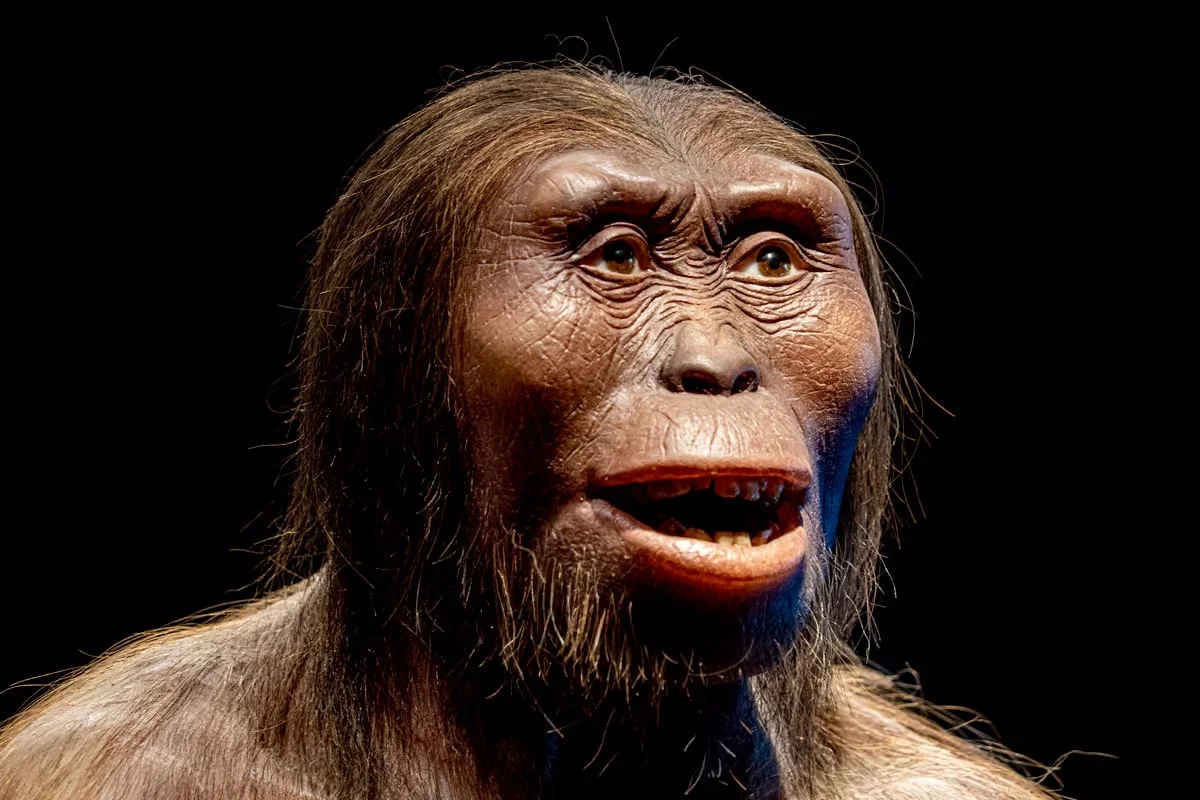
Lucy, a member of Australopithecus afarensis, remains one of the most famous and significant fossil finds in the study of human evolution. Discovered in 1974 in the Afar region of Ethiopia by paleoanthropologist Donald Johanson and his team, Lucy's nearly 40%-preserved skeletal fragment filled a crucial gap in our understanding of human ancestors. At over 3 million years old, Lucy provided unprecedented insights into the appearance, behavior, and mobility of early hominins. Her discovery was a watershed moment in paleoanthropology, challenging previous ideas about the timeline and course of human evolution. Here are 24 fascinating and informative facts about Lucy (Australopithecine afarensis) that highlight her importance and legacy.
- Lucy's scientific name is Australopithecus afarensis, and she lived approximately 3.2 million years ago.
- It was discovered on November 24, 1974 in the Afar Triangle of Ethiopia.
- Lucy's skeleton is preserved at approximately 40%, making her one of the most complete ancient hominin specimens ever found.
- The nickname "Lucy" was inspired by the Beatles song "Lucy in the Sky with Diamonds," which was playing in the camp on the night she was found.
- Lucy was approximately 1.1 meters tall and weighed around 29 kilograms, indicating small stature.
- Analysis of her bones suggests that Lucy was a young woman, possibly in her 20s, at the time of her death.
- Lucy's pelvic and leg bones indicate that she was upright and could walk, an important discovery for understanding human evolution.
- Although Lucy walked on two legs, the characteristics of her hands and fingers suggest that she could also climb trees.
- Lucy's species, Australopithecus afarensis, likely had both ape-like and human-like characteristics.
- Lucy's discovery has led to a rethinking of the lifestyles of early hominins, shifting the focus to a more complex understanding of the behavior and habitat of early humans.
- Lucy's skull was small, similar to that of a chimpanzee, indicating a small brain size.
- CT scans of Lucy's inner ear bones suggest that members of her species had an upright posture similar to that of modern humans.
- More than 300 fragments of Australopithecus afarensis remains were discovered at the site where Lucy's remains were found in Hadar.
- Lucy's knee joint clearly demonstrates her ability to walk upright, which is known as bipedalism.
- She had a valgus knee, meaning her femur was tilted inward, like a human's, which is a key feature of upright walking.
- The shape of Lucy's teeth suggests that her diet consisted primarily of plant foods.
- In 2016, a study based on an analysis of Lucy's bone fractures suggested she may have died as a result of a fall from a tree.
- Lucy's discovery played a crucial role in confirming that Africa is the cradle of humanity.
- Lucy's remains were found to contain no tools or evidence of tool use, suggesting that Australopithecus afarensis may not have used tools in large quantities.
- Lucy's discovery makes the Afar region of Ethiopia one of the most studied areas for early human evolution.
- Since her discovery, Lucy has traveled to museums around the world, allowing the public to experience early human history.
- Studying Lucy and her species has helped scientists understand the evolutionary transition from human-like creatures to bipedal humans.
- Australopithecus afarensis, the species described by Lucy, lived in both forest and grassland environments, as evidenced by the diversity of fossils found in similar strata.
- Lucy's discovery inspired generations of paleoanthropologists to continue their research into human origins.
Lucy's discovery became a cornerstone in the field of paleoanthropology, providing invaluable insights into the lives of our earliest ancestors. Her well-preserved skeleton allowed scientists to paint a clearer picture of early human evolution, revealing the complexities and nuances of our journey over millions of years. Lucy symbolizes our quest to understand our origins, bridging the gap between our ancient past and present. As research continues, Lucy will undoubtedly remain at the center of debates about where we come from and what it means to be human.