








Many people like to think that money can't buy happiness, or that money is the root of all evil, and so on and so forth, but we all also recognize that in practice, most of us need it and would like to have more of it. Money makes life comfortable and secure. You can have what you need, and then what you want. It's a good feeling. So many of us really have a hard time grasping the idea of giving up money, especially large amounts of money. But in the past, some people have given up huge, huge sums.
10. Bill Watterson refused to issue a license to Calvin and Hobbes
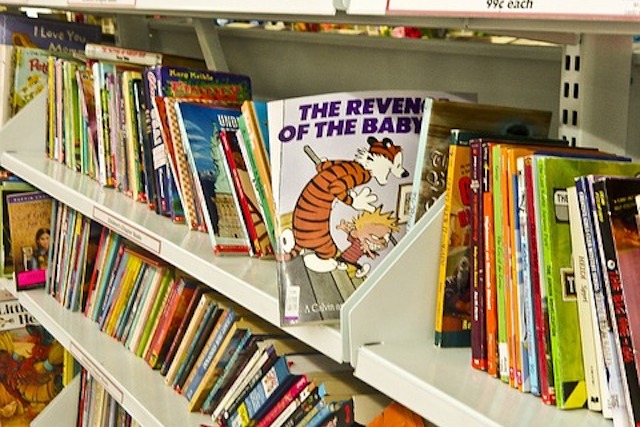
The comic book world has seen several standout characters over the years—Garfield and Peanuts have been around for decades. But Calvin and Hobbes rose to prominence in the mid-1980s and, for a decade, was one of the most popular and beloved strips ever created. Then its creator, Bill Watterson, decided to pack it up after a decade in 1995. However, the legacy lives on.
Watterson remained out of the spotlight for much of his career and very clearly refused to license or sell his creations. The money he could have earned is staggering. Estimates are from 300 to 400 million dollars . In fact, Watterson fought hard with the publishers , who wanted to sell stripe. This means that all those stickers you see on the back of trucks with images of Calvin peeing on another automaker's logo are not official.
9. Dave Chappelle turned down $50 million
Few comedians will ever be bigger than Dave Chappelle, and as controversial as he was, there's no denying he had a huge impact on the world of stand-up comedy, and at its peak, Chappelle's Show was incredibly popular. He was so popular that Comedy Central offered him 50 million dollars to continue the show beyond its second season in a deal that was unheard of in the comedy world. By the way , some sources claim that it was 55 million dollars .
Regardless of the dollar amount, Chappelle never closed the deal. Instead, he went to South Africa for a few weeks and seemingly disappeared from the global radar. When he finally returned to the spotlight, he kept the reasons for his departure under wraps for a while, but admitted to Oprah Winfrey that he was under a lot of stress and worried that some of the comedies they were making were "socially irresponsible."«. »"In particular, he was concerned about one particular sketch that caused someone on the set laugh in a way that he felt reinforced the racial stereotypes he was trying to satirize, and perhaps fueled racism rather than satirized it.
8. Keanu Reeves turned down $11 million for «Speed 2»
Few actors have had a career like Keanu Reeves'. For years, Reeves was the butt of jokes, his performance mocked with knowing "wow" by people imitating his characters from "« Bill and Ted's Excellent Adventure» or «On the Crest of a Wave» , which seemed a little silly or wooden. But then he starred in films "Speed"« и «"Matrix"» and established himself as a true action hero, which he continued in films like John Wick. This, as well as stories of his kindness and generosity in real life made him a fan favorite all over the world.
It has long been rumored that Reeves donated 70% of his salary to «The Matrix» to the film crew, which is not true, but sounds plausible, considering he has a private foundation to help children's hospitals and cancer research. He also refused salaries of $11 million , when it was planned «Speed 2» , and instead decided to play Hamlet on stage in Winnipeg, Canada. His manager told him he simply didn't want to act. in two action films in a row . Because of this choice he got into blacklisted by FOX for a whole decade.
7. Gauthier decided not to monetize "someone I knew before"«

Gotye's 2011 song "Someone I Used to Know" became a huge hit. The singer won several Grammys, and the video gained more two billion views on YouTube, making it one of the most popular music videos of all time. Unsurprisingly, those video views generate a tidy sum of money, because that's how YouTube works. Or at least, that's if you've set up YouTube for work, which Gotye never did.
The singer made it clear that he was not interested in selling his music, so he did not monetize his channel. As a result, he is estimated to have given up in 2017. near 10 million dollars. He also does not sell his song for use in films, although he has apparently been willing to allow some independent productions to use his music for free.
6. Weird Al Turned Down $5 Million in Beer Ads

«"Weird Al" Yankovic has been parodying popular music since the early 1980s, and during this time many of his albums became gold and platinum . He is now something of a cultural icon and continues to enjoy fame as a touring musician, with a couple of films under his belt.
Al said he was offered 5 million dollars for a beer commercial back in the '80s, when his star was really rising, but he turned it down. In other interviews, he continued to explain that he refused do several things on principle, despite the money involved.
Regarding the beer commercials, Al explained that he turned them down because he didn't think they were appropriate. Since most of his fan base is children, he felt selling beer was a betrayal of that idea. And it's true that much of his comedy, no matter how juvenile, is also family-friendly. He doesn't even swear. It's not that turning down the money was easy; mind you, he said it was a painful choice, but it was one he ultimately felt he had to make.
5. Will Ferrell was offered $29 million for the sequel. «"Elf"» .
Having achieved fame in Saturday Night Live« , Will Ferrell has starred in a number of major comedy hits, each of which has garnered in rental more 100 million dollars . One of his biggest was a Christmas movie. «"Elf"» , which grossed $222 million worldwide. It's no surprise that the film has with a budget of $33 million a sequel appeared.
Despite the film's immense popularity, Ferrell turned down the sequel , which was supposed to make $29 million a day . The reason was a harsh indictment of the film as a whole, because although Ferrell was very diplomatic in his wording, he essentially said that if he made the film, he would have to promote it and tell people it was good, and he just didn't think the script was good. He also said that he wouldn't want to undo any good work, which he had done before, making a bad sequel, before admitting that one day he would make a completely bad sequel.
His co-star James Caan, who was on board, had a different version of what might have happened when he explained that Ferrell and the film's director (who you may remember was Jon Favreau) didn't get along, and Ferrell didn't want to work with him.
4. Google offered to buy Friendster for $30 million
Social media has more ups and downs than a roller coaster. Every TikTok is built on the ruins of MySpace; every Instagram on Google Plus. One relic of a bygone social media era was a site called Friendster.
In 2002, Google offered Friendster's founder30 million dollars . The site was only a year old, and it seemed like a great deal. But others warned him against it. Tech companies had a way of increasing their value, and some people had turned down millions in the past to make billions later.
The offer was rejected in an attempt to turn Friendster into something bigger and more valuable. No doubt, if you remember Friendster at all, you know that never happened. What's worse is the fact that the founder was offered $30 million in cash. He was offered $30 million in Google stock, which would be worth $100 million today. more than 1 billion dollars .
3. Vince Gilligan turned down $75 million for three more episodes of the series. «"Breaking Bad".
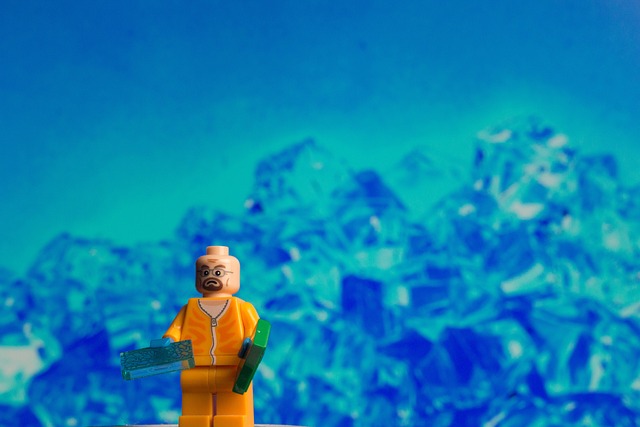
If you truly love a TV show, it's always disappointing to learn that it's coming to an end. It's safe to say that many people felt the same way when the hugely popular «"Breaking Bad"» , but perhaps no one suffered more than former Disney chairman Jeffrey Katzenberg.
In the show's final season, Katzenberg approached Vince Gilligan, the creator «"Breaking Bad »", with a proposal. Three additional episodes show by $25 million apiece , or a total of $75 million. This was approximately five to eight times more than the show was being produced for at the time.
The plan was to take each episode and break it into 5-10-minute chapters, then release each chapter for $1 to stream online. Gilligan said no, but Katzenberg was adamant that 10 million people would pay a dollar a day for 30 days if it worked. Keep in mind that Katzenberg was the man who founded Quibi, one of the biggest flops in recent history.
2. Jerry Seinfeld turned down $100 million
«Seinfeld» was one of the most popular sitcoms of all time. Rolling Stone puts him in 6th place of all the shows ever made. IGN ranked it at 10th place , and the Writers Guild of America put him on the West second place . The final episode became one of the most watched television shows of all time, looked 76.3 million man. And with numbers like that, it almost seems self-evident that someone wanted Jerry Seinfeld to return, even though the show was over.
The comedian was offered a 10th season «Seinfeld» , just one season in which he would leave with stunning 100 million dollars . But he said no.
It's worth noting that, apparently, thanks to syndication, Jerry Seinfeld and co-creator Larry David made money 400 million dollars on the show back in 2014, so maybe that $100 million wasn't as tempting as it seemed.
1. Latrell Sprewell turned down a $21 million offer

Latrell Sprewell was once a fairly well-known NBA player, a four-time All-Star, but will likely forever be known for his incredibly poor decision-making. In one instance, Golden Warriors coach P.J. Carlesimo told Sprewell to add a little mustard to a pass, meaning he should try harder, and Sprewell responded by choking the coach on the floor. He was suspended for a full year., 68 games and cost himself about $6 million. He later signed with the Knicks and was immediately fined $250,000 for showing up with a broken leg that he forgot to mention.
At the end of the 2004-05 season, after playing one season with the Minnesota Timberwolves, he was offered a three-year, $21 million contract to stay with the team, which was significantly less than what the Knicks were paying him. Sprewell declined the offer, saying, "« I need to feed my family. ”
You might assume this statement meant Sprewell expected more money. He and his agent rejected other offers, planning to hold off on negotiations until the last minute, when teams would be so desperate they'd make big offers. Only that never happened, and Sprewell never signed with anyone. He never played in the NBA again.
After losing his job, his partner sued him for $200 million. He was pursued for tax evasion and had his property seized.