








The most inevitable part of life is death. Despite this, science is getting closer and closer to ways to reverse death or simply ignore it entirely. It's not like we're actually creating zombies or resurrecting anyone, but you never know what the future holds.
10. Dead pigs had restored organ function
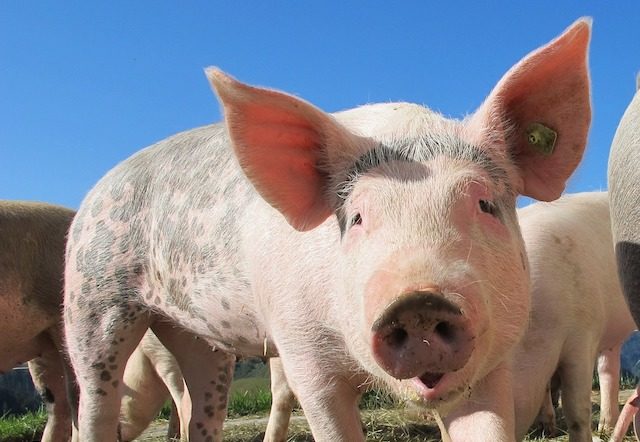
In early August 2023, news emerged that researchers had restored blood flow and cellular activity in the hearts and brains of pigs that had been dead for an hour. The researchers were quick to point out that this information had no clinical significance, and it wasn't as if the dead pig had gotten up and started running or anything like that. But it does have some significance in terms of what we think happens when something dies.
The idea of death brings finality. We've long believed that cardiac death is the final resting place for a living being. You can't change that. Or you couldn't until August 2023, when these scientists did just that. This means the body retains the potential for life long after what we traditionally considered irreversible death.
The future may not be about finding people who've been dead for an hour and reviving them, or perhaps it is. But there's also the potential for organ treatment and preservation, ensuring that life-saving organ transplants can be performed in greater numbers.
The study showed us that cells don't have to die immediately. Damage can indeed be reversed, and function can be restored. And we'll soon see what this means for an organ like the brain.
9. Brain resurrection experiment in India was blocked by the government
On the surface, the idea of reversing death can seem either incredibly cool or incredibly creepy. It's often filtered through our understanding of it through the lens of pop culture. Superhero-cool, zombie-creepy. But scientifically, it presents a staggering number of serious ethical issues that may be impossible to resolve. If you could bring a dead body back to life, would you have the right to do so? Should you?
These and other questions likely prompted the Indian government to put an end to experiments being conducted in the hopes of resurrecting the dead using stem cells, protein shakes and lasers, because why not?
A study conducted by BioQuark was planned for 2016 in Rudrapur, but regulators said it hadn't received approval, so nothing happened. The plan was to use stem cells, electrical stimulation, and proteins in brain-dead people to try to stimulate the growth of new neurons and restart the brain. It was literally an attempt to resurrect the dead. But it never got off the ground.
It's worth noting that many prominent scientists in the field spoke out against the experiments when they heard about them, calling them quackery and declaring that they had no scientific basis. At best, it seemed like a cruel experiment designed to give false hope to the living.
8. Russian scientists have resurrected a 30,000-year-old plant.

Of course, not everything science brings back from the dead has to be human. Russian scientists are at the forefront of this kind of research, as evidenced by the fact that they have resurrected 30,000-year-old fruits.
Thanks to the climate, Siberian permafrost preserves things perfectly in the frozen ground. So, 30,000 years ago, some squirrel or other creature buried the fruit. Silene stenophylla In the hopes that it would return and eat them later, I suppose. This never happened, and for 30,000 years the fruit remained frozen in the ground until it was dug up in modern times by explorers hunting for mammoth bones.
Scientists from the Institute of Cell Biophysics attempted to plant the seeds, but were unsuccessful. However, after collecting cells from the fruit, they were able to grow them in laboratory dishes, thus creating new plants. It is believed that the plant's natural sugars helped keep the cells frozen all these years.
The plants they grew were similar to modern versions, but not identical, with noticeable differences in things like petal shape.
7. The cryonics industry still preserves bodies.

Most of us have heard of cryogenics by now, even if it is only used in science fiction or as a joke, or both in the case of shows like «Futurama» , we at least understand the concept. A person is frozen at or just before death in the hope that medical science will advance sufficiently in the future to bring them back and cure whatever caused their death in the first place.
Cryonics is a real thing, at least the freezing part, and there are companies right now that will freeze and preserve you for the future. One company in China boasts a list of 10 frozen clients already in 2020, and many more plan to join their ranks when the time comes.
During the Covid-19 pandemic, patients who died from Covid-19 were preserved in cryonics facilities in the hope that the condition could be cured at some point in the future. However, the nature of the disease made preserving bodies difficult, and the journey of at least one patient sounds like the beginning of a horror movie.
The man's body lay on dry ice for 24 hours before being transported to a facility, where staff were unable to preserve it due to the contagious nature of the disease. Therefore, they wanted to use medical-grade antifreeze only on his head and brain, while the rest of his body was simply frozen in liquid nitrogen, a process that caused the ice crystals to tear his cells apart. Unfortunately, too much time had passed for even this to work.
The former president of the company that performed the freezing said they would likely be able to repair this damage in the future. He also noted that the brain could be fine, as it had been removed and stored separately.
6. Head transplant
Since 2015, neurosurgeon Sergio Canavero has been promising to perform the world's first head transplant. He claimed it would happen in 2017, and the procedure was performed using cadavers, leaving much to be desired in terms of confirming a successful outcome. Canavero reportedly briefly worked on a patient suffering from a debilitating disease that rendered his body useless, but it appears to have led to no success.
As of 2022, a head transplant has still not been performed, despite Canavero insisting he had overcome one of the major hurdles—how to connect two spinal cords together—back in 2016.
5. A company called Nectome wanted to create a backup copy of the human brain.
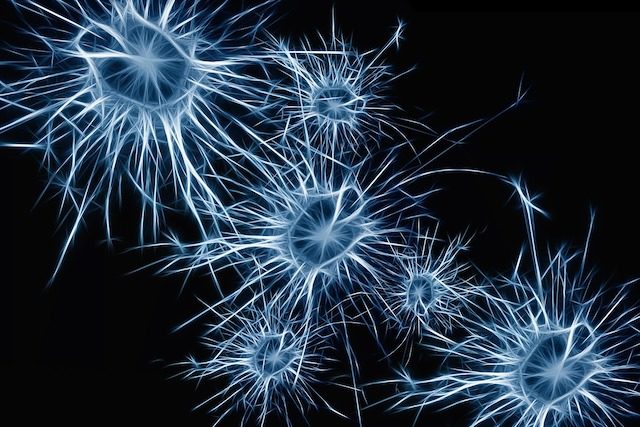
Not all afterlife has to be biological. The human brain is often compared to a computer, so it stands to reason that someone would consider transferring their mind to a computer, so they could act as a ghost in the machine.
A company called Nectome promised to create a backup copy of your mind for future restoration and even obtained a real human brain to test the process. They've since dropped many of their claims, pivoting their business model. They've shifted to saying they want to learn how to do it, not that they can actually do it, though several people apparently still paid for the service.
The science behind what they were doing was so shaky that MIT had to publicly distance itself from the company because the founder was one of their alumni, the professor was receiving money from a grant won by the company, and they didn't want to be accused of legitimizing the work.
4. Microscopic creature comes back to life after 24,000 years
We've already seen how the Russians resurrected a 30,000-year-old plant. But perhaps you're not impressed. It's just a plant. Big deal, right? How about a 24,000-year-old life form? They did that too. The bdelloid rotifer is a microscopic organism believed to be able to survive frozen for about ten years. That's impressive, but hardly anything compared to the truth.
Scientists found a specimen in the frozen Alayeza River in Russia, not only defrosted it but also forced it to reproduce. The discovery was significant because, despite being microscopic, it is a multicellular organism. If it can survive frozen for 24,000 years, perhaps other, more complex organisms can too.
3. Scientists from Pittsburgh revived dogs after three hours of death.

There's no better way to grab attention with a headline than to add the word "zombie," and that's what most media outlets did with the story of dogs being brought back from the dead in Pittsburgh back in 2005.
If you're a dog lover, you won't like this story, but that's exactly what the researchers did. They flushed living dogs of all their blood, replacing it with a cool saline solution mixed with oxygen and glucose. Their hearts stopped, as did brain activity, and the dogs were clinically dead. Three hours later, they reversed the process, returning the dogs' blood and then shocking them back to life.
Reports indicate that a small number of dogs suffered permanent damage, but the rest were fine. It was hoped that this experiment could one day be tested on humans, with the goal of using the process to save victims of severe blood loss.
2. Restoration of metabolic function in the pig brain
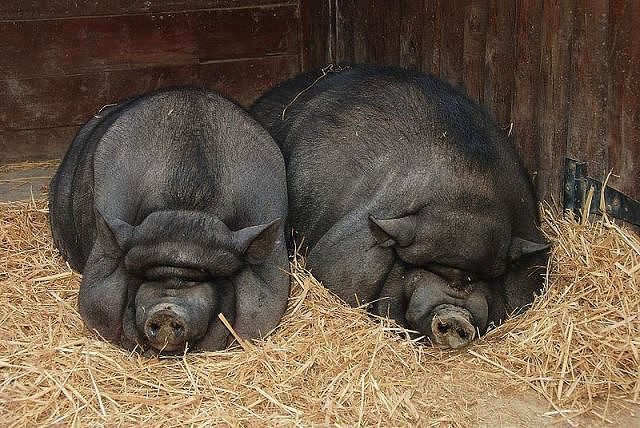
Let's return for a moment to where we started, with pigs coming back to life. The same team that successfully restored cell and organ function made another breakthrough a couple of years ago, which caused a media frenzy and sensational headlines about zombie pigs.
In 2019, Nenad Sestan of the Yale University School of Medicine and a team of other scientists conducted an experiment with pig brains obtained from a slaughterhouse. Using a machine of their own making, after much trial and error, they were able to preserve the full functionality of a dead pig's brain, maintaining the vital fluids flowing through it at the correct temperature and pressure, just as they would if the pig were still alive. They found that even outside the actual pig, they could maintain cell life. In fact, some cellular functions were restored.
Sestan took steps to prevent the neurons from firing again, fearing that their experiment might actually lead to some kind of consciousness. But during one test, they measured very low electrical activity, leading them to fear that they might have actually revived the brain hours after the animal's death—a literal existential nightmare.
While they seem confident that no real thoughts or consciousness were restored, they have proven that brain death is not a single event but a process, and with proper treatment it can be prevented or reversed.
1. The ReAnima project attempted to regenerate heart tissue using genetic manipulation.
Remember that Indian experiment that was supposed to stop brain death before the government shut it down? It was part of something called the ReAnima Project, and it wasn't their only foray into the world of undeath.
Funded by an 8 million euro grant from the European Union, ReAnima expanded its research in an attempt to reverse death. In India, they focused on stem cells, but studies showed that stem cells were not successful in regenerating human cardiac tissue. This means that if a heart attack damages or destroys your heart, stem cell treatment shows no sign of healing it. But this is a human heart.
There are animals in the world with remarkable regenerative abilities. Some species of fish and amphibians can regenerate damaged heart tissue. ReAnima is studying the nature of these regenerative abilities in the hopes of one day bridging the gap between these animals and humans. The process for how they will do this seems unclear, but their website certainly expresses confidence when they describe achieving these goals through such means as genetic manipulation.