








Despite their sluggish, backward territorial approach, the world's military machines are under constant pressure to stay ahead of the curve. If they don't, they lose wars. At least in theory. In practice, this isn't always the case. All ten of these weapons from the distant past are used on modern battlefields—sometimes even with triumph.
10. Club (1918)
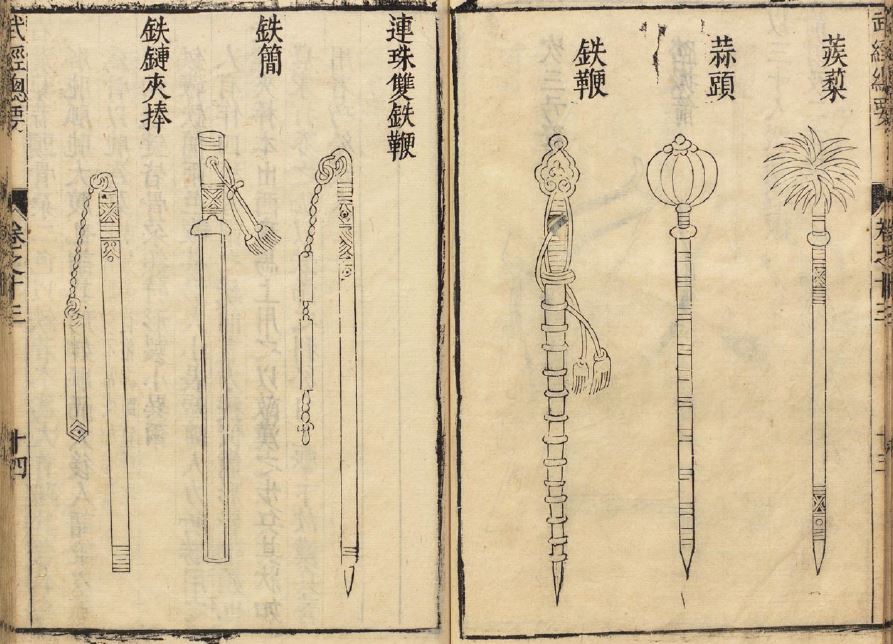
World War I, The so-called "Great War" introduced all manner of weapons for long-range combat—from tanks and submarines to machine guns and nerve gas. In practice, however, in the realities of trench warfare, soldiers on both sides improvised bladed weapons. They converted stakes into push knives, entrenching tools into battle axes, and anything that could be passed into clubs.
The clubs were particularly brutal. Some were simply large pieces of wood, while others were far more elaborate—for example, the German morning star, with ersatz wrist straps and deadly spikes on its head. The French version, which also doubled as a walking stick, was made of natural gnarled wood, a leather handle, lead weights, and iron spikes. Meanwhile, British clubs were often simpler. The knocker, for example, was a standard entrenching tool handle with a knurled metal head.
The effectiveness of this weapon for trench raiding soon led to standardization and mass production for official army issue.
9. Lance (1939)
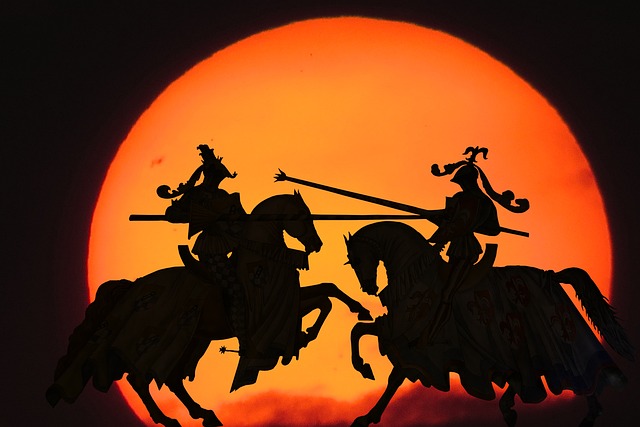
A symbolic return to the era of chivalry, duels between knights on horseback, the lance was used until World War II — at least according to legend. On September 1, 1939, as the story goes, veteran Polish Colonel Kazimierz Mastalerz and his cavalry saw a mass of German forces—much larger than their own, and supported by tanks—and realized they would need the element of surprise. Mastalerz decided to charge. And despite being mown down by machine guns, the mounted lancers managed to disperse the enemy.
In truth, this dramatic story was spread by Italian and German propagandists. Mastalerz and his cavalry did indeed attack the enemy, but not as naively as they remembered, and probably not with spears.
However, although Polish cavalry after 1937 typically used anti-tank rifles, lances were still part of their arsenal. The appeal of the lance, used at the commander's discretion, lay in its psychological impact on the enemy.
8. Brass Knuckles (1945)
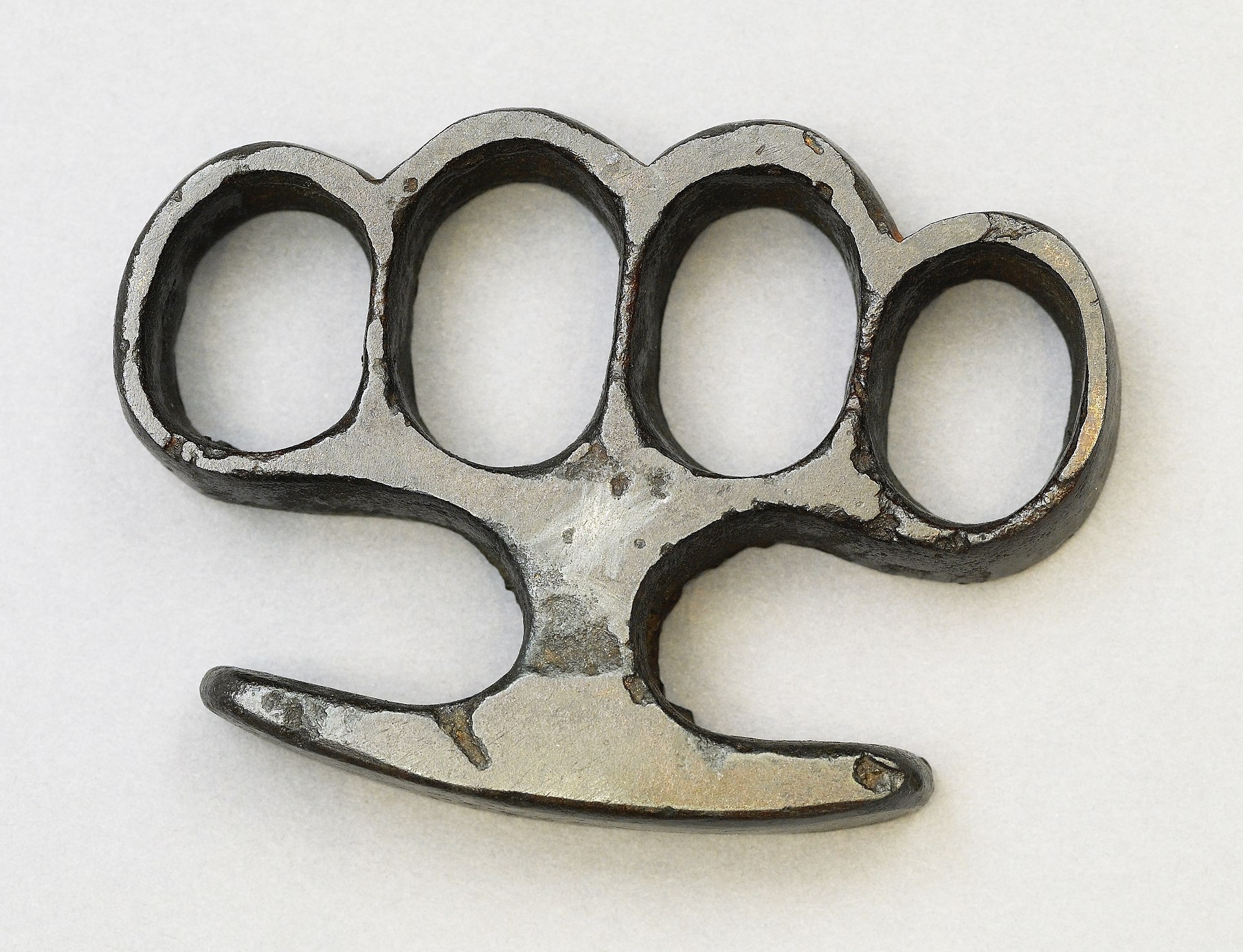
Brass knuckles were probably first used in the 12th century in India, where spiked vajra-mushti, or "thunder fist," was a hallmark of wrestling. Before this, fist augmentation with metal attachments usually took the form of a glove—like a cestus, which wore Roman gladiators.
Later, brass knuckles were used during the American Civil War. In fact, Abraham Lincoln (as well as his bodyguards) were known to carry this weapon.
More recently, they were used in the First and Second World Wars. There were several reasons for this. Besides their relevance for close-combat trench raids, they were also inexpensive to purchase or easy to manufacture by melting down lead bullets and casting them into molds. Another advantage was the freedom of finger use when carrying them, allowing soldiers to reload their weapons.
7. Blow Gun (1945)
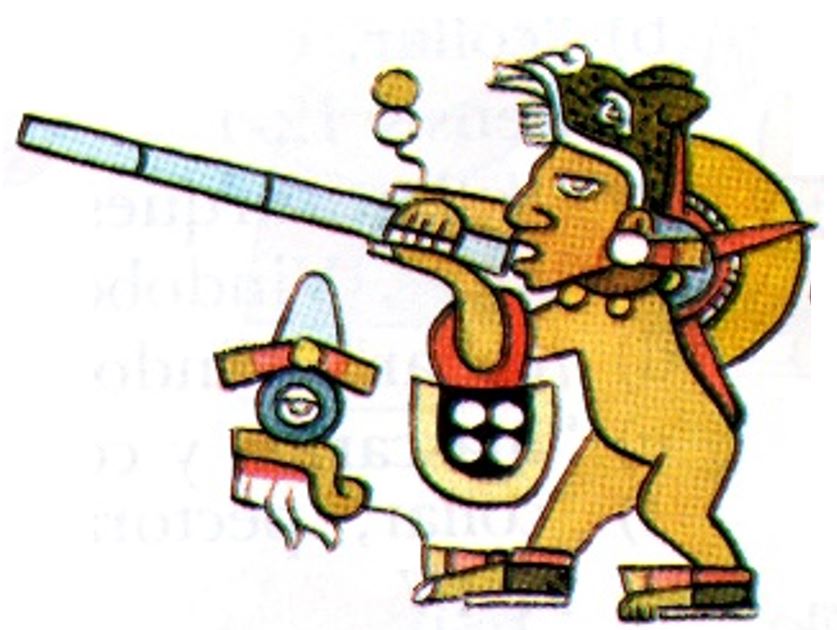
Air pistols are silent and deadly. The moment the victim hears the dart, it strikes them dead (or worse, depending on the poison). In 1964, they were used by guerrillas in the Congo, killing the Congolese army chief of staff, an American missionary, and others.
These aren't the weapons you'd associate with modern warfare. But they seem to have helped the Allies win World War II. During the Borneo campaign, local Dayak headhunters were encouraged to use their blowguns against the Japanese. American troops even joined them. After his B-24 Liberator crashed, an American soldier parachuted onto the island and was rescued by Dayaks and trained in the use of blowguns. Two decades later, the roles were reversed, and invading American troops found themselves under fire from the Viet Cong in Vietnam.
As recently as 2022, American soldiers stationed in Hawaii used darts against stray cats on Oahu, sparking outrage among local residents.
6. Bow and Arrow (1945)
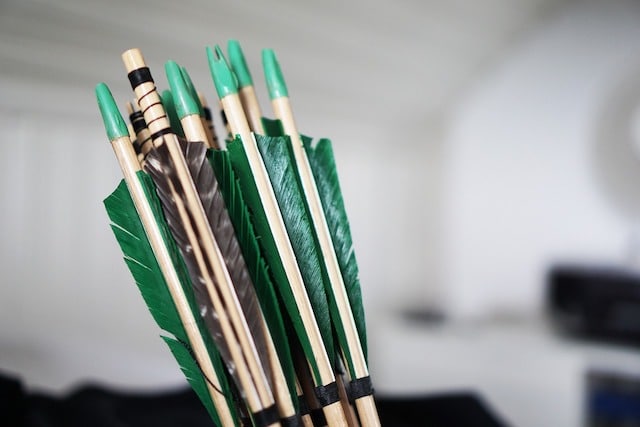
According to the World War II diary of the British 4th Infantry Brigade, "the sight of Captain Churchill walking along the beach with bows and arrows" was one of the most encouraging moments upon landing at Dunkirk. "Mad" Jack Churchill was known for his use of old weapons, once declaring that "any officer who goes into battle without a sword is improperly dressed." But he also believed in the longbow. After the Battle of Epinette in France, when his company was pinned down by the Nazis, he killed the first enemy soldier with his longbow before resorting to machine guns.
Even today, some people wonder why archery has fallen out of favor. The U.S. Army itself has demonstrated its tactical superiority—at least in some situations. In 2015, for example, Special Forces shot at a box filled with dirt using a variety of weapons (the M1911A1 .45 automatic, the .30 M1 carbine, the .30 M1 rifle, and modern bow), and only the bow and arrow shot from the other side. Another advantage, of course, is that they are easy to make in the field.
5. Crossbow (1999)
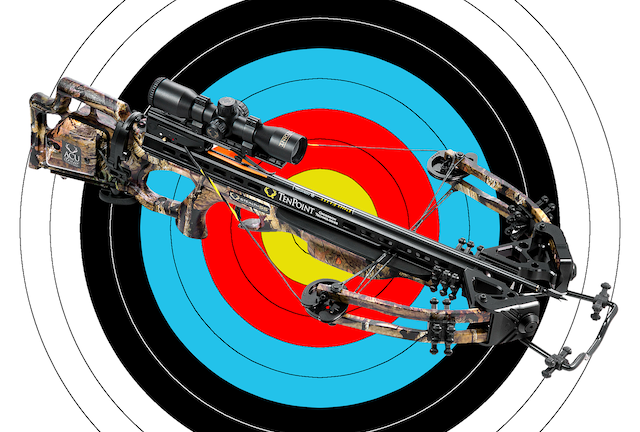
Crossbows, invented two and a half thousand years ago, were used in the Vietnam War last century. But there, they were the traditional weapon of the indigenous highlanders, or "Montagnards.".
Less traditional was its use by the Serbs against the Kosovo Liberation Army (KLA) in the 1990s. Surprisingly, they didn't simply use whatever was at hand. Crossbows were specifically selected and imported from England as the preferred weapon for countering snipers. Not only are they silent, one journalist said at the time, but they also "have a psychological effect." They also recalled the Serbian war criminal Arkan, who in the early 1990s used crossbows and "other exotic weapons" to strike fear into the hearts of his enemies.
But there was another, more practical reason. Because the British classified them as sporting equipment, crossbows weren't subject to the same export restrictions as other lethal weapons. So, at least until the British government learned of it, they could be imported freely into the war zone. Countries closer to the conflict, such as Slovenia and Croatia, weren't so laissez-faire—as the KLA discovered when they attempted to purchase some weapons from them.
4. Bayonet (2004)
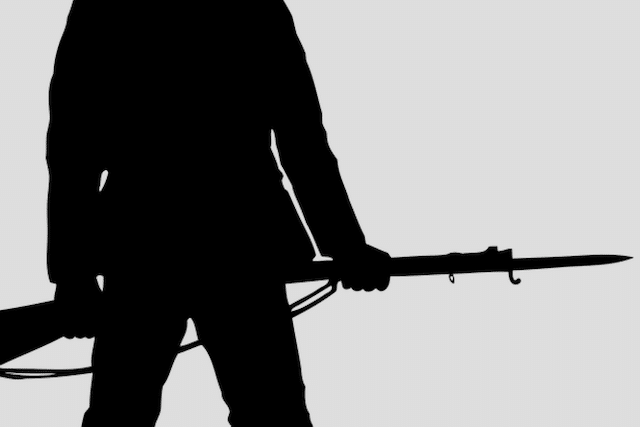
Bayonets haven't been used regularly since the Vietnam War. Based on spears, they're designed to pierce the enemy, which, given that they're mounted on rifles, was much more important before automatic reloading, such as during the American Revolutionary War and the American Civil War. They were only used in Vietnam because the jungle made close combat inevitable. .
However, in 2004, a British corporal led a bayonet charge against the Taliban in Helmand. Under heavy fire from nearby soldiers, his patrol retreated into a ditch, then realized they were pinned down. While two men provided covering fire, the corporal and three others jumped out and charged. The Taliban soldiers were apparently so disoriented that they retreated, and by the time they reappeared, reinforcements had arrived.
Spears were used even earlier than bayonets, but not by advanced modern armies. In December 2019, before acquiring firearms, the Masalites of Darfur still defended themselves with spears, as well as knives and daggers.
3. Trebuchet (2014)
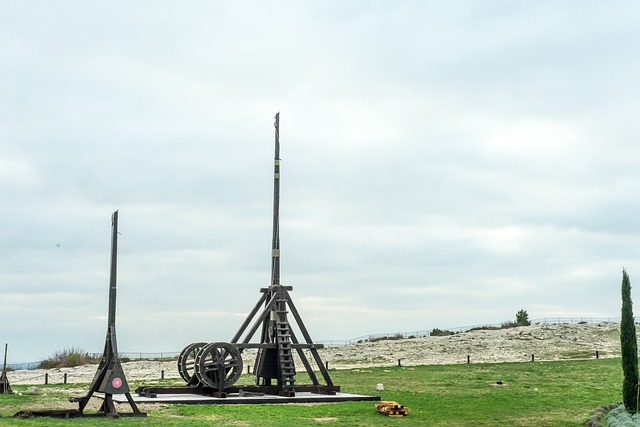
Another weapon from China, 4th century BC, trebuchet They fell out of use in the Middle Ages. Their last historical use was during the siege of Tenochtitlan in 1521. They have since been replaced by artillery.
However, in 2014, Syrian rebels built trebuchets to fight Assad. Their advantage over modern weapons (lack of sound, light, heat, etc.) was purely coincidental; the rebels used whatever was at hand. For example, they built their own grenade launchers from decorative balls and shotgun shells. They also rigged video game controllers to fire mortars and built their own "tanks": vehicles surrounded by corrugated iron.
2. Sword (2020)
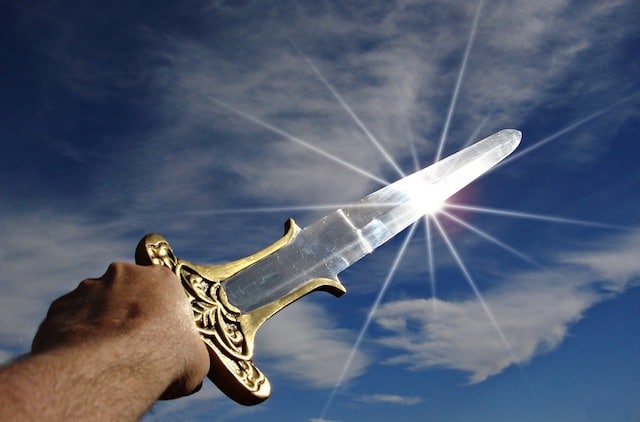
In Yemen, you can often see men with swords, many of which were forged from street fragments during the civil war. Although the Yemeni jambiya traditionally symbolic (like Sikh kirpan), the Houthis used it to continually oppress the population. In one particularly brutal incident, they stabbed a young man to death after beating him with wire—supposedly for uncovering corruption.
But the last time swords were issued to troops was during World War I. Despite all the new weapons debuting in that conflict, the cavalry saber remained in use. For British and Commonwealth soldiers, this was the 1908 Pattern, which is actually credited with Britain's first defeat of the war; Captain Hornby of the 4th Dragoon Guards killed a German from the 4th Cuirassiers. Designed for horseback riding, the design (reluctantly approved by King Edward VII, who called it "abominable") was intended for running and killing the enemy. In other words, it was for thrusting, not cutting.
Although the Japanese soldiers brought cutting swords (katanasDuring World War II, they weren't intended to be used as weapons. They were treasured family heirlooms, given to soldiers for good luck. The hope was that both would return home safely. Ultimately, however, America, still reeling from the murder of half a million civilians, forced Japan to hand them all over, knowing that a surrendered samurai sword would lose its value.
1. «Maxim Machine Gun» (2022)
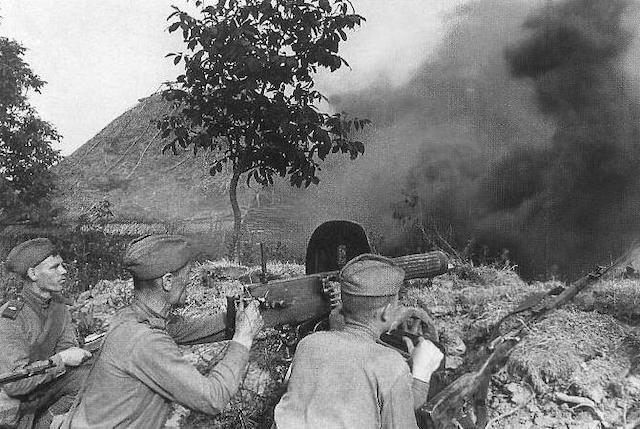
The Russian version of the first automatic machine gun was called the "Maxim 1910 Machine Gun," or M1910 for short. The original British-made Maxim, introduced two and a half decades earlier, in 1884, had so impressed Russia in the war against Japan (1904–1905) that they took on its further development. A few years later, it was used by the Imperial Russian Army in World War I, giving that conflict its nickname: machine gun warfare. It was also used by the Red Army in the Russian Civil War and World War II.
Just last year, Ukraine used it against Russia. Although the media ridiculed them, they actually had a good reason. Unlike modern machine guns, this bulky, stationary, rapid-fire relic of the early 20th century has a liquid cooling system, a brass water jacket around the barrel. Modern machine guns fire in bursts to prevent overheating, barrel deformation, and premature detonation of the ammunition. Meanwhile, the M1910 can fire continuously for several minutes.
This wasn't the only antique they used. The Ukrainians also used an American-made M101 howitzer and a D-44 artillery piece from the early 1940s.