








The U.S. Department of Agriculture (USDA) has confirmed a second case of the blowfly infestation in Texas, days after the first case in a yearling calf prompted aggressive measures to prevent the parasite's spread in the state, a leading livestock hub.
Texas Governor Greg Abbott said Friday that state officials are working with the federal government to slow the spread of the fly and the infestation of maggots that feed on the living flesh of warm-blooded animals and people.
Authorities are dispersing millions of sterile parasitic flies in an area where two cases of infestation were discovered, approximately five miles apart, in Zavala County, southwest of San Antonio. These sterile males prevent wild females from breeding.
See also: Alarming news: Calf in Texas found to have once-eradicated flesh-eating parasite
New World Screwworm (NWS) infestation is the first such disease identified in the United States since the 1960s.
The U.S. Department of Agriculture confirmed a second case. The first case was confirmed by the Texas Animal Health Commission (TAHC) on Wednesday after the NWS virus was detected in a three-week-old calf with an umbilical cord lesion.
«"This is the first NWS detection in Texas since its northward movement from Central America was recorded in 2023," the commission said in a press release, adding that an infestation zone has been established in the area. The commission also reported that animal movement restrictions have been implemented to prevent further spread of the pest.
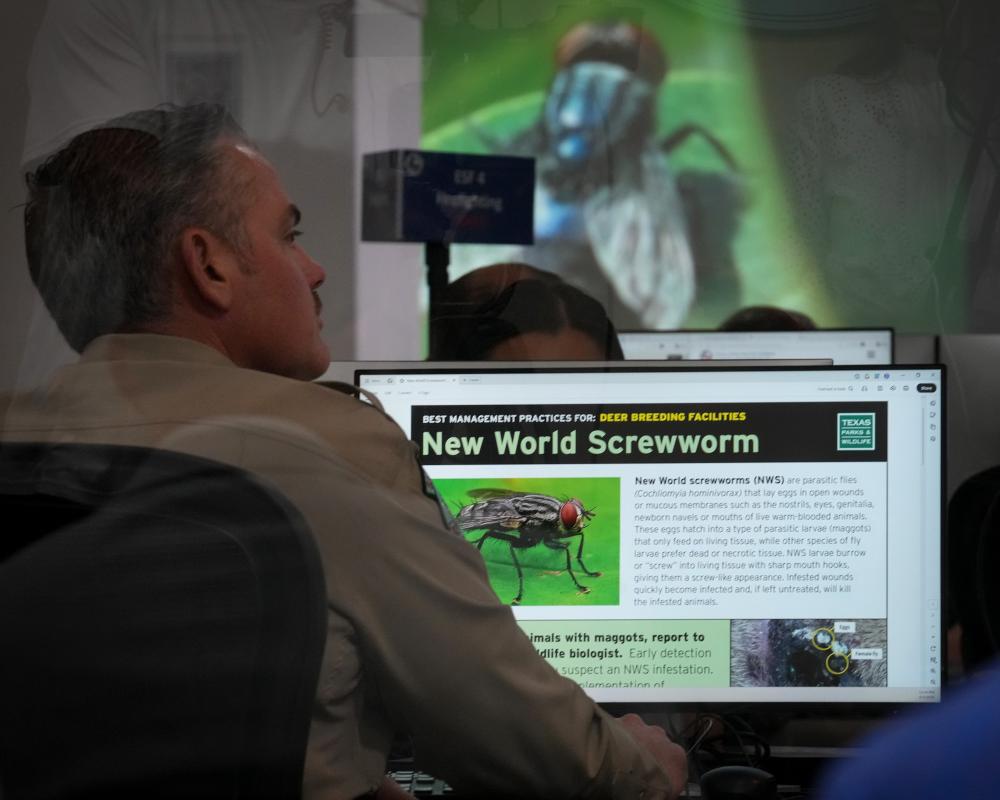
According to the U.S. Department of Agriculture, food in the United States is safe, and it is noted that NWS flies do not infest meat, fruits, vegetables, or other foods. NWS flies are the parasitic larvae or flies of the NWS flies. Cochliomyia hominivorax . They cause a painful condition called myiasis, caused by parasitic flies of the genus NWS.
When the fly eggs hatch into larvae, they burrow through living flesh, killing the host if left untreated.
«"TAHC has been actively preparing for the resurgence of NWS maggots for over two years," said Dr. Bud Dinges, director of the commission. "We are beginning to implement these preparations and urge all animal owners and caregivers to remain vigilant for the presence of maggots in animal wounds and to report any suspected cases immediately.".
The TAHC stated that the introduction of sterile flies, combined with enhanced surveillance, movement restrictions, prompt wound treatment, and education and outreach, "is a proven and effective tool for the control and eradication of this pest.".
Governor Abbott also declared a statewide emergency and warned that this summer would likely be "extremely challenging" for infected areas.
«Now is the season for the spread of infection,» the governor said.
The U.S. Department of Agriculture discovered the second infestation "after investigating several suspected cases," the agency's Animal and Plant Health Inspection Service said in a press release.
The discovery of the parasite was a blow to American cattle ranchers.
A widespread resurgence of the epidemic could pose a significant economic threat to Texas due to animal deaths and increased labor and treatment costs. For over a year, as the disease spread north, the US-Mexico border was closed to live cattle imports, causing the US beef industry, worth $100 billion, to shrink to its lowest level in 75 years.
According to industry data, the United States previously imported more than 1 million head of cattle from Mexico annually, representing approximately 4-5% of all cattle sold for beef production in the United States.
On Friday, the Canadian Food Inspection Agency announced a temporary ban on livestock imports from Texas after cases of the virus were detected.
Cows and horses that have been in Texas within 21 days before crossing the border into Canada will not be allowed into the country, the agency said in a press release.
Canadian officials noted that the country's colder climate made northwesterly winds unlikely to be a problem, but warned farmers to monitor cattle for wounds and any cuts "accompanied by discharge or an unpleasant odor.".