








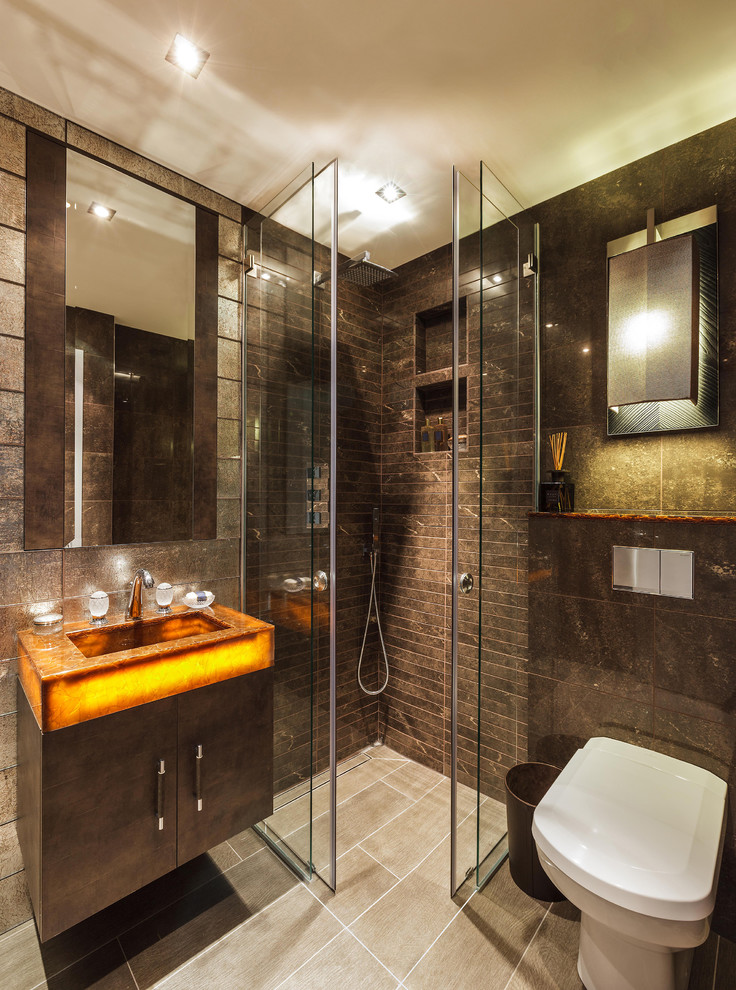
Brown in a bathroom interior is a bold and unconventional choice that breaks the mold of traditional bathroom design. This natural hue is associated with reliability, stability, and comfort, creating a unique atmosphere of calm and harmony.
Brown has been used in interior design for decades. In the 1920s, natural tones and marbled finishes were a symbol of refined taste. Today, brown tiles are experiencing a renewed popularity, offering a rich palette of shades—from delicate caramel to deep chocolate.
The psychology of brown in interior design
Brown has a calming effect on the psyche, helps reduce stress, and creates a sense of security. This is especially valuable in the bathroom—a place of rest and relaxation after a busy day.
Research in color therapy shows that warm brown tones promote mental relaxation and help restore emotional balance. This is why designers are increasingly recommending this color for private spaces in the home.
Selecting and Combining Shades of Brown
The richness of the brown palette allows for a variety of interiors, from classic to ultra-modern. Ceramic tile manufacturers offer dozens of options with a variety of textures and effects.
- Milk chocolate is a warm and cozy shade that pairs perfectly with beige and cream.
- Wenge is a deep brown-burgundy tone that gives the interior nobility and luxury.
- Coffee is a universal medium shade that suits most styles.
- Dark Chocolate is a rich, dark color for creating accent walls.
- Wood tones range from light walnut to dark oak, creating a natural ambience.
Practical aspects of using brown tiles
High-quality brown tiles are practical—they show less water marks and soap stains. However, there are a few important factors to consider when choosing.
Glossy surfaces visually expand space and reflect light, which is especially important for small rooms. Matte textures create a calmer and more respectable atmosphere, but require more careful maintenance.
Tips for Combining Colors
A monochrome brown interior can look gloomy, so it's important to pair it wisely with other shades. Ideal complements include:
- Beige and cream create a soft contrast
- White - refreshes and adds purity
- Gold and copper add luxury
- Olive and light green add natural freshness
- Turquoise and turquoise create bright accents
Visual effects and space correction
Brown has a unique ability to visually alter the perception of space. Vertical installation of dark-toned tiles visually increases the height of ceilings, while horizontal placement makes narrow spaces appear wider.
To create depth, use a combination of dark and light shades in a checkerboard pattern or gradient. Mosaic inserts and decorative panels add personality to the interior.
Lighting in a brown bathroom
Proper lighting is crucial for dark tones. Combine different light sources: a main ceiling light, spotlights near the mirror, and niche and shelf lighting.
Warm white light (2700-3000K) accentuates the cozy feel of brown tones. Cool light (4000K and above) creates a more formal and modern look. Consider LED strip lighting behind a mirror or under shelves to create a floating effect.
Selection of plumbing and furniture
Modern plumbing offers interesting solutions for brown interiors. Sinks and bathtubs made of brown artificial stone look monolithic and luxurious. Alternatively, white plumbing fixtures against brown walls create a striking contrast.
Furniture that matches the main color creates a cohesive look. Wooden cabinet fronts complement the natural aesthetic of brown. Metal handles and faucets in gold or matte black add accents.
Textiles and accessories
Sand-, mustard-, or terracotta-colored towels complement the color scheme. Rugs with natural patterns or geometric designs add a cozy touch.
Accessories made from natural materials—wooden shelves, bamboo baskets, ceramic soap dishes—enhance the natural aesthetic. Mirrors in wooden or gilded frames add a stylish accent.
Live plants with dark green foliage look beautiful against a brown background. Choose moisture-loving species that thrive in the bathroom.
Care tips for brown surfaces
Brown tiles require regular maintenance to maintain their original appearance. Use mild, non-abrasive cleaners. Glossy surfaces should be wiped with a special shine cleaner.
To prevent limescale deposits on faucets and glass surfaces, use water with minimal hardness. Regular ventilation prevents mold from forming in corners.
A brown bathroom is an investment in comfort and aesthetics. With the right approach to planning and design, you'll create a space that will delight you for years to come with its cozy atmosphere and practicality.