






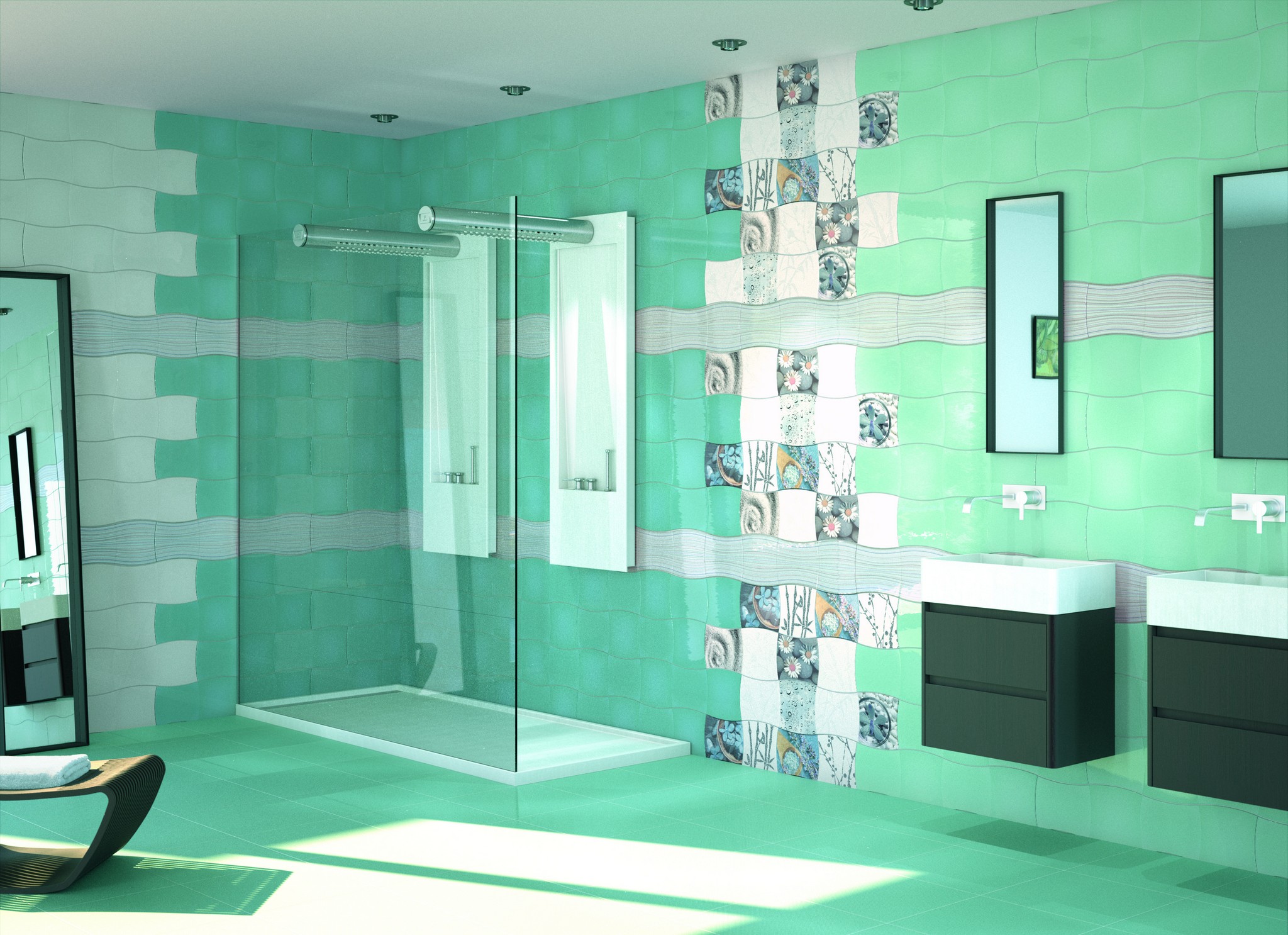
Turquoise is a popular choice for bathrooms for those seeking an atmosphere of seaside freshness and natural harmony. This stunning shade, born from the fusion of blue and green, has a unique ability to visually expand a space and fill it with light. Unlike cool blue tones, turquoise retains a warm undertone, making it comfortable to look at even in rooms without natural light.
The Psychology of Turquoise in Bathroom Interiors
In terms of psychological impact, turquoise combines the calming influence of blue with the life-affirming energy of green. This balance is especially valuable for the space where we begin and end our day. Morning rituals in a turquoise bathroom inspire energy and optimism, while evening relaxation sessions help relieve pent-up tension. The color is associated with clear seawater, tropical lagoons, and summer skies—images that subconsciously evoke feelings of freedom and serenity.
Interesting fact: turquoise is one of those rare colors that feels equally comfortable in both bright and muted versions. This opens up wide possibilities for creating a multi-layered color scheme, combining different saturations of a single hue.

Classic combinations of turquoise with other colors
The most common and foolproof combination is turquoise and white. This combination creates a sense of purity and spaciousness, especially important for smaller spaces. With this approach, it's recommended to distribute colors vertically: a white ceiling visually lifts the space, turquoise walls create the main color theme, and a dark floor adds stability to the composition. For those who find pure white too sterile, warm shades such as milky, vanilla, cream, or caramel are an alternative.
Gray paired with turquoise reveals its depth and nobility. This combination looks modern and stylish, though it can feel cool. To soften this effect, add natural wood elements or warm-toned textiles. The combination with brown adds solidity and elegance to the interior. Chocolate, coffee, or terracotta are best used as accents: mirror frames, shelves, door handles, or decorative details.

Bold color combinations for unconventional solutions
For lovers of vibrant interiors, a striking combination of turquoise with lilac and pale violet will be a striking choice. These related colors create a complex interplay of tones, reminiscent of tropical sunsets. It's important to maintain balance: if turquoise dominates, violet should be present in the form of accents—towels, soap dishes, paintings, or mosaic elements.
Black, in moderation, highlights the richness of turquoise and adds a graphic touch to the interior. This contrast is particularly striking in modern, minimalist bathrooms. However, it's important not to overdo it: black should comprise no more than 10-15% of the overall color scheme, otherwise the room will become gloomy. Use it for framing, bathroom fixtures, or contrasting lines.

Practical aspects of using turquoise color
When choosing turquoise-colored finishing materials, it's important to consider lighting conditions. For north-facing rooms, warm shades of turquoise with a predominantly green undertone are preferable. For south-facing rooms, cool turquoise-blue tones are a safe bet—they'll create a pleasant coolness in the summer heat.
When it comes to maintenance, modern turquoise-finished finishes are easy to maintain. Glossy surfaces are easy to clean from limescale and soap scum. Matte finishes are more practical for hiding minor scratches and fingerprints, but may require specialized cleaning products to maintain their original appearance.

Features of planning and zoning
In small bathrooms, turquoise can be used to visually expand the space. To achieve this, use a gradient: darker shades near the floor, medium shades near the walls, and lighter shades near the ceiling. Mirrors in massive frames, positioned opposite each other, will create an infinity effect and enhance the feeling of spaciousness.
In spacious rooms, turquoise allows for effective zoning. For example, the bath or shower area can be highlighted with contrasting tiles, creating a unique "island" within the overall space. An interesting solution would be to use turquoise on just one accent wall, while the other surfaces remain neutral.
Lighting design for a turquoise bathroom
Lighting plays a key role in revealing the beauty of turquoise. Cool LED lamps highlight the blue tones, creating a fresh, seaside atmosphere. Warm, yellowish light, on the other hand, enhances the green tones, making the room more inviting. For complex, multi-layered lighting, it's recommended to combine different types of lighting fixtures:
- Spotlights around the perimeter of the ceiling for general uniform lighting
- Wall sconces near the mirror for comfortable hygiene procedures
- Illumination of niches and shelves to create an intimate atmosphere

Textures and materials in a turquoise bathroom
Modern manufacturers offer a wide selection of finishing materials in turquoise tones. Ceramic tiles remain a classic choice—they're durable, hygienic, and available in a wide range of textures. For accents, mosaics can be used, allowing for complex patterns and smooth color transitions.
Natural stone with turquoise veins—marble, malachite, or onyx—looks luxurious but requires professional maintenance. A more affordable alternative is a high-quality imitation of porcelain stoneware or quartzite. For those who prefer unconventional solutions, turquoise-coated glass panels are an interesting option—they visually enlarge the space and create interesting lighting effects.

Accessories and decor: finishing touches
The right accessories can transform the interior of a turquoise bathroom. Metallic elements in gold or copper tones add warmth and luxury. Chrome steel and nickel create a more understated, modern look. Textiles—towels, rugs, shower curtains—allow you to easily change the mood of the room without renovating.
Live plants thrive in high-humidity environments and complement a nautical interior theme. Ferns, orchids, and scindapsus not only decorate the space but also naturally purify the air. For those who prefer not to deal with live plants, high-quality artificial ones or decorative elements with plant motifs are a good choice.

Mistakes to Avoid
Despite turquoise's versatility, some color combinations can be off-putting. Bright red creates too much of a contrast with turquoise, which is visually tiring and disrupts the harmony of the space. If you're looking to add warm accents, muted terracotta or coral shades are a better choice.
Another common mistake is using too many shades of turquoise in one room. It's best to limit yourself to two or three related tones to maintain a cohesive look. Also, avoid pairing turquoise with acidic colors—this combination looks bland and jarring.
Durability and relevance of design
Turquoise in a bathroom is timeless. Its natural origins guarantee it won't go out of style for years to come. This design will delight you for years to come if you choose high-quality materials and consider every detail.
Modern finishing technology allows for the creation of turquoise surfaces that are resistant to moisture, detergents, and UV rays. This means the color's vibrancy and saturation will be preserved throughout its lifespan.

A turquoise bathroom isn't just a trendy design solution, but a well-thought-out interior that evokes a sense of freshness and harmony every day. Carefully chosen shades, appropriate lighting, and high-quality materials create a space in which to begin a new day and relax afterward. This design will suit both connoisseurs of classic elegance and fans of modern styles who value individuality and comfort.