






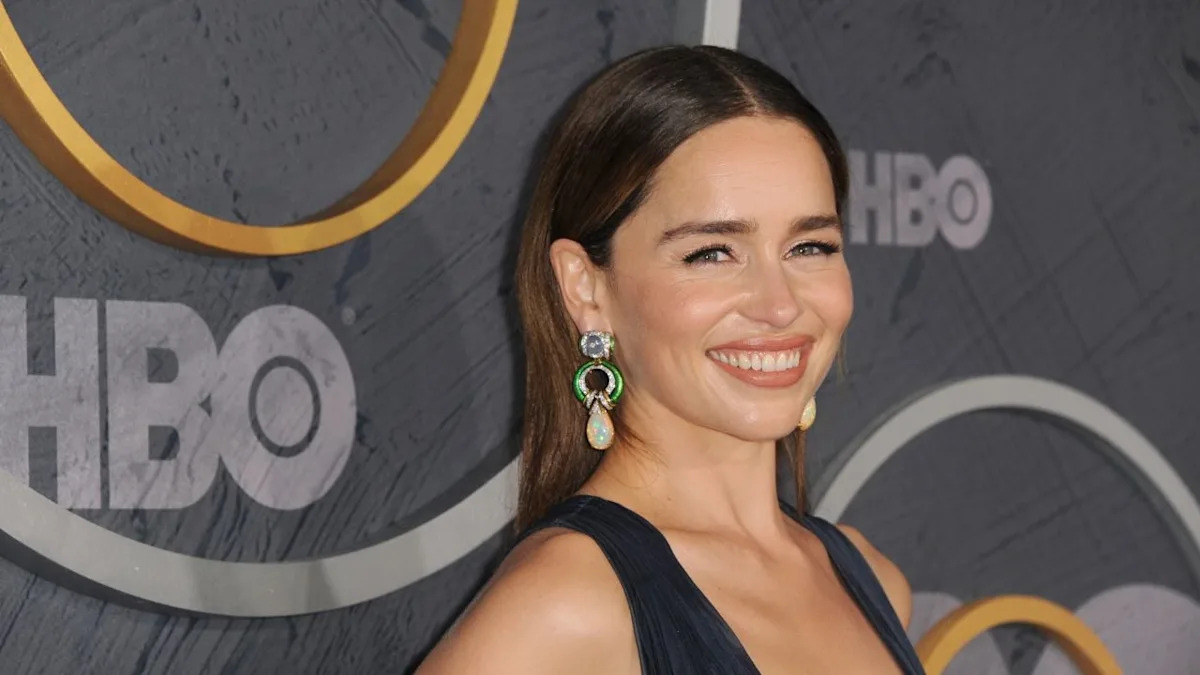
Emilia Clarke is using one of the most challenging periods of her life to spark a wider discussion about what happens after a person survives a traumatic brain injury.
The Game of Thrones star was honored at Variety's "Power of Women" event in London, where she spoke about surviving two brain hemorrhages while playing Daenerys Targaryen. Clarke has previously spoken about the fear, isolation, and survivor's guilt that followed these medical emergencies, but her latest address focused on what happens after a person survives.
For Clark, surviving a life-threatening situation isn't the end of the story. Recovery can be long, lonely, and far less noticeable than the emergency itself.
Clark said recovery is as important as survival.
As Variety reports, Clarke, speaking at the Power of Women awards ceremony, spoke about her brain hemorrhage and emphasized that recovery is just as important as survival.
This message directly ties into the work she does through SameYou, a brain injury rehabilitation charity she founded with her mother, Jenny Clarke, in 2019. The organization focuses on improving recovery support for people living with brain injury and stroke.
Clarke's public activism has been shaped by her own experiences. She survived a medical crisis, returned to star in one of the world's most popular television shows, and later used her platform to explain that the period after leaving the hospital can be terrifying in its own way.
Her first hemorrhage occurred after the first season of Game of Thrones.
Clarke suffered her first brain hemorrhage shortly after filming the first season of Game of Thrones. She said she fainted while working out at a London gym and immediately realized something was seriously wrong.
In a recent interview with How to Fail with Elizabeth Day, Clarke described the pain as sudden and intense, likening it to a snapping rubber band gripping her brain. She was 24 at the time and had just landed a career-changing role.
Clarke was reportedly initially concerned about how the injury might impact her work and whether those who hired her would perceive her as weak or fragile. She kept the experience largely private, confiding only to the showrunners, and focused on returning to work on the series.
The second hemorrhage left a deeper emotional mark.
Later, while living in New York and performing in a Broadway play, Clark suffered a second aneurysm. Doctors monitored it after discovering it while treating the first hemorrhage.
Surgery to repair the second aneurysm reportedly failed, requiring emergency brain surgery. Clarke stated that doctors told her parents they believed she was at risk of dying.
The second experience affected her differently. Clarke said she withdrew emotionally, became hypersensitive, and felt disconnected from the outside world because her body and brain had failed her in ways others couldn't see.
She also said that whenever she had a headache, she would be overcome with fear, as she feared that another hemorrhage might occur.
Work helped her survive, but it was no substitute for recovery.
Image source: Featureflash Photo Agency / Shutterstock.
Clarke said the work helped her move on. Returning to «Game of Thrones» gave her structure, purpose, and a reason to overcome her fears as the series became a global phenomenon.
This didn't mean she fully comprehended what had happened. Clarke said she hadn't been kind enough to herself during her recovery and had once viewed the injury as a personal failure.
This detail partly explains why her current work advocating for survivors' rights feels so personal. SameYou's mission is based on the idea that trauma survivors need support after hospital discharge, when the outside world may think the crisis is over, but they are still recovering physically, emotionally, and socially.
The organization SameYou turned Clark's experience into community support.
SameYou describes itself as a brain injury recovery charity that works to develop more effective treatments for mental health issues in survivors, raise awareness, and advocate for improved rehabilitation programs.
The charity states that in many places, recovery services for traumatic brain injuries remain limited after acute care has ended. SameYou also offers recovery resources, survivor stories, peer support, and programs to help people access counseling after hospital discharge.
This work gives Clarke's message, "The Power of Women," a practical foundation. It doesn't simply recount a celebrity's health story. It highlights the gap in medical care many survivors face after completing a vital part of their treatment.
The feeling of loneliness she describes is central to this mission. Clarke previously told People that one of the most powerful feelings after her brain injury was profound loneliness, and that SameYou exists in part to help others escape this isolation.
Her story changes the way fans remember Game of Thrones.
Clarke played Daenerys from 2011 to 2019, becoming one of the most recognizable faces on television while secretly harboring concerns about her health.
Viewers witnessed dragons, power struggles, speeches, battles, and one of HBO's biggest pop culture phenomena. Clarke was also recovering from an injury, worried about brain damage, and trying to prove she could continue doing the job she'd just landed.
This doesn't make her work on the show a simple symbol of survival. It makes her achievement more human. Clarke was simultaneously playing a public role and experiencing a personal crisis.
Her final message is about the aftermath.
Celebrity health reports often focus on emergencies: fainting, surgery, diagnosis, life-or-death moments. Clarke, however, shifts the focus to the aftermath.
In SameYou's own materials, traumatic brain injury is described as a phenomenon that affects the whole person, not just the brain. The charity's work aims to help survivors understand that they haven't lost who they once were.
This is the most obvious thread in Clarke's final comments. Survival mattered. It also mattered to be noticed, supported, and taken seriously after surviving.