








While artificial intelligence remains a dirty word in Hollywood and a source of broader discontent over job losses in the US, studios and artists in other countries are increasingly embracing the technology. This dynamic could have implications for the competitiveness of the next generation of creatives on the global stage, as AI plays an increasingly important role in the media industry.
This was one of the key takeaways from a panel discussion I moderated at the AI on the Lot conference, held this week at Amazon MGM Studios in Culver City, California. The discussion explored the varying perspectives on AI in different countries and how this impacts the adoption of this technology among creatives around the world.
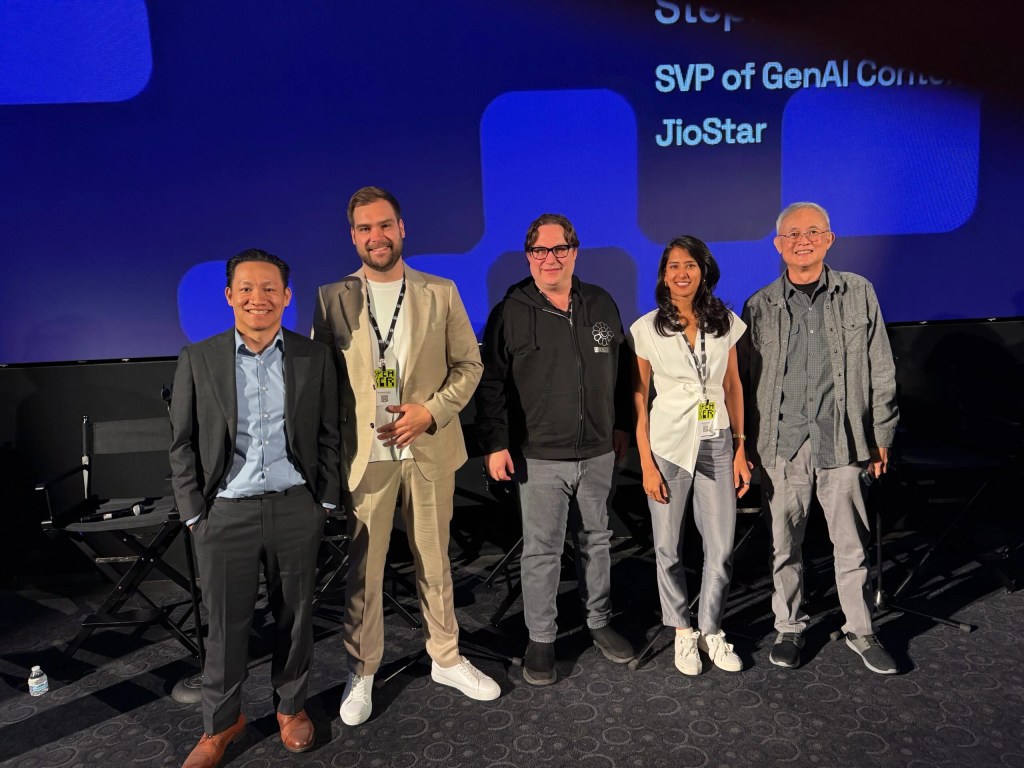
The panel included Richard Chuang, co-founder of Pacific Data Images, which later became Dreamworks; Stefan Vladimir Bugaj, an Emmy Award winner who earlier this year joined Indian media giant JioStar as senior vice president of content and technology at GenAI; Mrinalini Rao, head of international market research and development at Google; and Christian Schusler, CEO of Norwegian AI studio Reimagine Studios.
The panelists noted that artificial intelligence has become more widespread worldwide. In India, Jiostar has already released a show entirely created using AI, "Mahabharata: One Month." Rao noted that in South Korea, the government is developing a textbook on AI for schoolchildren. Schussler noted that Norway's strong education system has allowed people to study this technology in greater detail.
On the contrary, Chuang reported that students at a Northern California school signed a petition calling for a ban on AI. He noted that there is a great deal of misinformation about this technology, which has led to such concerns, and this risks leaving the next generation of creative people behind on the global stage.
«"I blame a lot of educators for not teaching them well enough because, as it turns out, our educators aren't as knowledgeable about artificial intelligence as I think they should be," he said. "That's a big problem for us in the United States.".
Chuang urged universities to begin offering courses on artificial intelligence to their faculty. "I think training our faculty is the first step, because they need to understand the limits, the constraints, and how to use it to their advantage rather than avoid it," he said.
Artificial Intelligence Powering Local and Niche Content
There's a lot of talk these days about how AI is reducing the time and cost of content production. According to panelists, the benefit is that this opens up opportunities for creative people to create series or films that are tailored to specific interests, which would previously have been considered too expensive or unrealistic to produce using traditional methods.
«"Making niche content accessible is really exciting, and I think there's a lot of opportunity there," Bugay said. "There are a lot of sub-fandoms, like furries who love Star Trek. You can't make a $100 million feature film for that audience, but you can create content for that audience, and there are thousands of audiences with truly dedicated, engaged fandoms who are willing to pay for experiences that relate to their niche.".
He mentioned a feature film he saw last year, made by a guy in Malaysia, that touched on LGBTQ+ issues and domestic violence—topics that would have gotten him arrested if the film had passed local censorship—but which was created using AI and screened at international film festivals.
«"This way, he could talk about it in his native language with people who share his culture, in a setting similar to his culture," he said. "There are entire cultures whose work doesn't always get the recognition it deserves, and some of them can't even create their own work.".
In Korea, one K-pop company is creating K-pop stars using artificial intelligence, and according to Rao, Korean audiences are not only not put off by the process, but are actually interested in it.
«"It's not about broad reach, it's about engaging your most passionate fans and harnessing their potential for co-creation," she said, noting that AI can engage these fans in personalized, one-on-one conversations to further engage them.
Moving away from Western models
The problem with using models developed by American companies is that the generated photos and videos are taken from a database trained on images targeted at a Western audience. Or, with the advent of Chinese models, the images may be biased toward Chinese themes.
This poses a challenge when attempting to create videos featuring real Indians from specific regions. Rao noted that India is building a national model based on local data and imagery.
Malik Afegbua, a Nigerian artist known for his AI-generated art, encountered this problem using tools like Midjourney. When I discussed this with him for a previous article, he mentioned creating an African master's program that would incorporate data, images, and stories from local sources.
Schussler noted that whenever anything is published in Norway, it ends up in the national library. He said he's working with the government to use this repository of Norwegian culture, spanning hundreds of years, to train his models.
«"This will really help preserve culture in a world where everything is being generalized and erased from memory," he said.
The article "Hollywood's Resistance to Artificial Intelligence Could Have Consequences for the Next Generation" first appeared on TheWrap. .