








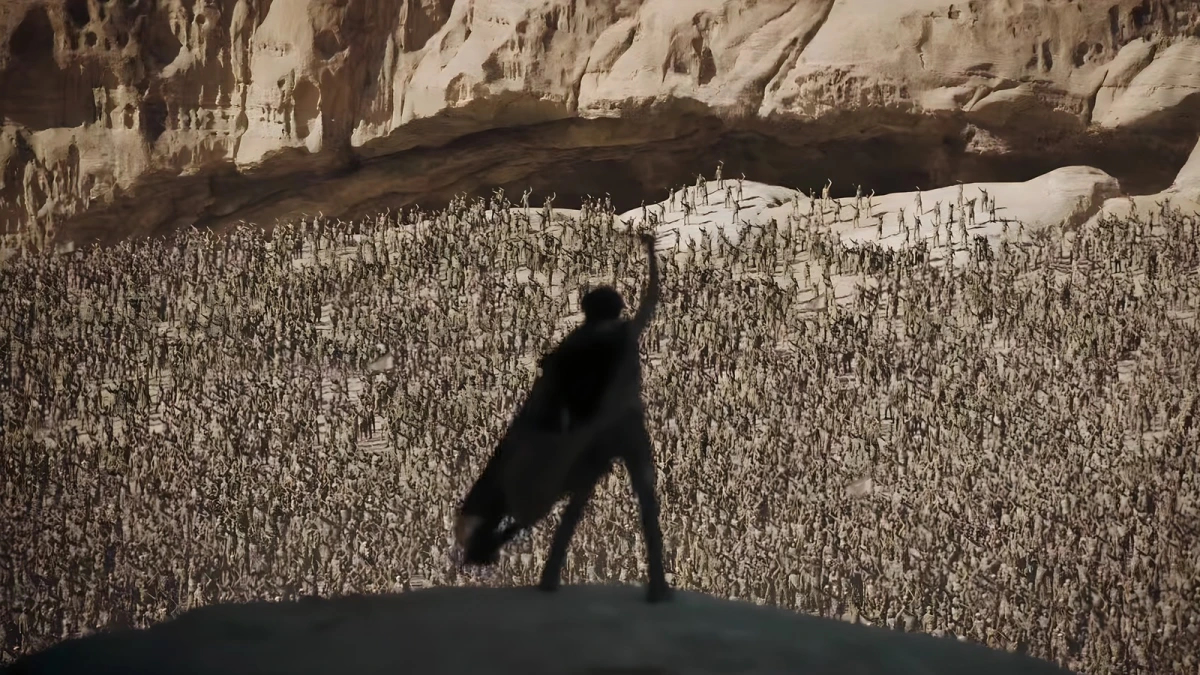
The sudden mainstream adoption of generative AI has raised concerns about creative bankruptcy across all fields, from digital art to blockbuster filmmaking. On Tuesday at the SXSW festival in London, Patrice Vermette, an Oscar winner for Best Production Design for the Dune films, criticized the push to incorporate generative AI into his work.
«"When it comes to the push for AI, I'm against it," Vermette told the crowd at an event exploring the intersection of science, worldbuilding, and storytelling in fiction.
Science fiction has often been the most effective medium for conveying moral, humanistic, and technological lessons. However, in recent years, this role has manifested itself in a surprisingly metaphorical way: leading science fiction authors are directly defining the place of new technologies in everyday life, but this time in their own lives, not in their fiction.
Vermette isn't the only prominent science fiction figure to oppose artificial intelligence. His fellow filmmaker, Guillermo del Toro, is a screenwriter and director of films «Pan's Labyrinth» , «The Shape of Water »" And «"Frankenstein"» , has repeatedly criticized the use of artificial intelligence in film and creative works. Margaret Atwood, a writer and poet, author of such classic works as «The Handmaid's Tale» , called AI a "shitty" poet and writer.
Many creative professionals, including actress Demi Moore and legendary director Martin Scorsese, have asserted that artificial intelligence is here to stay, but in both cases the reaction has been harsh. Similar instances of praise and criticism have been seen in fields other than film; Nobel laureate Olga Tokarczuk's admission of her love for AI and its use in the creative process sparked heated debate among writers worldwide and left many readers feeling disappointed.
Despite the claims of Moore, Scorsese, Tokarczuk, and others, GenAI has made no real progress in the development of science fiction. All the innovations in «"Frankenstein"» , «Dune: Part One» и «Dune: Part Two» were the result of human ingenuity. Old-school authors like Atwood and Stephen King joined modern writers in their rejection and even contempt for this technology. The recent success of the film «"Project "Ave Maria"« »"," directed by two people who have been vocal about their distaste for GenAI, is particularly telling: it has grossed over $670 million worldwide, a huge success for a post-COVID release that isn't a superhero movie.
For decades, GenAI had been absent from the progress made by science fiction artists of all kinds and styles. Before GenAI's development, such seminal novels and epics as «"Dune"» Frank Herbert and «The Left Hand of Darkness» Ursula K. Le Guin introduced readers to new worlds, while filmmakers like George Lucas have inspired admiration for centuries with their sci-fi blockbusters.
The centuries-old archive of films, literature, video games, and much more proves to the world that creators don't need artificial intelligence to create. Science fiction, which has already told countless stories about AI (recalls «Terminator» ), this is even more true. Now, more than ever, audiences crave originality, something that, by definition, AI will never be able to achieve.
People like Vermette—part of a new generation of artists channeling human ingenuity into new planets and new life—reaffirm a truth about creativity in science fiction: artificial intelligence must be part of the narrative, but as a subject, not a creator.