








Iquitos, Peru, is a melting pot of cultures brought to the city by immigrants during the rubber boom. Days and nights are filled with bustling, bustling traffic. Paradoxically, there is no road leading into or out of the city. Surrounded by the Amazon River, forests, and marshy lands, access by land is virtually impossible. Yet, Iquitos's concrete buildings are in perfect harmony with nature. Read on to learn more about Iquitos, the largest city in the world inaccessible by road.
Connected to the outside world only by water and air, Iquitos is the world's largest city inaccessible by land. Located in the Peruvian Amazon, this port city is home to over 450,000 residents.

The city of Iquitos is located on the Great Plains of Amazonian Peru. It is the capital of the Maynas Province in the Loreto Region of Peru. It is located at the confluence of three rivers: the Amazon, Itaya, and Nanay. The city of Iquitos is comprised of four districts: Iquitos, Belén, Punchanám, and San Juan Bautista.

The bustling metropolis of Iquitos is surrounded by swampy Amazon rainforests and rivers. Water bodies are an integral part of Iquitos, and people often use boats to travel between regions. While there are roads within the city, driving into or out of Iquitos is not possible.
For thousands of years, the city of Iquitos was inhabited by Native Americans. Before the arrival of Europeans, the area was home to the Napeano and Iquito peoples, from whom the city takes its name. Peru gained independence in the early 19th century, but it did not gain full control of the city of Iquitos until the 1940s.
The exact date of the founding of Iquitos is unknown. When European invasion began, this region of the Amazon was inhabited by nomadic hunter-gatherers, the Napeano and Iquito peoples. The city of Iquito derives its name from the indigenous Iquito people. In its early years, Iquitos was a remote jungle province. The indigenous people lived there in small seasonal settlements. Between 1638 and 1769, Jesuit missionaries from Spain established various missions in the region, and indigenous tribes settled there. The missionaries converted to Christianity and taught the natives.
In the early 19th century, Peru gained independence from the Spanish Empire. However, the northwestern Amazon basin remained under the control of Peru, Colombia, Brazil, and Ecuador. After a brief struggle, the city of Iquitos came under Peruvian control in 1864.
The city of Iquitos experienced significant changes during the rubber boom of the early 1900s, when thousands of immigrants flocked to the city. In the late 20th century, wealthy Europeans began building luxurious mansions, some of which can still be seen today. Revenues from the rubber industry began to decline when cheap Asian rubber became available.
The early 20th century brought a boom in rubber production to Iquitos, and the city began to prosper. To meet the global demand for rubber and profit from the business, thousands of immigrants arrived and settled in the city. This also sparked rapid development in other sectors, such as the automotive and banking industries. As revenues from rubber production grew, so did architecture. Rubber magnates began building mansions, decorating them with imported Portuguese tiles and French furniture.
During the rubber boom, someone brought rubber tree seeds to Indonesia and began cultivating them. Rubber trees began to be cultivated on plantations. The rubber grown on these plantations was much cheaper than that exported from the city of Iquitos. Thus, Asian rubber dominated the market, and after 1911, the Peruvian rubber market began to decline.
After the rubber industry declined, people turned to other businesses, such as extracting various resources in the Amazon region. The recent influx of tourists has led to a growth in the tourism industry and the emergence of shamans , who cook and sell hallucinogens from the jungle.

At the end of the 20th century, the Amazon rubber industry suffered a serious blow. Rubber magnates began to seek other sources of income. In the 1970s, oil was discovered in the Amazon, and the oil industry began to develop in the city of Iquitos. Later, many other industries, such as mining and other industries related to the extraction of Amazonian resources, also developed there. Immigrants who arrived in Iquitos during the rubber boom married local women and settled there. The current population of Iquitos is approximately half a million.

Iquitos's tourism industry began to grow after 2011, when the Amazon jungle and river were included in the list of the "Seven Wonders of Nature." Currently, most tourists visit Iquitos in search of inner peace and traditional remedies for various ailments. Many shops in the city sell medicinal herbs, elixirs, and healing potatoes.
In the city of Iquitos, one of the most popular ways to cleanse the body and achieve inner peace is to drink ayahuasca . It is popular among both locals and tourists. Ayahuasca - this is a drink that is prepared shamans from the roots of various jungle plants. Shamans It is claimed that this drink can induce hallucinations for up to six hours. During this period, a person can find inner peace and find answers to their questions about life.
Although Iquitos is inaccessible by road, its interior is connected by both roads and waterways. The city's buildings are a stunning mix of mansions, concrete structures, and houses built on rafts moored to the riverbanks. The city is also famous for the Iron Building, designed by the creator of the Eiffel Tower.

Iquitos is accessible only by air or water. The city is served by roads. Buses, motorcycles, and cars are the most popular modes of transportation. In addition to roads, much of the city center is also connected by waterways.
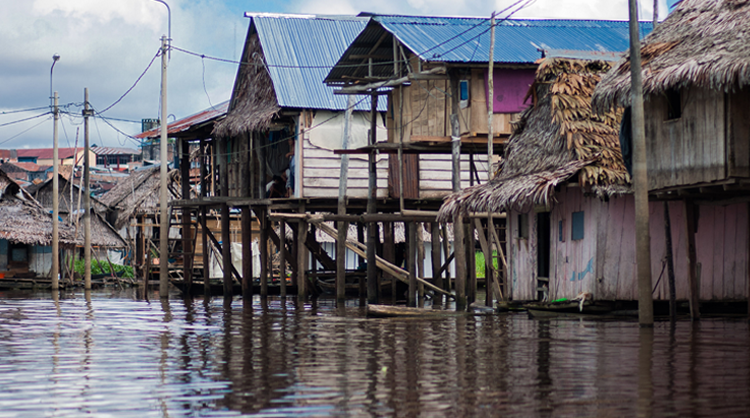
The buildings of Iquitos are striking in their harmony: majestic mansions and clay huts coexist perfectly. The mansions were built by rubber magnates during the rubber boom, while the huts are built on rafts moored to the riverbanks and float depending on the water level. In addition to residential buildings and offices, the city boasts casinos, shopping malls, and 18th-century churches.
One of the famous structures in Iquitos is the 19th-century Iron Building. Designed by Gustave Eiffel, the creator of the Eiffel Tower, the building was originally planned for the capital of Bolivia. According to legend, while the ship was being transported by water, the captain realized it would take another six months of sailing through the Amazon forests and rivers to reach its destination. He therefore abandoned the building in Iquitos, where it was later erected. The Iron Building was once a hotel and club. Today, only a few shops and bars remain.
The concrete buildings of Iquitos border the Peruvian Amazon rainforest, home to 850 plant and 730 animal species. Connected by waterways, the city would seem to have a Venice-like landscape, but this landscape is marred by the ubiquitous dumping of trash into the rivers. Overall, Iquitos is a unique blend of Amazonian wilderness and Peruvian urban life.
Situated on the banks of the Amazon River, the outskirts of Iquitos are surrounded by the Amazon rainforest. The verdant landscape boasts a rich diversity of flora and fauna. Due to illegal hunting and trade in endangered and sometimes rare species, the government is taking various preventative measures. Twenty kilometers from Iquitos is the Alpahuayo-Michana National Reserve. Padre Cocha, Iquitos, is home to a butterfly zoo displaying over 40 species of insects, particularly butterflies. A shelter for rescued animals is also located there.
The city of Iquitos, surrounded by the Amazon River, also boasts numerous waterways within its coastline. The most popular of these is the Belén neighborhood, also known as "Venice," located in the Belén district. However, the presence of trash in these waterways detracts from their beauty. Nevertheless, the fascinating Belén floating market always attracts tourists who want to stay and explore the amazing city of Iquitos.
[source: 1,2,3,4]