








Behind-the-scenes sources may be hiding a secret - a warning about generative artificial intelligence.
A24's box office hit is based on "Backstage," a seven-year-old meme about the macabre horror of nostalgia and artificial spaces.
However, some fans see the film as a clear metaphor for artificial intelligence.
Recent comments from the director Backrooms Kane Parsons has fueled further speculation as the former YouTuber turned filmmaker has been highly critical of generative artificial intelligence.
Many fans believe that the film's parallels with the controversial technology are not accidental.
What did Kane Parsons say about generative artificial intelligence?
«"I think I'm in the same position as most perfectly sane people," Parsons told The Australian.
«"If I could snap my fingers and make generative AI disappear forever, I probably would. Creatively, I don't enjoy using these tools. For me, it completely defeats their purpose.".
Parsons, a self-taught visual effects artist who created content for the YouTube series "Behind the Scenes," created numerous viral videos using Blender, a free 3D rendering tool.
«"We already live in a world where, when you step outside, you see billboards and signs clearly created with artificial intelligence. It's become part of our visual reality. For me, generative AI isn't so much an innovation as it is a symptom of a broader cultural and economic decline.".
«"I'm interested in using this iconography in art—not in creating the artwork itself with AI, but in exploring what it symbolizes. I definitely want to explore this further in future projects," Parsons concluded.
According to some fans, Parsons' book "« Behind the scenes »"The dangers of generative artificial intelligence are explored.
Is the Backrooms project really about generative artificial intelligence?
Warning! Spoilers ahead!
«Behind the Scenes» It could well be seen as a metaphor for the horrors of generative artificial intelligence, although the plot allows for various interpretations.
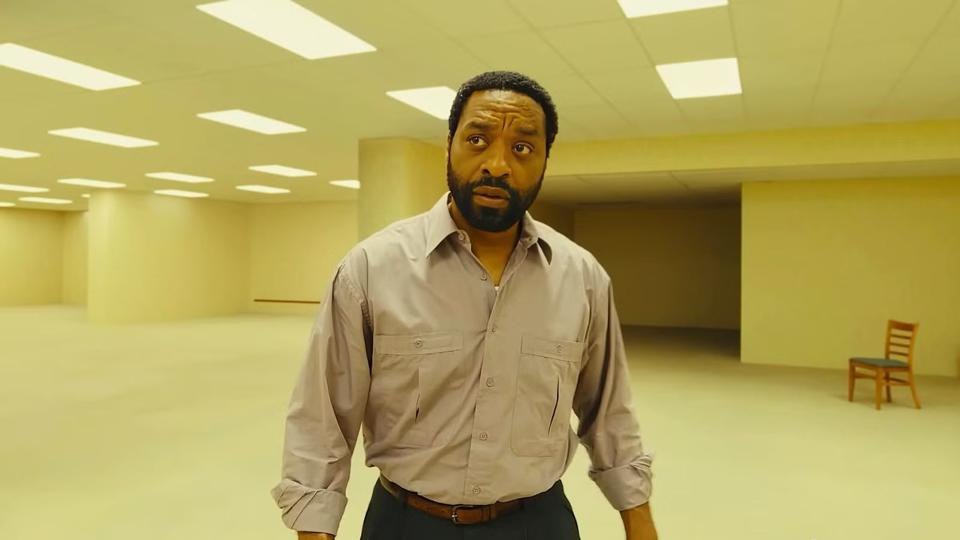
In the film "Behind the Scenes"« shows the downward spiral of Clark (Chiwetel Ejiofor), a man stuck in a rut, living in his own furniture store and falling asleep in alcohol.
When Clark enters Backstage, he discovers an endless maze of randomly scattered debris, including items from his shop.
Deep within the soul are mindless copies of real people, "distorted" in the Backstage and horribly deformed - Clark even finds a monstrous clone of himself and decides to befriend him.
When Clark's therapist, Dr. Mary Kline (Renate Reinswe), enters Backstage to look for him, she realizes that Clark isn't trapped—he enjoys living in this artificial space.
Clarke believes that the Backstage absorbs memories and reproduces them poorly, which is why the rooms are full of distorted images of people and objects.
After Clark demands Mary confirm his delusions, he is eaten by a monstrous clone that embodies his worst side.
«Behind the Scenes» — is a gripping story of a lost soul in a self-imposed prison that bears a striking resemblance to artificial intelligence.
The parasitic nature of "Behind the Scenes" is similar to the principles of generative artificial intelligence, which operates by consuming vast amounts of text, images, and video created by real people and producing media content that contains inhuman errors.
Common "hallucinations" in AI-generated media include distorted hands, limbs, and faces, as well as deformed objects that blend into the floor and walls.
These hallucinations are less common in newer, more powerful models, but are often seen in background details, especially in complex images and videos, such as crowd scenes.
"Backstage" utilizes a similar visual component, reflecting the outside world but without regard for context. The furniture, randomly arranged, is often devoid of important elements or blends into the floor.
What's most striking is that the inhabitants of Backstage, with their extra fingers and distorted facial features, closely resemble hallucinations created by artificial intelligence.
In the film, Backstage is only discovered because it steals electricity from Clark's store, reflecting concerns about the energy-hungry data centers that power generative AI models.
While "Backstage" is strikingly artificial and nightmarish, there's something about it that appeals to Clarke—escapism and a hollow attempt at self-affirmation.
Artificial intelligence chatbots are known for their obsequiousness and ability to confirm delusional and paranoid thoughts, which sometimes leads to tragic consequences.
Clark's downfall echoes the story of a victim of AI-induced psychosis, where the Backstage provides him with a refuge from reality, a place where no one tells him he's wrong—his only companion is his worst self.
«Behind the Scenes» It's a horror story about a stagnant life, a tale of a lost soul who refuses to change, but it can also be seen as a metaphor for the worst aspects of generative artificial intelligence.
Like the endless corridors of Backstage, littered with half-forgotten junk, artificial intelligence floods the internet with meaningless nonsense and tells vulnerable users exactly what they want to hear.
In the film, Clark's last words before he is devoured are the words he uses to reassure his monster: "We don't need to change.".
MORE FROM FORBES
FORBES | Dani di Placido: The Surreal Ending of 'Behind the Scenes' Explained
FORBES | Author: Dani Di Placido. How does A24's "behind the scenes" relate to the online phenomenon?
FORBES | Dani Di Placido "Obsession" - what is a willow that grants one wish?
FORBES | Dani Di Placido: Unraveling the Mysteries of "Clark's Monster" and "Behind the Scenes"«
This article was originally published on Forbes.com.