






A small bathroom doesn't mean sacrificing personal comfort and hygiene. Many people believe that a bidet requires too much space and is difficult to install, but this isn't entirely true. There's an elegant and practical solution that has been popular in many countries for many years: a bidet shower. This compact device consists of a faucet with a long flexible hose and a special spray head, which is mounted next to the toilet. It not only provides comprehensive intimate care but is also incredibly useful around the home: for cleaning toilet trays, filling tall containers with water, or quickly cleaning the plumbing itself. Essentially, you get the functionality of a bidet without taking up any extra precious space.
Types of hygienic showers: from simple to intelligent
Before heading to the store, it's worth understanding the options available. These aren't just "a hose with a button." Designs vary in complexity, installation method, and, of course, price. The most affordable and common option is a wall-mounted hand shower. It consists of a concealed or exposed faucet, to which a hose and shower head are connected. The shower head is usually stored in a special holder on the wall. This type of shower connects to existing cold and hot water pipes. Important: for comfortable use, it's best to choose models with a thermostat that maintains the desired water temperature, preventing unexpected burns or freezing splashes.
A more expensive and technologically advanced solution is a toilet with a built-in bidet function or an intelligent bidet lid. In the former, the hygienic shower is integrated directly into the toilet, controlled by buttons on the panel, and often features additional functions such as drying, a heated seat, and deodorization. A bidet lid is a stand-alone device that mounts on an existing toilet. It also features a built-in pull-out shower head and an electronic control unit. These models require an electrical outlet near the toilet and a water supply. Their main advantages are aesthetics (everything is hidden) and maximum comfort, but the price is also corresponding.
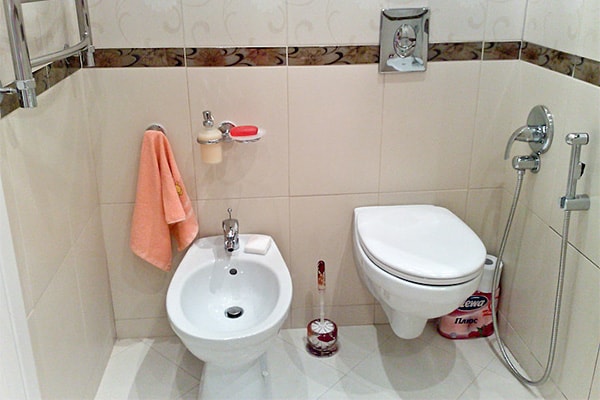
Let's look at three main types of devices that can replace a traditional bidet in limited space. Each has its own strengths and is suitable for different situations and budgets. The first option is a bidet seat with electronic controls. It's ideal for people with limited mobility, as it's often controlled by a remote control. It can be installed on almost any toilet, but this is the most expensive option. The second type is a prefabricated toilet with a built-in bidet function. This type of plumbing fixture has a seamless and stylish appearance, but requires a complete replacement of the fixture. Finally, the third, most popular and versatile option is a separate wall-mounted bidet shower. It doesn't require a complete bathroom renovation, is easy to install and maintain, and offers functionality comparable to more expensive alternatives.
- Bidet lid. A high-tech solution with electronic controls, heated water and seat, and a drying function. Requires power. Suitable for any toilet, but is expensive.
- A toilet with a built-in bidet. A complete sanitary system with all components integrated. It looks aesthetically pleasing and is easy to operate. The downside is that you need to buy a new toilet.
- Wall-mounted hand shower. A classic and practical solution. It consists of a faucet, hose, and shower head. It's wall-mounted and connected to the water supply. Excellent balance of price, functionality, and ease of installation.
How to Install a Bidet Shower: Four Practical Methods
Installation is a key step, determining the convenience and durability of the system. The main advantage of a stand-alone bidet over a fixed bidet is installation flexibility. It can fit into any layout, even the most cramped. The installation method depends on the condition of your bathroom: whether you're renovating from scratch or wanting to add convenience to an already lived-in space. For example, when completely replacing plumbing and utilities, you can choose a concealed installation, where all the pipes and faucet are hidden within the wall, leaving only a neat panel with a shower head exposed. This is the most aesthetically pleasing, but also the most labor-intensive option.
If you're not ready for a major renovation, there are several effective solutions. For example, connecting the sink to the faucet if it's located nearby. This requires replacing the standard faucet with a pull-out spout. This "kitchen-style" approach works well in combined bathrooms with older layouts. Another common method is installing a separate faucet with a shower head on the wall next to the toilet. This requires cutting into the plumbing but won't affect other fixtures. It's important to ensure the shower hose is long enough for comfortable use.

- Connection to the toilet cistern. Specialized kits with a faucet built into or mounted on the cistern. Convenient when purchasing a new single-piece toilet. They often require a hot water supply from below. Keep in mind that this type of installation is almost impossible on an existing toilet.
- Wall mounting of a separate mixer. A versatile and popular method. A compact faucet (preferably thermostatic) is mounted on the wall next to the toilet. Cold and hot water are supplied to it, and a hose with a hand shower is attached. After use, the water is shut off at the faucet itself to relieve pressure in the hose.
- Connection to the sink mixer. Ideal for small combined bathrooms, this upgrade features a special sink faucet with a pull-out hand shower instead of the standard spout. Only the faucet is replaced; the plumbing remains the same.
- Concealed (built-in) installation. Used during major renovations, the faucet and hose are concealed within the wall or behind a false panel for a wall-hung toilet. Only the decorative panel and shower head holder remain exposed. This provides maximum aesthetics and protection from accidental damage.
Selection criteria: what to look for when buying
Choosing a specific model is always a compromise between budget, functionality, and quality. First and foremost, consider the material. Cheap silumin (aluminum alloy) is lightweight but brittle and can crack when tightening the nuts. The best option in terms of price and reliability is brass with a chrome or matte nickel finish. Such fittings will last for many years. Pay attention to the internal components: membranes and gaskets made of silicone or EPDMRubber is more durable than regular rubber. The second key consideration is the type of faucet. A simple two-handle faucet requires manual temperature adjustment. A single-lever faucet is more convenient and safer. And the ultimate in convenience is a thermostatic faucet, which maintains a set temperature regardless of pressure fluctuations in the system.
Design is equally important. Make sure the model is designed for both hot and cold water connections (dual-inlet). Some of the cheapest "pseudo-showers" only connect to cold water, which negates their convenience. Check the hose length: the standard is 1.5-2 meters, which is usually sufficient. The shower head should have a convenient instant shut-off (pause) button and a secure holder. After use, the shower head always leaks—a common feature of all models—so the holder should be designed so that any drips flow into the toilet bowl, not onto the floor.
- Material and build quality. A chrome-plated brass body is preferable to silumin. Check the smoothness of the levers and the integrity of the coating. The country of manufacture and brand often indicate quality control.
- Mixer type. Valve (cheaper), single-lever (more convenient), or thermostatic (safer and more comfortable). A thermostat is the best investment in your comfort, especially if your system experiences temperature fluctuations.
- Length and quality of the hose. A stainless steel braided hose is stronger and more durable than a plastic one. The length should allow for comfortable use of the shower head without straining the hose.
- Functionality of the watering can. The presence of a pause button, a comfortable shape, the material (preferably metal), and the mounting method in the holder. The holder should securely hold the shower head and direct the drops into the bowl.
- Completeness and warranty. It's best to buy a complete kit from a single manufacturer: faucet, hose, shower head, holder, and mounting hardware. This ensures compatibility and simplifies installation. Be sure to review the warranty terms.
The cost of a hand shower can range from several hundred to tens of thousands of rubles. A simple wall-mounted brass model with a two-handle mixer will cost 2,000-5,000 rubles. Thermostatic models from well-known European brands can cost 15,000-30,000 rubles or more. Don't chase the lowest price—it often means low-quality materials that will quickly fail. Remember that this device is purchased for many years, and its reliability directly impacts comfort and the absence of leaks. If in doubt, consult not the salesperson, but a trained plumber who knows which models truly work well in our water supply conditions.