








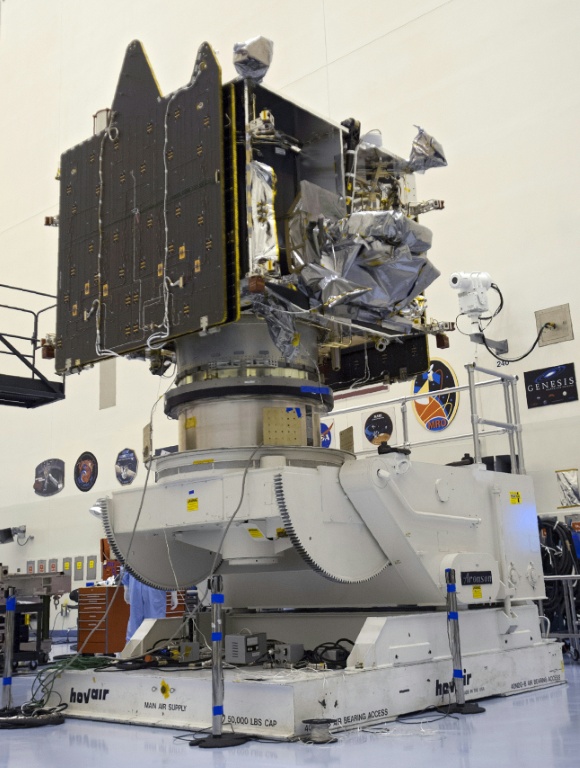
NASA said Wednesday it will end its mission to study the atmosphere and evolution of Mars after the probe went silent for six months.
The Mars Atmosphere and Volatile Evolution (MAVEN) spacecraft entered Martian orbit in 2014.
The mission was originally expected to last one or two years, but the probe remained active for more than a decade, until December 2025, when it lost contact with Earth.
After months of silence, NASA has come to terms with the loss of a spacecraft believed to still be in orbit around Mars.
The US space agency said on Wednesday it would investigate the cause of the crash.
For Shannon Currie, an astrophysics professor who participated in the flight, it was "the best mission to Mars ever.".
As Curry told reporters, the probe allowed scientists to understand the phenomenon of atmospheric leakage, that is, the loss of atmospheric gases into space.
«"We now understand the atmospheric leakage process better on Mars than on any other planet, including Earth, and therefore Mars serves as an incredible natural laboratory for studying the atmospheres of rocky planets," Curry said.
NASA's program manager, Tiffany Morgan, added that MAVEN "has significantly advanced our understanding of Mars' atmosphere, climate history, and habitability.".
The probe also served as a communications relay between Earth and the robots NASA sent to the surface of the red planet.
Now other orbital vehicles will have to intercept these relays.
cha/ph/sla/jgc