








August 12 promises to be a busy day for space enthusiasts, as a solar eclipse, meteor shower, planetary alignment, and new moon will all occur on the same night.
Overall, August is a great time for skywatching, with plenty of events happening throughout the month and warmer nighttime temperatures making for comfortable conditions.
A guide to observing the sky in August: from planetary parades and eclipses to a meteor shower.
Find out which celestial events will be in focus on Wednesday:
According to the Planetary Society, a parade of six planets will begin at dawn on Tuesday and last for several nights.
Jupiter, Mercury, Mars, Uranus, Saturn and Neptune will take part in this parade of planets.
NASA's mission to rescue the Swift telescope has encountered a major setback.
Those looking to see this six-planet spectacle will likely only be able to see four without any aids: Jupiter, Mercury, Mars, and Saturn.
To observe Uranus you will need binoculars, and to observe Neptune you will need a telescope.
The new moon in the rising sky will make it easier to observe the planets in the night sky.
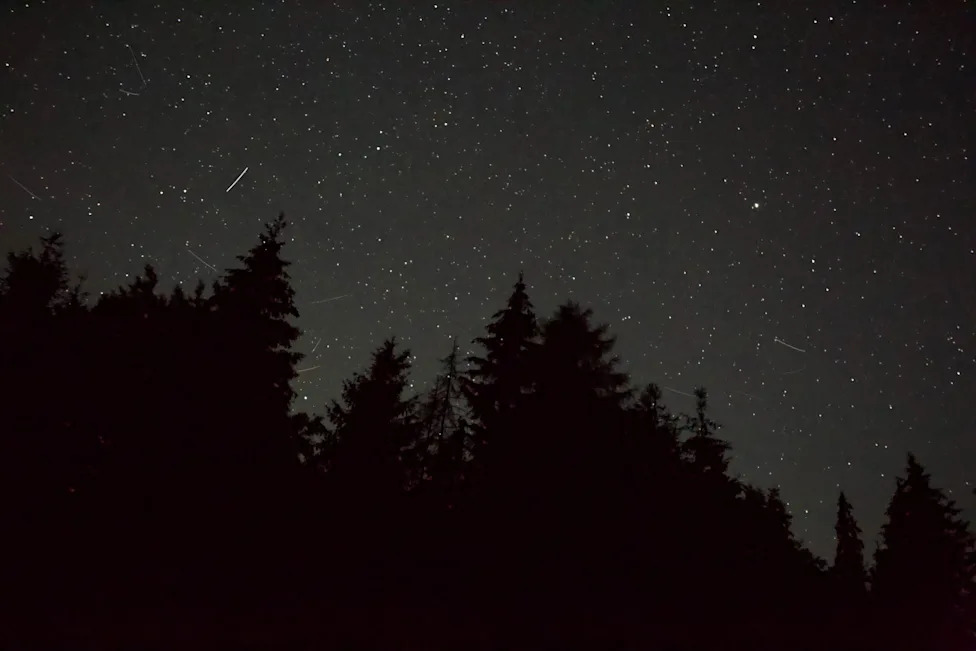
MURAN, SLOVAKIA - JULY 9: Sky view with stars, Milky Way and space object at Muranska Planina dark sky park captured during the event "Stars over Muran" organized by regional tourist organization Gemer, in Muran, Slovakia on July 9, 2026.
The next new moon occurs on Wednesday at 1:37 PM ET.
Another exciting celestial event will occur around the same time as the new moon.
According to NASA, the total solar eclipse will pass through northern Russia, Greenland, Iceland, and northern Spain, with a small corner of Portugal in the path of totality.
In the United States, a partial solar eclipse could be visible from Alaska to North Carolina.
Watch: NASA's Curiosity rover captured stunning images of honeycomb-like texture while exploring Mars.
Be sure to wear protective eyewear if you find yourself in the path of a solar eclipse, whether partial or total. Observers can use special solar viewing glasses (often called "eclipse glasses"), portable solar filters, or other safe solar filters that block most of the sun's light and prevent eye damage, according to NASA.
A complete list of viewing times for the eclipse from around the world can be found on NASA's website here.
The Perseid meteor shower will reach its peak on the night from Wednesday to Thursday.
The Perseids, formed from debris left behind by Comet Swift-Tuttle, can produce up to 100 meteors per hour, making them one of the most spectacular meteor showers of the year.
A NASA telescope has discovered a hidden planet using a revolutionary method after years of space searching.
The Northern Lights (Aurora Borealis) light up the sky over Joshua Tree National Park during the Perseid meteor shower in Joshua Tree, California, early on the morning of August 12, 2024.
This year, observing meteors will be much easier during the new moon, as the sky will be dark.
NASA recommends looking northeast after dark to see the constellation Perseus on the horizon to view this meteor shower.
«"This is where meteors are born, but don't look away just yet, because they can streak across any part of the sky," NASA said.
How to watch the weather forecast on the Fox Weather channel
The Perseid meteor shower is seen over Lake Cubuk in the Goynuk district of Bolu province, Türkiye, on August 13, 2024.
Find a dark location when the stars are highest in the night sky and allow your eyes to adjust for about 30 minutes to increase your chances of seeing meteors.
Original article: 4 Major Celestial Events That Will Dominate the Night Sky Next Week