






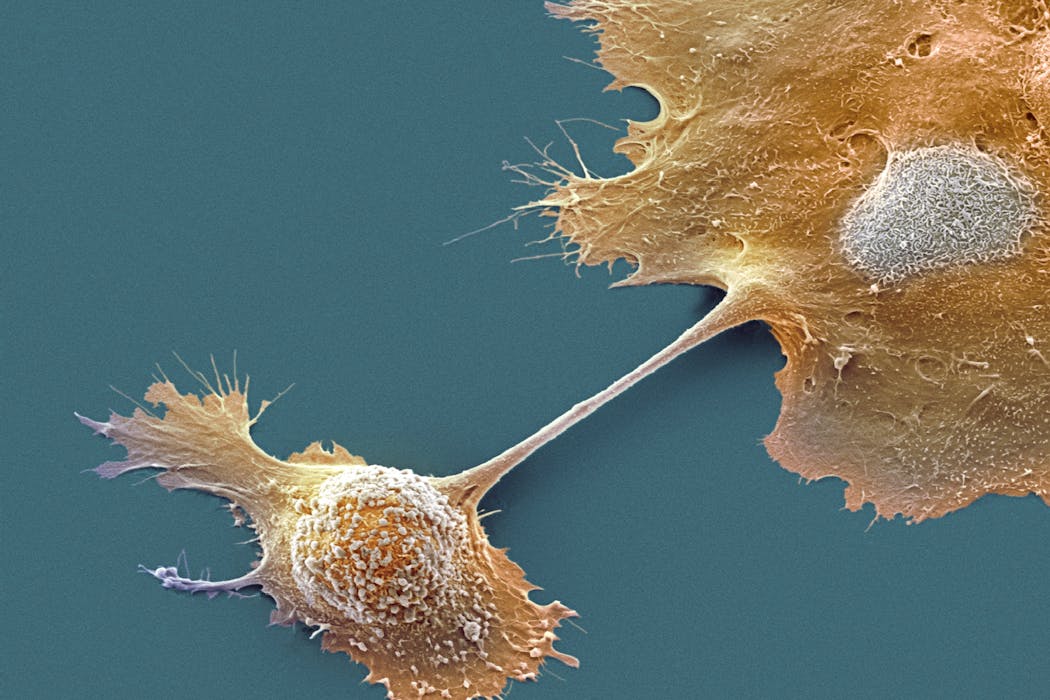
For a long time, survival rates for pancreatic cancer were extremely low. Among patients diagnosed with metastatic pancreatic cancer between 2015 and 2021, approximately 971 TP3T died within five years of diagnosis.
Pancreatic cancer is so dangerous in part because there are no effective screening methods, and in its early stages, it rarely causes noticeable symptoms. By the time a patient develops symptoms such as jaundice (yellowing of the skin) or abdominal pain, the cancer has often already spread to other organs.
As a gastroenterologist-oncologist and a researcher specializing in early-phase clinical trials, I see a pressing need for more effective treatments for patients with pancreatic cancer. For decades, it was considered impossible to successfully target the central mechanism that causes the vast majority of pancreatic cancer cases.
However, this situation is rapidly changing thanks to a new drug that can suppress a key protein that causes pancreatic cancer, nearly doubling the survival rate of patients with the late-stage disease.
«"Incurable" tumors
Standard treatment for advanced pancreatic cancer has historically relied on chemotherapy—potent drugs designed to kill rapidly dividing cells. While chemotherapy can slow disease progression, its effectiveness is often limited by the ability of pancreatic cancer cells to develop resistance to these drugs.
KRAS (blue) is a complex protein that is difficult to target with drugs. Fvasconcellos/Wikimedia Commons
Pancreatic cancer's success is rooted in its genetics. More than 90% pancreatic tumors are caused by mutations in the KRAS gene. This gene encodes proteins that act as switches that turn cell growth on and off. When the KRAS gene mutates, the switch becomes permanently stuck in the "on" position, commanding cancer cells to proliferate indefinitely.
For decades, scientists considered KRAS "drug-resistant." The protein's surface is exceptionally smooth, lacking the molecular pockets needed to bind to standard drugs and turn off this "switch.".
Because existing drugs are unable to target this protein, pancreatic cancer treatment relies primarily on toxic drugs that act more like blunt instruments than precise agents. Chemotherapy attempts to control the disease through widespread cell destruction, causing significant collateral damage to healthy tissue, leading to side effects.
What is daraxonrasib?
A new drug called daraxonrasib represents an important step forward in the treatment of metastatic pancreatic cancer.
Daraxonrazib is taken orally daily. Instead of directly binding to KRAS, it binds to the cyclophilin A molecule in cells, which helps proteins fold into their final three-dimensional structures. This protein complex is then able to bind to the active KRAS protein and inhibit its ability to signal cancer cells to proliferate.
On May 31, 2026, Revolution Medicines, the company developing the drug, presented the results of a phase 3 clinical trial involving 500 patients with previously treated metastatic pancreatic cancer. Compared to standard chemotherapy, daraxonrazib nearly doubled overall survival—from 6.7 to 13.2 months after diagnosis. Overall, daraxonrazib reduced the risk of death in patients with 60% metastatic pancreatic cancer.
The most common side effect was a severe skin rash, which was observed in more than 861 patients participating in the study. Patients also frequently experienced stomatitis—a painful swelling and ulceration in the mouth—as well as diarrhea, nausea, and vomiting. However, patients receiving daraxonrasib were significantly less likely to discontinue treatment due to serious side effects compared to chemotherapy, and they experienced improved quality of life and reduced pain.
Next steps for using daraxonrasib
By successfully targeting a specific genetic mutation that causes the vast majority of pancreatic cancer cases, researchers have demonstrated that this "incurable" disease is treatable with targeted therapy.
The next step will be regulatory approval of the drug for clinical trials. Following the official publication of the data, Revolution Medicines will use these results to seek formal approval from the Food and Drug Administration (FDA) and other international regulatory agencies.
Because advanced pancreatic cancer is notoriously difficult to treat, breakthrough therapies demonstrating such significant survival benefits are often given accelerated or priority review. The timing of daroxonrazib's availability to patients will depend on the review schedule. If approved, the drug could be available in clinics within a few months.
In the broader context of drug development, this milestone represents a potential shift in pancreatic cancer treatment. I expect more clinical trials to explore combination therapies combining KRAS inhibitors with other drugs to prevent tumors from developing resistance to treatment.
If daraxonrasib is successful, this could pave the way for more precise, personalized, and effective treatments for pancreatic cancer in the coming years.
This article is republished from The Conversation, a nonprofit, independent news organization that provides you with facts and reliable analysis to help you make sense of our complex world. By Christopher Liu, University of Colorado Anschutz.
Read more:
-
Stopping cancer cells that thrive on chemotherapy: Research into how pancreatic tumors adapt to stress could lead to a new treatment approach.
-
A new way of organizing information about cancer cell mutations could lead to more effective treatment choices for patients.
-
GLP-1-mediated drugs like Ozempic show great promise for more than just weight loss. But which is better: science or hype?
Christopher Liu does not work for, consult, own shares in, or receive funding from any company or organization that would benefit from this article, and has disclosed no relevant affiliations beyond his academic position.