








Through star-studded screenings, discussions, and rooftop parties, ABFF continues its mission to elevate the voices of Black filmmakers.
In June 1997, African-American film stars such as Regina King, Halle Berry, Debbie Allen, Robert Townsend, and many others came to Acapulco, Mexico, for a celebration of African-American cinema. Berry received her first-ever acting award. After debuting at the festival that same year, the film "Hav Plenty" was acquired by Miramax and released. It also created a space for critical discussion about the lack of opportunities for African-American talent in the film industry in the 1990s. It was the beginning of something special.
Rumor has it that back home the festival was more like a party, which, as the festival's founder, television and film producer Jeff Friday, admits, was indeed the case.
«"We had fun, but we also managed to get some things done," he said on Thursday, May 28.
Almost 30 years later—after a rebranding and move to the US—the party continues to rage.
From sold-out, cast-filled screenings and raucous red carpets to endless talks and star-studded rooftop parties that lasted late into the night, the 30th annual American Black Film Festival (ABFF) transformed Miami Beach into a celebration of stories created by Black filmmakers for five days beginning Wednesday, May 27.
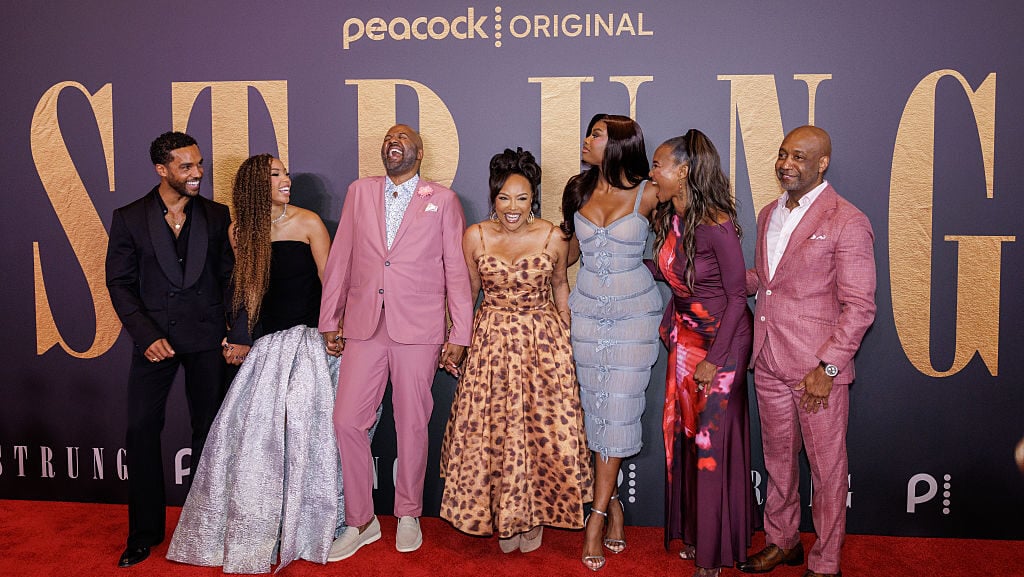
(L-R) Alexis Fraser, Malcolm D. Lee, Dominique Telson, Chloe Bailey, Lynn Whitfield, Lucien Laviscount, and Coco Jones speak during the Peacock panel discussion "Strung: From Script To Screen" as part of the 2026 American Black Film Festival at New World Center on May 28, 2026 in Miami Beach, Florida. (Photo by Arturo Holmes/Getty Images for ABFF)
«"Someone asked me how I was feeling? I'm never speechless, but this time I was truly speechless," Friday said during the premiere. "I'm overwhelmed with joy and gratitude. You've all been with us for 30 years.".
The festival opened with a screening of Malcolm D. Lee's upcoming film "Strung," which will be available on the Peacock platform. Following the screening, the actors, Chloe Bailey, Coco Jones, Lucien Laviscount, and Lynn Whitfield, sat down for a Q&A session. The following day, after the audience laughed, applauded, and screamed throughout the screening, the actors shared their impressions of watching the film in a theater full of Black people.
«"There's nothing better than watching a movie with black people in it," Jones joked.
Debbie Allen, Taylor Polydore Williams, and Felicia Pride speak onstage during the Netflix panel celebrating Black television as part of the 2026 American Black Film Festival at the New World Center on May 29, 2026, in Miami Beach, Florida. (Photo by Arturo Holmes/Getty Images for ABFF)
It was then that the purpose of ABFF's 30-year existence became clear. This year's festival, led by Ambassador King and featuring the Florida A&M University Marching Band under the theme "Coming Home," comes at a particularly important moment for Black stories. In a year when the number of films featuring Black actors released in theaters can be counted on one hand, and when Black history, culture, diversity, equality, and inclusion continue to face increasing political and cultural attacks, the festival felt urgent.
For 30 years, the ABFF has served as a place for Black artists to bring their work home, not just geographically, but culturally. It's a place where filmmakers can share their stories with an audience that instinctively understands the references, appreciates nuance, and responds with the enthusiasm only family can provide. Frankly, it's the artistic equivalent of showing your latest achievement to Big Mama and everyone else. No one will applaud louder.
«"This is a safe place for us," Friday added. "There's been a lot in the news about places where we're not treated so favorably. Our culture is exploited, but that won't happen here.".
Michelle Buteau, Nicole Friday, and Amy Aniobi attend a panel discussion about the 2026 American Black Film and Television Festival from Netflix held on May 29, 2026, at the New World Center in Miami Beach, Florida. (Photo: Alexandra London/Getty Images)
This energy wasn't limited to celebrities or established filmmakers. During the HBO short film screenings, audiences reacted enthusiastically to films from around the world, laughing, gasping in amazement, and becoming engaged as the stories unfolded. When the filmmakers became emotional while sharing the inspirations for their projects, the audience responded with support and applause.
The support was mutual. Throughout the week, artists repeatedly spoke about the importance of spaces where Black creatives can gather, share work, and support each other. This spirit was palpable. In addition to "Strung," the festival featured gripping family dramas like "Girl Dad," starring Marsai Martin and Courtney B. Vance; directorial debuts like "Thought She Was the One" by T.I.; contemporary musicals like "Otra," documentaries like "Black Is Beautiful: The Kwame Brathwaite Story," international feature films like "Small Gods," and much more.
The festival featured discussions of the industry's realities, artistic ambitions, and the responsibility many creators feel to tell stories that might otherwise remain untold. In one panel, Black anime voice actors discussed the importance of representation in anime and how Black audiences have long embraced art that rarely puts them front and center. In another, media icon Iyanla Vanzant reflected on her next step in anticipation of her return to television.
The festival's annual awards ceremony recognized both emerging and established talent, sometimes even within the same awards ceremony—Marsai Martin and Bashir Salahuddin shared the acting award. Awards were presented to directors of documentaries, features, series, and international films, as well as screenwriters, directors, and other performers, continuing a tradition that previously honored the likes of Issa Rae and Ryan Coogler before they became some of the most influential figures in the industry.
(L-R) Amy Aniobi, Nina Parker, Tani Marol, Michelle Buteau, Courtney Kemp, Crystle Stewart, Mario Van Peebles, Taylor Polydore Williams, Maleah Joy Moon, Debbie Allen, and Felicia Pride speak onstage during the Netflix panel celebrating Black television at the New World Center as part of the 2026 American Black Film Festival on May 29, 2026, in Miami Beach, Florida. (Photo by Aaron Davidson/Getty Images for Netflix)
However, some of the festival's most significant moments occurred offstage and outside of the screenings. Media personality Bevy Smith, who hosted HBO's short film program, told theGrio that she has been attending ABFF for over 20 years. During her first visit, she recalled waiting for a taxi and striking up a conversation with another attendee, who turned out to be Charles D. King, the future founder and CEO of Macro.
«"There's some truly magical stuff that happens at ABFF," Smith said. "That's what makes it so special, because if you open up, you never know who you're talking to.".
She's right.
During casual conversation while waiting for the panel to begin, you might connect with a director from your hometown, an entertainment journalist, a studio executive, or a future collaborator. Over the course of the week, strangers became connections, and ideas became opportunities. Those attending for the first time planned to return, and many noted that this was already their third, tenth, or even more than twentieth visit.
The musical accompaniment to the proceedings reflected the scale of the diaspora itself. Baltimore club music and Washington, D.C., go-go mingled with Chicago house, Afrobeat, soca, and R&B as filmmakers, executives, journalists, and film buffs moved between screenings, discussion panels, and parties.
Marsai Martin and Bashir Salahuddin perform on stage during the Best Of The ABFF Awards ceremony as part of the 2026 American Black Film Festival at the New World Center on May 30, 2026 in Miami Beach, Florida. (Photo by Arturo Holmes/Getty Images for ABFF)
By the week's final party, the White Party at M2 Miami, hosted by Terrence Jay, the atmosphere felt more like a family reunion than an industry event. Dressed in white, guests filled the dance floor, celebrated another successful year, and toasted the future of African-American storytelling.
Thirty years after a group of Black artists gathered in Acapulco to celebrate stories often ignored by Hollywood, the festival's mission remains remarkably unchanged. The festival has grown. The industry has evolved. But for one week each summer, Black storytellers still come together to share their work, support each other, and imagine what else is possible.
And judging by the packed theatres, standing ovations and packed dance floors that ended the week, they're still doing a great job.
Other must-read materials:
-
Dexter Wansel, a Philadelphia soul legend with a rich family history who produced Teddy Pendergrass's "Love TKO" album, has died at the age of 75.
-
Steph Curry has concluded his sneaker free agency period by signing a massive 10-year deal with Chinese company Li-Ning.
-
Social media mourns the end of Euphoria and the reality of addiction.