








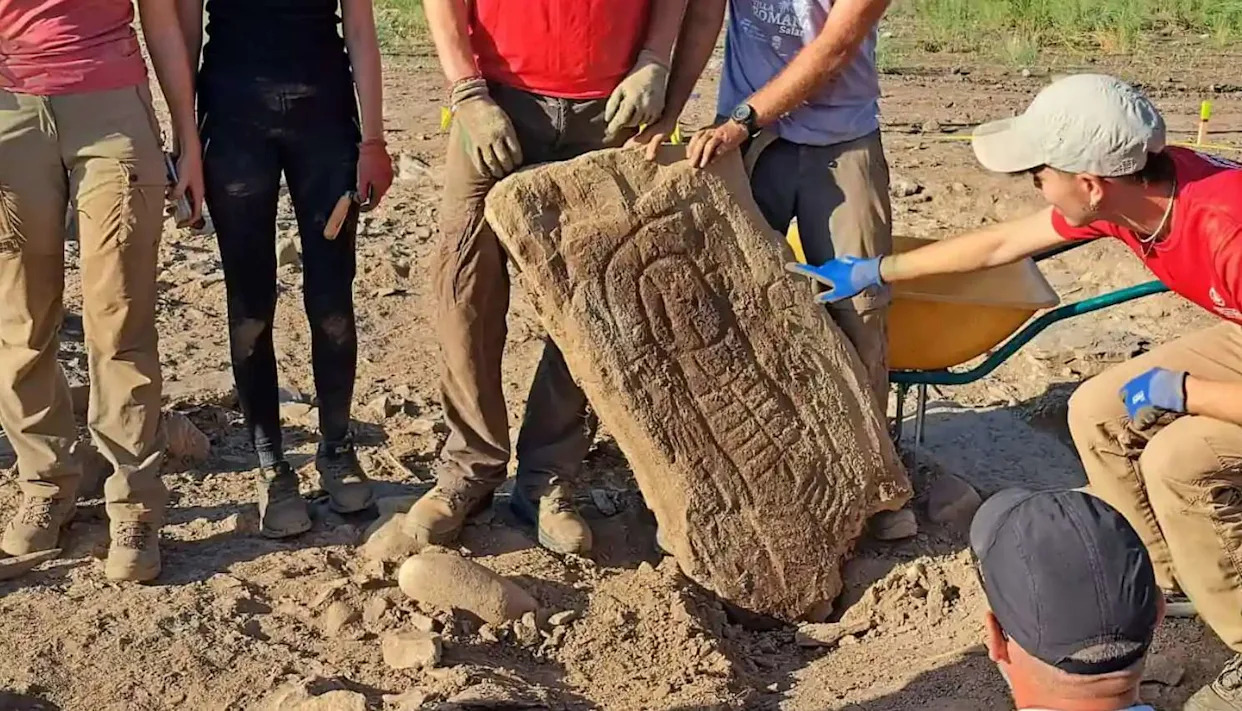
Three stone monuments discovered in southwestern Spain may finally help answer a question that has puzzled archaeologists for over a century: what exactly were ancient Iberian steles used for?
A recently studied burial complex suggests the answer may not be limited to a single purpose. Instead, the stones may have served simultaneously as gravestones, territorial markers, and road signs.
What's happened?
In Las Capellanias in Huelva, archaeologists working with the University of Seville discovered three stelae in the same location as graves and a former road. According to La Brújula Verde, such immediate context was missing from the long-standing debate about the purpose of these decorated stones.
Work at this site began after a chance discovery in 2018, when a stele was discovered on the side of the road. From 2019 to 2023, researchers explored approximately 5 kilometers around the site and recorded 18 burial structures, eight of which were fully excavated.
The tombs cover an unusually long period, from the second millennium BC to the middle of the first millennium BC, with particularly intensive use observed between the 8th and 6th centuries BC.
The location of the monuments suggests they served multiple functions in the landscape. Two of them are steles depicting warriors, one is a stele with a diadem, and all three were located near graves and along the trail, suggesting they may have marked burial sites and also marked the route.
Why is this important?
This discovery provides a clearer picture of how the inhabitants of ancient Iberia lived, travelled, traded and honoured the memory of their dead.
The graves contained cremated remains, ceramic urns, bronze objects, glass beads, a silver earring, and evidence of external influence from Phoenician and Greek trade networks. One urn, made on a potter's wheel, appears to be associated with Phoenician traditions, while other vessels and metal objects reflect local customs.
Taken together, the findings suggest that communities in the region mixed imported ideas with older regional practices.
The researchers also found stable isotope data indicating the presence of marine fish in the diet, despite the coast being more than 62 miles from the collection site. This detail suggests that long-distance trade routes were part of everyday life, influencing dietary habits and burial rituals.
This was part of a wider network of mobility, trade and cultural exchange during a period of important transitional changes in southwestern Iberia.
What is being done?
Researchers are currently using Las Capellanias as an important reference point for studying prehistoric stelae on the Iberian Peninsula. Because the stones were found near graves and along a route that may have been used for centuries, the site offers archaeologists a rare opportunity to compare similar finds elsewhere.
The excavations also highlight the importance of protecting landscapes that may appear ordinary today but are located above ancient infrastructure and burial sites. In this case, the modern trail appears to preserve the line of a much older communication route, possibly used long before it was recorded in the medieval period.
As the researchers concluded, the excavations revealed «temporal continuity, geographical connectivity, and cultural hybridization in funerary architecture and objects» and provide «valuable and new data for understanding the social and cultural context of prehistoric stelae use in the Iberian Peninsula as never before.».
Subscribe to TCD's free newsletters to receive helpful tips, actionable advice, and a chance to win $5,000 toward your home improvement. To see more stories like this, change your Google preferences here.