








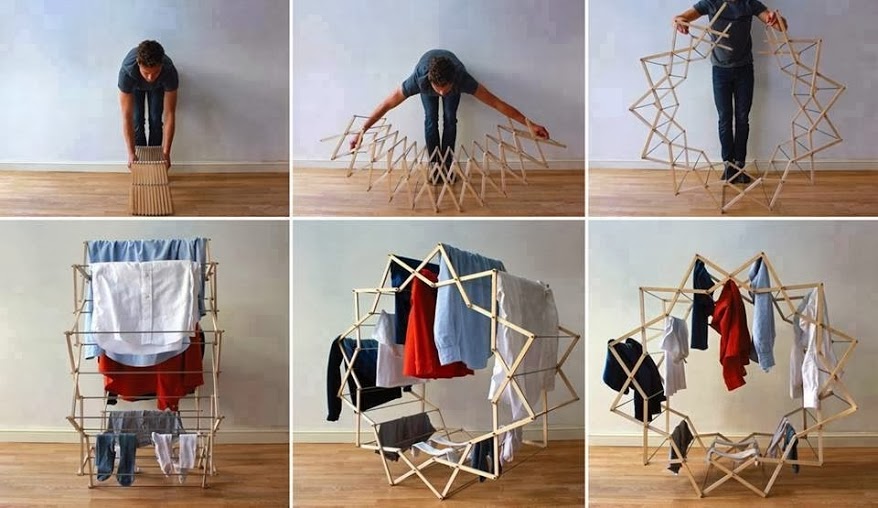
Drying laundry in a city apartment is a constant headache. Taking it out to the balcony isn't always convenient, especially in winter or when it's raining, and hanging it indoors can ruin the indoor climate and decor. The bathroom is a logical compromise: it has ventilation, high humidity isn't a problem, and wet laundry isn't a nuisance. But how do you choose a dryer that's convenient, roomy, doesn't take up too much space, and fits into your design? I've tried almost every type and am ready to offer a detailed comparative analysis based on my personal experience.
The key selection criteria are the size of your bathroom, the amount of laundry you need to dry regularly, whether you have children or pets, and your budget. A floor-standing dryer is a classic, but it takes up space. A ceiling-mounted or wall-mounted model frees up floor space but requires permanent installation. An electric dryer dries quickly but consumes energy. But is it possible to build a convenient dryer yourself using household items? Let's explore the advantages and disadvantages of each option so you can make an informed choice.
Floor-standing dryers: mobility versus space requirements
This is the most common and affordable type. It's a folding structure made of metal (or, less commonly, plastic) pipes with several "wings" or tiers. Its main advantage is its portability. It can be placed anywhere, unfolded, and, after use, folded and stored in a closet or behind the bathtub. Modern models can be very spacious, holding 30-40 meters of rope. There are also vertical (lift) dryers, which take up only 40x40 cm of space when folded, but open up to 2-3 tiers.
However, in a small bathroom, even a folded dryer can be an inconvenience. An unfolded one completely blocks access to the cabinets. Another drawback is instability. If the dryer is lightweight and the laundry is heavy and unevenly hung, it can tip over, especially if you have active children or cats who like to jump on it. When choosing, consider the material (aluminum is lighter, steel is stronger), the reliability of the folding mechanisms, and the rubber pads on the feet, which protect tiles from scratches and improve traction.
- Pros: Low price, mobility, no installation required, easy to fold and put away.
- Cons: Takes up useful space when unfolded, may be unstable, limited capacity.
- What to look for: On the material and thickness of the pipes, on the number and length of sections, on the quality of the clamps and rubber feet.
- For whom: For those with a spacious bathroom or who are willing to put the dryer away after each use. Ideal for seasonal drying of small loads of laundry.

Ceiling and wall-mounted dryers: maximum space
These are stationary systems that are attached to the ceiling or wall. A classic ceiling-mounted dryer consists of two rails with several rods attached to ropes running between them on rollers. Using a special pole, you hook the rod, lower it to a convenient height, hang the laundry, and then raise it back up to the ceiling. This ingenious invention completely frees up floor and wall space. The capacity is enormous—some models can dry up to two full washing machines at once.
A wall-mounted dryer operates on a similar principle, but is attached to the wall and folds out horizontally, like an accordion or book. It can be unfolded over the bathtub and then folded back against the wall. It's smaller than a ceiling-mounted dryer, but easier to install (no need for access to a solid ceiling). The disadvantages of wall-mounted dryers include: installation is more complex (requires securely fastening the brackets to the ceiling/wall), they're more expensive than floor-mounted dryers, and ceiling-mounted dryers also require maintenance (cleaning the rollers and lubricating the mechanism).
- Ceiling dryer: Maximum capacity, completely free of floor space. Requires a high ceiling and secure mounting (preferably in a concrete floor).
- Wall-mounted accordion dryer: Compact when folded, unfolds quickly. Capacity is smaller than a ceiling-mounted model. Mounts to any sturdy wall.
- Wall-mounted lier (rope): The simplest option: two brackets with coils, with several strands of rope stretched between them. It's inexpensive, but less convenient and aesthetically pleasing.
- For whom: For owners of cramped bathrooms, who dry laundry frequently and in large quantities, and are ready for permanent installation.

Electric dryers: speed and comfort at an extra cost
This high-tech option features a heating element in a housing with shelves or laundry rods. It's plugged into an electrical outlet. Its main advantage is speed. Wet laundry dries in a few hours instead of a day. This is especially important during colder months or in homes with poor ventilation. Many models feature a timer, temperature control, and even an antibacterial steam setting.
However, electric dryers have significant drawbacks. First, they consume electricity (1 to 3 kW). Second, they take up space (although wall-mounted and ceiling-mounted models are available). Third, they are expensive: they are several times more expensive than their mechanical counterparts. Safety is also important to remember: a device with a heating element and dripping water requires careful handling and reliable grounding. Avoid using it to dry delicate items, as they may shrink from the hot air.
- Pros: Quick drying regardless of weather and ventilation, additional functions (timer, antibacterial treatment).
- Cons: High price, energy consumption, need for careful handling, risk of damaging delicate fabrics.
- Types: Floor stands, wall panels, ceiling cassette models.
- For whom: For those who value drying speed, are willing to pay for comfort, and have a secure connection point in the bathroom.

How to make a simple and reliable dryer yourself
If you're looking to save money and enjoy DIY, you can create a functional drying rack from scrap materials. The simplest option is a wall-mounted rope drying rack. You'll need: two sturdy wooden blocks or metal corners, clothesline reels (available separately at a hardware store) or simply heavy-duty hooks, and durable synthetic rope (polypropylene, which won't rot).
Attach the blocks to opposite walls above the bathtub. Install spools or screw in hooks. Stretch the rope in several strands. That's it, the dryer is ready. A more complex, but also more convenient option is a folding dryer. It consists of two rectangular wooden frames connected by door hinges. A rope or fishing line is stretched across the frames in a mesh pattern. One side of the frame is secured to the wall with hinges, and the other side has a hook or magnetic clasp. When folded, it hangs on the wall; when unfolded, it forms a horizontal plane above the bathtub.
The advantages of homemade drying racks are minimal cost and the ability to customize the design to your exact dimensions and needs. The disadvantages are time and skill required, the appearance may not be as good as factory-made models, and careful treatment of the wood to remove moisture (staining or varnishing) is essential.
- Rope wall: Cheap, cheerful, and functional. It can be done in a couple of hours.
- Folding "book": It's easier to use and can dry smaller items. It requires more complex assembly.
- From the stairs: An old wooden or aluminum stepladder can be mounted horizontally on the wall, turning it into an original towel dryer.
- Materials: Moisture-resistant plywood or timber, stainless steel screws and hooks, synthetic rope or fishing line, door hinges.

Choosing a bathroom dryer is a balancing act between functionality, space, and budget. For spacious rooms, a floor-standing option is suitable. If space is at a premium, ceiling-mounted or wall-mounted systems are definitely worth considering. An electric dryer is the choice for those who value speed and comfort. And if you're creative and not afraid of hard work, a DIY solution may be the most optimal and inviting solution. Either way, the right dryer will eliminate the hassle of storing wet laundry and keep the rest of the room cozy.
