








Everyone has done at least one thing they regret or would like everyone to forget. The same applies to nations. States that have existed for centuries or millennia are sure to have a few skeletons in the closet that they would like everyone to simply ignore. But unfortunately, some things are easier to forget than others.
Whether these events are too fresh in our memories or so horrific, we try our best not to think about them from time to time. We can't forget that they happened, even if the countries responsible for them want us to.
10. The departure of the Afghans
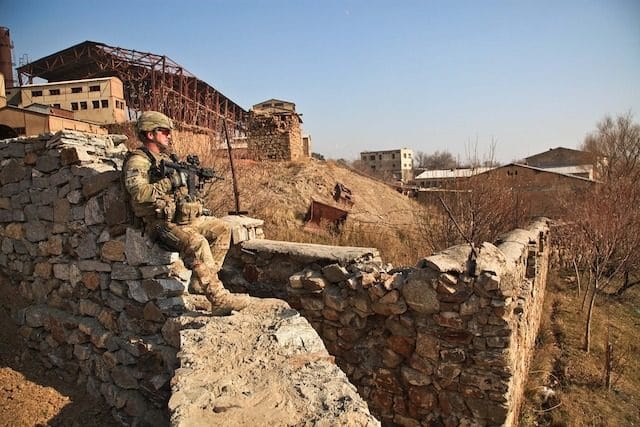
One of the most recent historical events that many countries would like you to forget is the 2021 troop withdrawal from Afghanistan. While several countries participated in the withdrawal, the United States bore the brunt of what was considered a complete and utter failure.
In 2020, the decision was made to withdraw troops from the Middle Eastern country. However, things became more complicated when the administration changed, abandoning the 2020 agreement to give them more time to do it right. But, as we know, things didn't go as planned. Intelligence had always predicted that the Taliban would succeed in regaining power in the country; they just didn't realize it would take days.
As soon as the troops began to withdraw, the situation quickly deteriorated. The Taliban advanced into the countryside and launched attacks on key cities. Afghan forces, trained by the US military, were unable to halt the advance due to low morale, casualties from US airstrikes, and internal distrust. When Kabul came under attack, Afghan President Ashraf Ghani fled the country. We would soon see thousands of Afghan citizens attempting to flee and taking drastic measures to achieve freedom. Some attempts were fatal, and who could forget the images of people hanging from aircraft carriers as they fled the country?
The 20-Year War ended, but left the country in dire straits and on the brink of collapse. The United States suffered gravely from the largely unsuccessful war and its disorganized retreat.
9. Italy's participation in World War II
When we think of World War II, it's understandably difficult not to immediately focus on Germany. However, we rarely talk about Italy's participation in the war, which ends up on the wrong side of history.
In June 1940, Italy officially entered the war, but sided with Germany. Prime Minister Benito Mussolini sided with the victor, hoping to reclaim a piece of the conquered lands. They immediately began fighting Germany, but the Franco-German armistice almost immediately ended their efforts in the French Alps. In October, Mussolini invaded Greece, which ended badly after Germany was forced to rescue Italian troops and seize Greece by force.
Italy's participation in World War II was horrific. Mussolini's war effort was hampered by incompetent generals, low morale, meager supplies, a shortage of weapons, and the fury of the Allies. Moreover, by allying Italy with Adolf Hitler, Mussolini created the pretext for his own downfall. By 1943, Italy was in dire straits. They were constantly bombed, morale plummeted, and trust in the regime was utterly lost. Finally, the Allies invaded Sicily in July 1943, Mussolini was ousted on July 25, and Pietro Badoglio took over.
Citizens took to the streets, tearing down statues of Mussolini and other fascist symbols. Badoglio eventually joined the Allies. However, Germany continued to fight, now seizing Italy by force, leading to a two-year campaign for control of Italy. The war ended in 1945, and while Germany bears the mark of the war and will continue to do so, Italy's role in the early years of World War II has not been forgotten.
8. Japan's attack on Pearl Harbor
Japan became another victim of choosing the wrong side of history during World War II. Japan and the United States were not allies long before the war, and in some respects they themselves were inclined toward war. At the time, Japan was a warlike nation, unlike the Japan we know today. They sought to expand their empire, so in 1937 they declared war on China. The United States responded aggressively with economic sanctions, trade embargoes, and other diplomatic measures. These efforts were supposed to force the Japanese to agree to a ceasefire and abandon their ambitions for expansion; however, they had the opposite effect. They made the Japanese more determined to win.
Relations between the two countries were fraught in the lead-up to the war. Now they were at breaking point. Initially, the possibility of a Japanese attack was assumed to be imminent, but there was considerable debate about where it might occur. One location that was almost never considered was far from the US mainland in Hawaii: the Pearl Harbor Naval Base. Ignoring a potential attack on Pearl Harbor meant the base was completely unprepared.
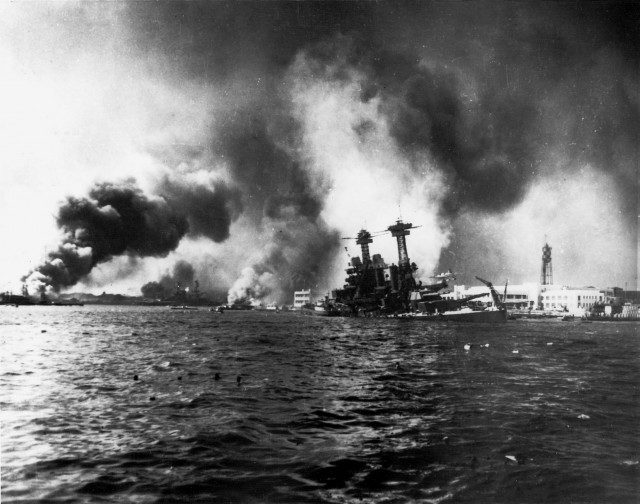
On December 7, 1941, Pearl Harbor was attacked by the Japanese at 7:55 a.m. This took the entire area by surprise. There were concerns about a flotilla of aircraft heading for Pearl Harbor. However, these fears were allayed when commanders determined that the area was likely only flown by American B-17 bombers, so there was nothing to worry about.
The attack on Pearl Harbor lasted only an hour and fifteen minutes. Yet, 353 Japanese aircraft were enough to kill 2,403 American servicemen and several civilians, wound another 1,178, damage or destroy 19 U.S. Navy ships (three of which were completely destroyed), and shake the nation to its foundations. The outrageous attack prompted retaliatory measures from the United States. Although things are very different today, December 7th remains a day that lives in infamy.
7. Chernobyl
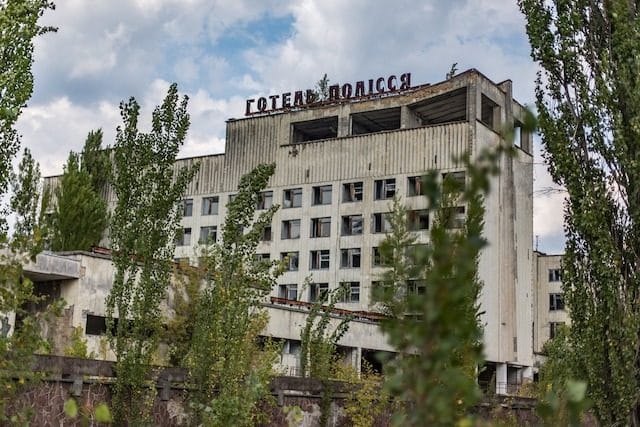
In 1986, the former Soviet republic of Ukraine experienced the worst nuclear accident in history. It occurred on April 25, when technicians attempted to test the safety of the plant's emergency water cooling systems. The test was aimed at determining whether the emergency water cooling systems would function in the event of a power outage. Unfortunately, the situation quickly deteriorated.
Preparations for the safety test began early on the morning of April 25. At 2:00 PM, they shut down the emergency core cooling system for Reactor 4. Due to delays, they were eventually cleared to continue the safety test. However, this delay meant that the safety check was left in the hands of the inexperienced night shift.
As soon as they began the test, they further reduced the power, creating unstable conditions. An hour later, this led to an explosion in the core of Reactor No. 4. The resulting fire caused the uranium fuel to overheat and melt through the protective barriers. The safety test operators ignored the automatic safety systems, assuming the system didn't understand the safety test.
The disaster began at 1:23 a.m. Officials immediately misrepresented or downplayed the significance of the disaster. The fires were extinguished by 6:35 a.m., with the exception of a reactor core fire that raged for several days after the disaster. Soviet authorities began evacuating Pripyat on April 27. The international community eventually acknowledged that 31 people had died. This does not include the approximately 125,000 people who died as a result of exposure to Chernobyl radiation.
Chernobyl was a disaster caused by flaws in the reactor design and inadequately trained personnel. At a time when the USSR was in dire straits, it was a financial blow to the regime that Gorbachev credited with catalyzing the collapse of the USSR.
6. The Fall of Saigon
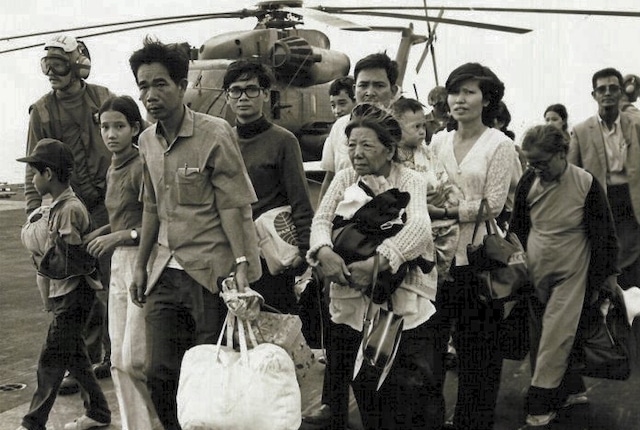
As the troop withdrawal from Afghanistan unfolded in 2021, many began drawing comparisons to another hasty exit from a failed war: Saigon. The Vietnam War has a long history in the United States, raging for decades under four different presidents. However, it was the fifth president who laid the groundwork for US involvement. Harry Truman wasn't the president who committed entire infantry to the war during the collapse of French colonial rule, but he actively funded their efforts. However, the collapse of colonial rule and the rise of communism in Asia prompted Eisenhower to fully support South Vietnam, even if the ambitions of its leaders ultimately conflicted with American values.
For decades, the United States had been sending troops, military aid, intelligence, and training to Vietnam. President Kennedy intensified these measures to ensure Vietnam did not fall, fearing a domino effect from the country's decline to communism. In the 1950s, troop levels were fewer than 800; by 1962, that number had jumped to 9,000.
President after president entered the Vietnam War more out of fear of failure than out of confidence in victory. No one wanted to blame, and so it continued. When Nixon was president, he oversaw some of the most devastating aspects of the war. While he was reducing troops, he dropped unprecedented numbers of bombs across North Vietnam and Cambodia.
As Nixon's presidency crumbled under the weight of Watergate, the United States negotiated and signed a peace treaty for all parties to the war. However, after American troops withdrew in March 1973, the communists violated the treaty, seeing cracks in the United States' ability to respond. As a result, they took over the country. The United States left the world with the heartbreaking and infamous image of American personnel hastily retreating as the country fell to communism after decades of war.
5. Weapons of Mass Destruction in Iraq
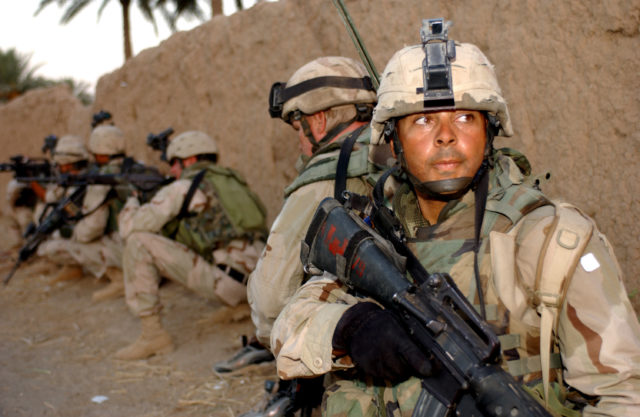
It was March 19, 2003, when the United States and a small group of its allies entered the war against Iraq. Then-President George W. Bush had been declaring his intentions in the Middle East for months. On February 5 of that year, Secretary of State Colin Powell delivered a speech at the UN outlining the goals and rationale for the US invasion. There was just one problem: much of what he said was either misleading or simply outright lies.
The Bush administration launched a domestic effort, led by Vice President Dick Cheney and Secretary of Defense Donald Rumsfeld, to remove Iraqi President Saddam Hussein. Of course, the international community didn't hold Hussein in high regard, but that didn't necessarily justify the invasion effort. Instead, Bush used the September 11 attacks to launch the "war on terror." In the case of Iraq, he also used incomplete or inconsistent evidence or poorly supported allegations of a "massive stockpile of biological weapons" to justify the upcoming invasion. This lie would be followed by many others over the next five years.
Although the Iraq War ended in 2011, less than a decade after it began, questions and criticism persist. In 2016, the UK government publishedThe Chilcot Report . It was a report seven years in the making, examining the decision, necessity, and consequences of the invasion. All the evidence pointed to an obvious truth: not only was it a complete disaster, but it also, if anything, potentially made the region more unstable. Ultimately, the evidence is hard to deny; the war was unnecessary, and the end results were catastrophic. In many cases, US foreign policy decisions over the past two decades were among the worst.
4. The USSR failed to invade Afghanistan.
While we focus squarely on the recent attempts to invade Afghanistan, we often neglect to mention how this had already been attempted several times before, by both the British and the Soviet Union. All attempts to invade and conquer Afghanistan ultimately failed.
In 1979, under the pretext of upholding the Soviet-Afghan Friendship Treaty, the USSR invaded Afghanistan. They invaded in the dead of night, arriving in Kabul at midnight via a military airlift. They brought approximately three divisions of 8,500 troops each and 280 transport aircraft. Initially, the Soviets achieved some success when they captured Kabul, ridding the country of its government and installing a puppet leader. However, over the course of a nearly decade-long invasion, they ultimately failed in the Middle Eastern country.
The Afghan people, especially the resistance fighters known as mujahideen, had no interest in Soviet rule and considered it a desecration of Islam. The mujahideen used guerrilla tactics against the Soviets, launching quick attacks before disappearing into the mountains. This made the conflict much more difficult and protracted for the Soviets, who hoped for a quick takeover.
The war continued until the late 1980s, with the United States arming the resistance, consistent with its anti-Soviet stance. Finally, when Mikhail Gorbachev was declared the new Soviet leader, he withdrew from the conflict, realizing its futility. By 1988, they began to withdraw, and the last Soviet soldier left on February 15, 1989. The results of this unsuccessful war were catastrophic for the USSR's public relations and finances. In many ways, it served as a pretext for the collapse of the USSR. However, worst of all, it became the catalyst for the breeding ground of terrorism that Afghanistan became with the rise of Osama bin Laden.
3. The United States drops nuclear bombs on Japan.
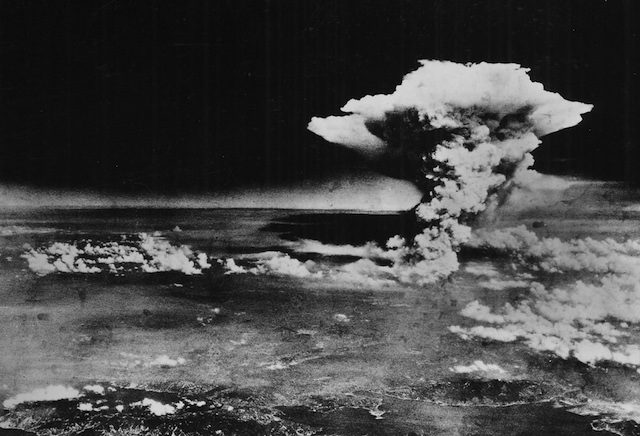
The United States and Japan are allies today, but their relationship wasn't so friendly during World War II. This became clear after Japan's attack on Pearl Harbor. So, of course, we could view the dropping of nuclear bombs on Hiroshima and Nagasaki as retaliation for Pearl Harbor. Still, it was more complex than simple revenge.
The United States had been working on nuclear weapons long before the attack on Pearl Harbor, citing Ellie's concerns about Nazi Germany's research in this area. When the Allied Powers defeated Nazi Germany, Japan vowed to fight to the bitter end. Although Japan faced demands to end the war, it rejected the idea of surrender. President Harry Truman, in the face of fierce Japanese opposition, decided to use the bomb in the hopes that it could end the war once and for all. His Secretary of War, General Eisenhower, and the scientists of the infamous Manhattan Project opposed the idea.
On August 6, 1945, Little Boy was dropped on Hiroshima. It was the first city ever hit by a nuclear bomb. It took 45 seconds to descend, causing massive devastation in the industrial city. 70,000 citizens were killed instantly, and many more died from radiation poisoning.
A few days later, on August 9, 1945, another bomb, nicknamed "Fat Man," was dropped on Nagasaki, a city divided into two coastal valleys. Forty thousand people died instantly, and an estimated 30,000 more died from injuries and radiation poisoning.
On August 14, 1945, the Japanese surrendered shortly after the attack on Nagasaki. However, the United States was left with a lingering scar from the use of the first iterations of this weapon of mass destruction against what is now its ally.
2. The Armenian Genocide of 1915.
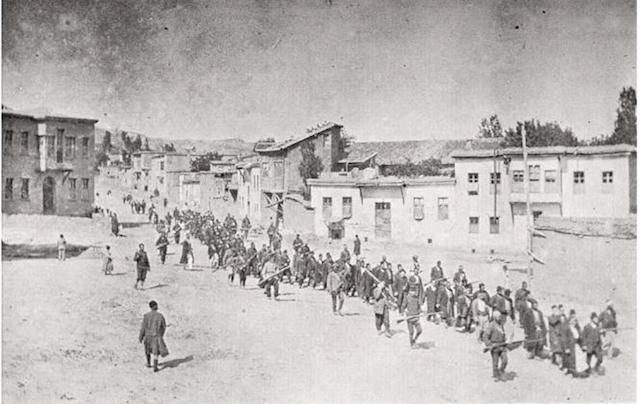
In 2021, US President Joe Biden called the 1915 massacre of approximately 600,000 Armenians a genocide committed by the Ottoman Empire, now Turkey. No president had ever called it genocide. This was unexpected, given Turkey's status in NATO and the already fractured relations between the two allies. Turkey quickly responded, rejecting the US president's statement. Nevertheless, the story attracted considerable attention. It highlighted the horrific aspect of the Ottoman Empire's decline during World War I.
In 1915, approximately 2.5 million Armenians lived in the Ottoman Empire. They were concentrated around six provinces of Eastern Anatolia. Armenians were familiar with harsh treatment at the hands of their Muslim neighbors and compatriots. They were often subjected to violence and the confiscation of land, property, and livestock.
This imbalance between Muslims and Armenians in the Ottoman Empire eventually led to the emergence of separate factions calling for different solutions. Young Armenian activists sought an independent state, while a coalition of reformist groups known as the Young Turks led a revolution against the Ottoman authoritarian regime. They eventually came to power and, while seeking to change the Ottoman Empire for the better, soon slid into authoritarianism.
In March 1914, the Young Turks sided with Germany in the war and launched an eastward attack, a brutal and unsuccessful assault on Russian forces in the Caucasus. The blame was shifted to the Armenians, who launched a campaign against them that led to genocide. The death toll is still debated. Some estimates put 600,000, while others put 1.2 million. The Ottoman Empire fell in 1922, but the stain remained on independent Turkey for over a century.
1. The collapse of the USSR
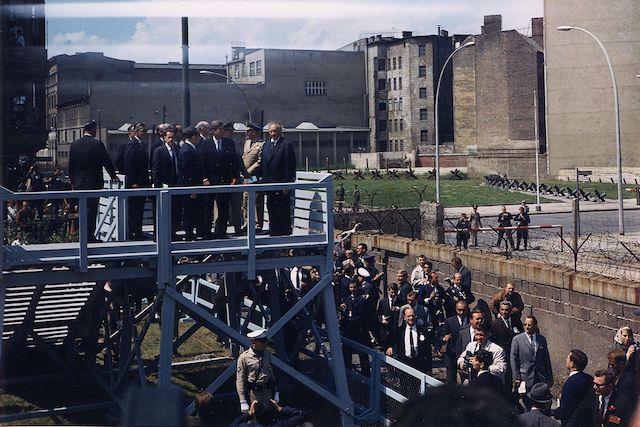
The fall of the USSR is considered a disgrace by many Russians, including current President Vladimir Putin. The Soviet Union began in the 1920s with the Marxist revolutionary Vladimir Lenin. It emerged from the revolution against the Romanov monarchy and, in the coming decades, would become a powerful Marxist-communist state occupying nearly a sixth of the globe.
When Lenin died in 1924, a new leader took his place: Joseph Stalin. He controlled the USSR for just three decades before his death in 1953. During his reign, the USSR became a military and industrial superpower. However, it also saw the consolidation of critical industries, leading to food shortages, widespread famine, and death. All of this occurred against a backdrop of interethnic strife.
At the end of World War II, the USSR denigrated its alliance with the United States and Great Britain. With the formation of NATO in 1949, tensions only increased. Democracies feared the spread of communism, and the threat of nuclear catastrophe was ever-present. As the USSR consolidated power among the Eastern Bloc countries, it sparked the Cold War and decades of tension between the superpowers.
In 1985, Mikhail Gorbachev became the nominal head of the USSR. He sought to reform a wavering nation that had lost its way. Many of Gorbachev's policy changes severed the USSR from its deep communist roots and destroyed much of Stalin's legacy.
It was becoming clear that the Soviet Union was collapsing, and Gorbachev knew that rejoining the international community was the only way to save it. But this recognition led to an attempted military coup against Gorbachev in 1991. During this period, parliamentary leader Boris Yeltsin played a crucial role in preventing the coup. He ultimately allowed Ukraine and Belarus to seek independence from the Soviet Union. Soon after, the nine remaining republics also declared their independence. On Christmas Day 1991, Gorbachev resigned, and the Soviet Union officially dissolved.