








Some historical figures have been so mythologized that they've acquired extraordinary personas and taken on a life of their own after death. This is understandable, as some people achieve cult status thanks to significant actions that had such a profound impact on the world that everyone imagines them as extraordinary. However, these people were just like us, who ultimately accomplished extraordinary things. The truth of their lives may be very different from what you imagined.
10. Sir Arthur Conan Doyle
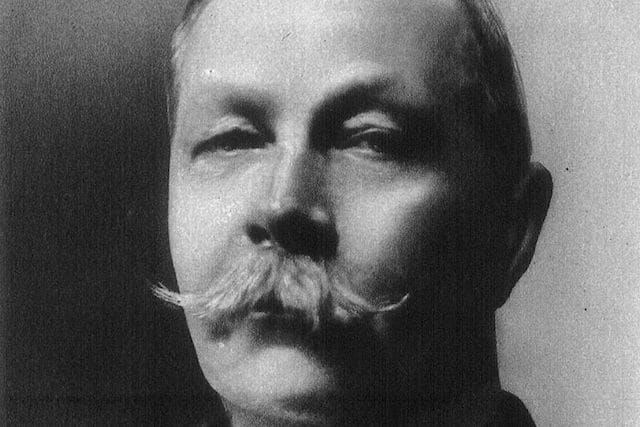
Arthur Conan Doyle is well known as the genius behind Sherlock Holmes, and, to his great regret, he was never known for anything else. You see, although Arthur Conan Doyle is primarily known for writing Sherlock Holmes, uncompromisingly logical detective stories weren't his true passion. Conan Doyle was an ophthalmologist, a historian, and a man with a passion for medicine and cutting-edge science in general.
He also wasn't as logical as most of us might think, as later in life he became a self-confessed spiritualist. When the infamous Cottingley Fairies hoax surfaced, Conan Doyle was there to publish an article in The Strand (the same magazine that published his famous stories) "proving" that the fairies were real. To make matters worse, he held séances and tried to lure Houdini into them. They eventually fell out because Houdini didn't believe in spiritualism, while Doyle was convinced his friend was refusing to tell him how to perform real magic. .
9. General George Armstrong Custer
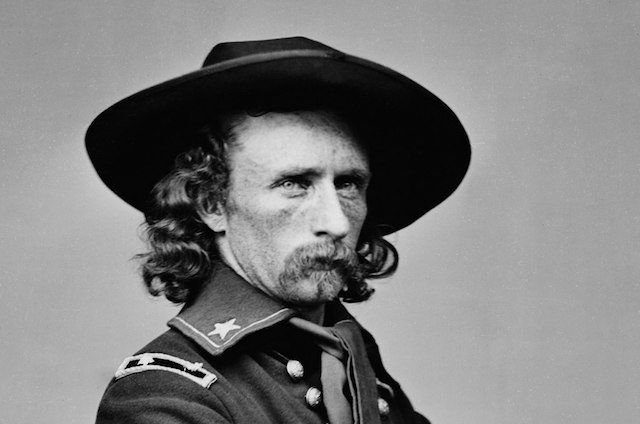
George Armstrong Custer was an American commander during the decline of the Native American people. He was often tasked with attempting to defeat Native forces or capturing the population and driving them to where the government wanted them. He was known as a valiant and courageous fighter who led his men from the front. Posthumous hagiographies of his time are very kind to him, saying that even his death was a brave last stand.
However, while his story is so contradictory that it's difficult to say how good or evil this man truly was, he wasn't quite what most people imagine. While he enjoyed leading from the front, he was also known as a tribune, dressing in flamboyant attire and seeking glory at every turn. More importantly, his supposedly brave last stand wasn't quite as the stories suggest. He was hunting a large group of natives, whom he believed were mostly civilians. He was so concerned about not letting them escape him, even temporarily, that he tried to rush in and catch them off guard. Had he taken the time to scout out the situation instead of acting hastily and recklessly, he would have realized before entering that he was vastly outnumbered.
8. President Teddy Roosevelt
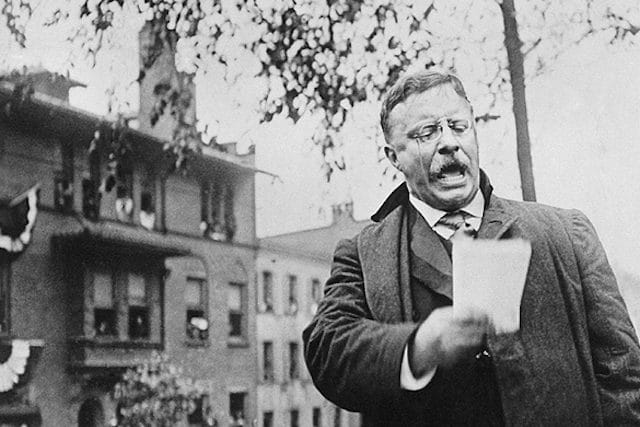
Teddy Roosevelt is a man who has become a towering figure in American mythology for many good reasons. Roosevelt was once saved from an assassin's bullet thanks to a massive speech he kept hidden in his pocket, he championed most of America's current environmental laws, and he was said to have looked down on large corporations. He's also known for more humorous things, like the legend of the teddy bear and how Roosevelt's kindness became a staple in children's bedrooms everywhere.
Unfortunately, this is where things start to go wrong. The touching story of Teddy Roosevelt sparing a bear cub did inspire the creation of the teddy bear, but that doesn't mean it was true. Roosevelt was out bear hunting but couldn't find one. An assistant found the cub and tied it to a tree. He gave up because it wasn't the sport he was looking for, and the bear was shot anyway.
This is entirely consistent with Roosevelt's primary reason for advocating for conservation: he loved hunting. This isn't to say that hunting isn't necessarily sometimes part of an overall conservation strategy, but the late American president believed that hunting is part of a love of nature that will help you appreciate the environment more deeply.
7. Nikola Tesla
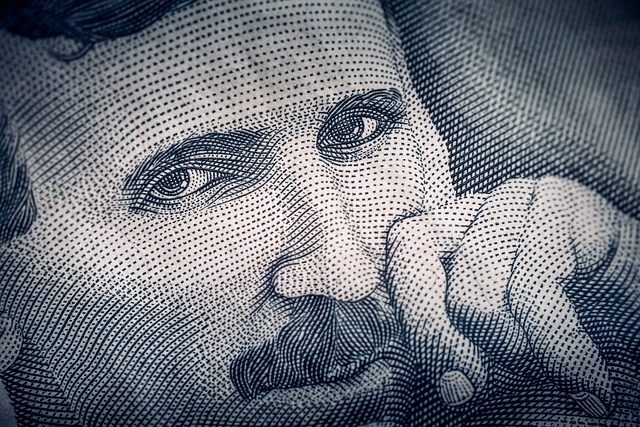
Nikola Tesla is considered by many to be a patron of science and, in particular, of misunderstood scientists. People continue to cite his rivalry and quarrel with Thomas Edison as proof that he was horribly mistreated and never received the money, credit, or attention he deserved. Tesla is considered a visionary who simply wasn't listened to enough.
Unfortunately, the truth is that some of Tesla's most visionary ideas simply weren't viable. Some now claim he simply didn't receive the necessary funding, but in his time, he was revered and received plenty of money for his projects. JP Morgan even gave him $150,000 (a princely sum at the time) to build a wireless energy tower, but Tesla couldn't make it work. Perhaps one of the reasons he had so many wild ideas about unviable inventions is that, by his own admission, he slept only four hours a day or less. This sleep deprivation may also have triggered a psychosis that led him to believe he was in love with a certain white dove.
6. President Abraham Lincoln
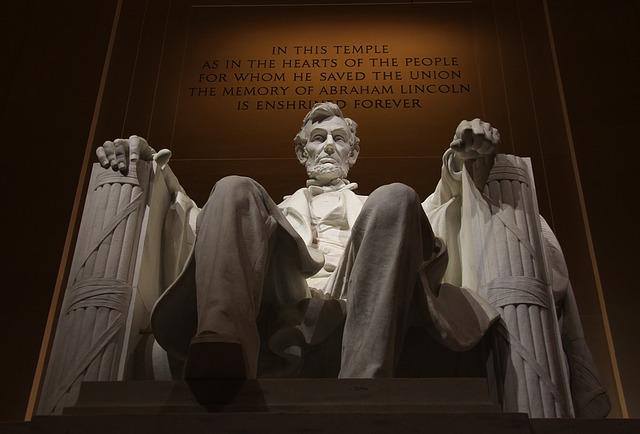
Abraham Lincoln is one of the most famous people of the last few centuries and needs no introduction. We all know who this guy is. But that doesn't necessarily mean we picture him accurately in every respect. Although countless books and all sorts of historical documents have been written about him, the ability to record sound hadn't yet been invented, so we mostly have to use our imaginations when it comes to what he sounded like. Knowing he was a renowned orator, people imagined he had a deep, resonant voice that allowed him to captivate huge audiences.
The truth is, however, Abraham Lincoln's voice wasn't deep at all. Lincoln's voice was much higher pitched than most people imagined, and it was described as shrill and piercing. However, this doesn't mean his voice was raspy or lacked projection. He mastered the art of projection and was known for being heard from deep within a crowd. While we can't know for sure what he would have sounded like, Daniel Day-Lewis in the film «Lincoln» , is perhaps the most historically accurate example, as he attempted to portray it based on actual accounts of what it sounded like.
5. Johnny Appleseed (aka John Chapman)
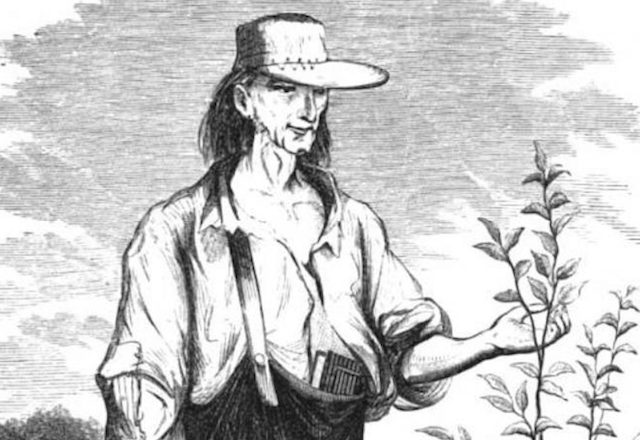
Johnny Appleseed is a mythologized figure in American history, folklore, and culture. He is known as a kind and generous man who planted apple trees throughout the countryside, living largely off the generosity of locals who enjoyed his work. The Johnny Appleseed we all know loved apples (it's kind of right there in the name, after all), and especially apple pie. Johnny simply wanted the whole country to enjoy them, even if it didn't make him any money. He's such a larger-than-life figure that some aren't even sure whether he was real or just a fake, like Betty Crocker. .
While he was a real man named John Chapman, everything else is a bit exaggerated. Johnny did love to extol the virtues of apples, but he did so because he believed they made excellent liquor, a belief supported by the varieties of seeds he planted. These seeds grew into trees that produced tart apples that were perfect for making hard cider, but nothing more. As for the generous and freeloading hippie character, the truth is that Chapman was a shrewd businessman. He planted apple seeds on unused land, knowing this gave him future rights to them, then returned years later to sell them at a profit.
4. Ponce de Leon
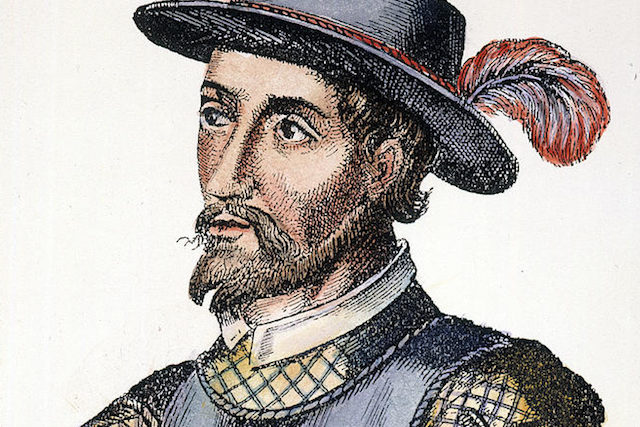
Ponce de Leon is known as one of the most foolish explorers ever written about in biographies. He was a renowned explorer in the days when Europeans first discovered what they called the New World, and he played a major role in mapping much of what we now know as Florida. (Does that technically make him the first person from Florida? Okay.) He was also known as the man who searched for the famous Fountain of Youth and, of course, never found it because it wasn't real. He's considered an idiot who was duped by Native Americans. What a fool, huh?
However, the reality is that there is no evidence that Ponce was searching for some mythical fountain that would keep people young for the rest of Earth's existence. Of course, if he weren't looking for a fountain of youth, the question arises as to why so many people believe he did. The reason is that after his death, his biographer, who hadn't shown much interest in him in life, began claiming that this was his goal during his exploration of the New World. In other words, we believe this because he successfully ruined another person's reputation after their death.
3. General Robert E. Lee
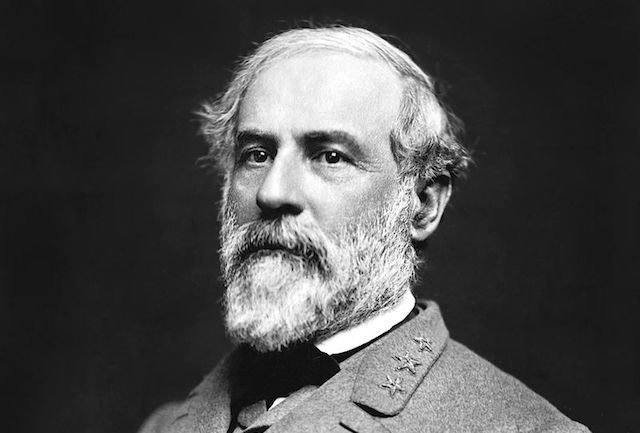
Robert E. Lee is often considered a tragic hero, or at least a tragic figure in a terrible drama. He is viewed primarily as a noble man, torn between country and family. This loving hagiography of Lee has led countless Southerners to name their children after his last name (instead of Robert, which would have made more sense). It has also led most people to respect him at some level, regardless of their views on the American Civil War.
Lee may have been genuinely concerned about the war, but that doesn't mean he was a particularly good or honorable man. You see, before he became a famous Civil War general, Robert E. Lee had a stepfather who died and left him a fair amount of land and slaves. The only problem was a clause stating that the slaves would only be forced to work for six years after his death. Lee fought this in court and won, allowing them to continue working. Lee then proved to be a tyrant toward his slaves, encouraging his overseers to be harsh and especially cruel to any slaves who tried to escape or showed disobedience. While one might expect a wealthy and high-ranking member of the Confederacy to be quite the jerk, somehow Lee's reputation after the Civil War remained far cleaner than he ever deserved.
2. Joseph Pulitzer

Joseph Pulitzer is one of the most recognizable names in the writing and publishing worlds. An award for lifetime achievement in publishing was established in his name, and even if you know nothing else about this award, you know it is extremely prestigious and important. For this reason, most people consider Pulitzer a man of great honor and integrity who elevated publishing and the literary world to a higher level. Unfortunately, the truth about Pulitzer is less flattering to his legacy.
The award isn't presented because, after his death, people decided he was so great that writers should be honored in his name. Rather, it was a stipulation in his will, which stipulated that a portion of his remaining wealth would be used to create a lasting legacy. This wish was understandable, given the reputation he built for himself during his lifetime.
Pulitzer and his New York World, as well as William Randolph Hearst and his New York Journal, are credited with lying before and during the Spanish-American War in an attempt to outdo each other. Some historians now debate how much responsibility they bore for starting the war, but there is no doubt that their journalism was extremely irresponsible.
1. Martin Luther King Jr.
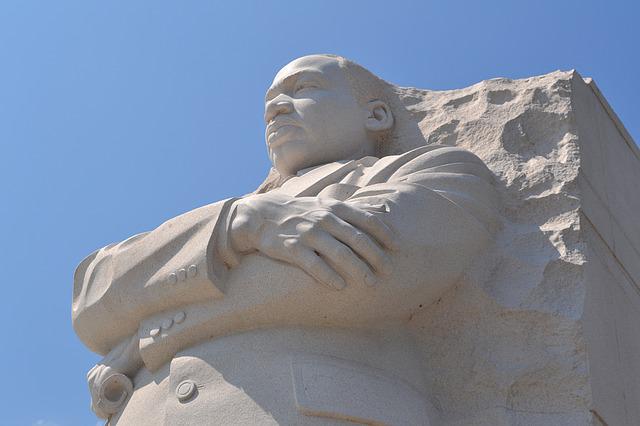
When it comes to the American Civil Rights Movement, it's hard to argue that there's a more influential and powerful figure than Dr. Martin Luther King, Jr. To this day, during times of political unrest in the United States, Dr. King's words and wisdom are relevant on both sides of the aisle. In recent years, during the height of the Black Lives Matter movement, his method of peaceful protest was considered the "correct" way to rebel against people you felt had wronged or oppressed you. Critics of such movements will point to MLK's methods as the "correct" way to protest (missing the irony that people who feel beaten down and unheard are told how, when, and where to rebel). But this is a gross oversimplification, given that the reality wasn't so black and white.
While no one can put words in MLK's mouth, there is reason to believe that he didn't necessarily believe in simply turning the other cheek in every situation. Dr. King knew that in the Old South, anything other than passive resistance would have been essentially death for the protesters (famously, "Today there is no longer a choice between violence and nonviolence; it is either nonviolence or nonexistence"). For this reason, he had to adopt tactics that made sense given his place of residence and his upbringing. Many historians argue that Malcolm X and MLK were hardly enemies, but, in fact, two sides of the same coin. Moreover, in a speech shortly before his assassination, Dr. King advised young Black men to never allow anyone to strip them of their manhood. Yes, he was a man of peace, but he was also a man of defiance and, like his dear friend, the late politician and activist John Lewis, a proponent of good problems. .