








Throughout the history of slavery, rebellions were usually brutally suppressed to set an example for others. Despite this, rebellions were common in slave societies since the time of ancient Rome and Persia.
10. Stono Uprising
The Stono Rebellion of 1739 was the largest slave rebellion in the Southern colonies—a union of British-controlled territories in North America at the time. Beginning on September 9, 1739, it involved several slaves working on plantations near the Stono River in South Carolina. They may have intended to march toward St. Augustine, Spain, where Spain offered freedom and property to all escaped slaves from British territories.
It was a brutal uprising, as the rebels killed everyone in their path except one innkeeper. However, it was short-lived, as the rebellion was suppressed by white militiamen and mounted plantation owners within hours. By the end, up to a hundred rebels had been killed, and more than 20 white residents during the march.
9. Jij Rebellion
By the early 19th century, slavery constituted a major part of the economy of the Cape Colony, a rapidly developing region in South Africa under British rule. While there had always been some resistance among the enslaved population, the 1808 rebellion, also known as the Jij Rebellion, was one of the first organized slave uprisings in the colony.
Around 340 slaves participated, mostly from the fertile and productive grain farms of Swartland and Koeberg. The effort was largely non-violent, as the gangs seized several farms, imprisoned the families of slave owners, and freed the slaves. They intended to march on Cape Town and, in their own words, "raise the bloody flag and be free.".
Although they were temporarily successful, the rebellion was short-lived. It was suppressed within 36 hours, and all its main leaders were sentenced to death or imprisoned. It failed to achieve its larger goals, although the 1808 rebellion contributed to the strengthening of revolutionary voices in the Cape Colony, which ultimately led to the complete abolition of slavery in the 1830s.
8. Amistad Rebellion
The Amistad mutiny in 1939 occurred on the ship of the same name, en route from Havana to Puerto Principe, Cuba. It was carrying 53 recently kidnapped and sold into slavery, most of whom participated in the mutiny. Almost the entire crew perished in the uprising, with the exception of a few people essential for the return home, such as the navigator.
However, instead of sailing to Africa as the rebels demanded, the Spanish navigator continued north, ending up in New London, Connecticut, where the rebels were imprisoned. While Spain demanded that the slaves be returned to their rightful owners, the matter was less clear-cut in the United States, where the debate over abolition was just heating up.
In a widely publicized ruling, the Supreme Court ruled that the defendants had been illegally abducted and had exercised their right to escape captivity. All 35 surviving captives were released and returned home to Sierra Leone thanks to donations from local abolitionists and other private organizations.
7. Gabriel's Conspiracy
The Gabriel Conspiracy was a highly ambitious slave rebellion planned in Virginia at the turn of the 19th century. If successful, it would have been the largest slave rebellion in U.S. history, likely leading to the liberation of hundreds of slaves in one of the largest slave states of the time. Organized by Gabriel, an enslaved blacksmith working in and around Richmond, the plan involved slaves from at least eleven Virginia counties, including Norfolk, Charlottesville, Caroline, and Louisa.
According to the plan, Gabriel's army was to advance on August 30, 1800, to seize Capitol Square in Richmond, raid the armory, and kidnap the governor, alongside parallel uprisings in Petersburg and Norfolk. It was a good plan, and it likely would have worked, had not a severe thunderstorm struck the city on the very day of the uprising. Since rising waters made some planned routes impassable, they were postponed until the following day.
Before they could do so, however, two slaves in different locations became nervous and told their masters. Although they were eventually freed, the information led to a statewide pursuit of the rebels. By the end, 26 people, including Gabriel, were hanged for their involvement in the conspiracy.
6. The Zanj Rebellion
The Zanj Revolt is often considered one of the most brutal and protracted uprisings of the early Islamic era. For 15 years, beginning in 869, the armies of the Abbasid Caliphate waged fierce battles against East African slaves, also called "Zanj," from the marshes of southern Iraq and southern Iran. Led by a man of mysterious origin—Ali ibn Muhammad—the rebel forces successfully repelled the caliph's attacks for many years, even establishing their own state deep in the marshes called al-Mukhtara.
Although exact numbers are unknown, thousands of rebels fought in the years-long civil war, which had a devastating impact on the economy of the Basra region and its surrounding areas. Thousands lost their homes and livelihoods as rebels systematically destroyed agricultural land belonging to landowners. At one point, even major cities such as Basra and Wasit were looted, forcing much of the population to flee.
Ultimately, the rebels were defeated, though the caliph paid a heavy price. The devastation wrought by the Zanj rebellion led to the emergence of several regional dynasties, greatly weakening the Abbasid Caliphate's influence in the region and limiting its authority to its capital.
5. The Rise of Nat Turner
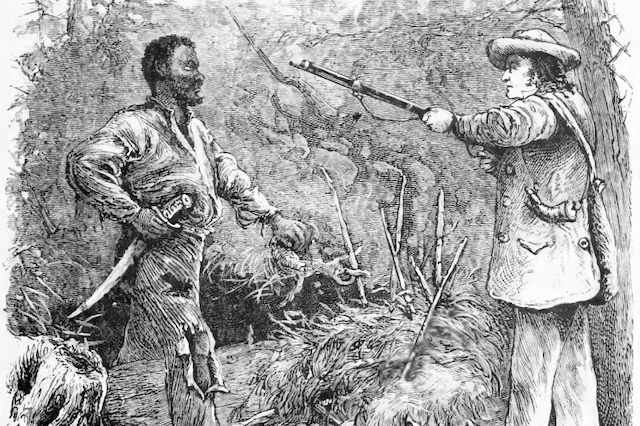
The Southampton Rebellion, also known as Nat Turner's Rebellion after its leader, began on the evening of August 21, 1831. It was one of the most daring slave rebellions in U.S. history, as well as one of the most brutal. In a single day, Turner and his approximately 50 followers marched through Southampton County and killed at least 55 people. They hoped to advance to the nearest city, Jerusalem, where they could obtain arms and men to continue the rebellion.
Due to the rebels' lack of organization and planning, the uprising was quickly suppressed by local militias. More than three dozen rebels were killed as punishment, although Nat Turner himself evaded capture for two months. The uprising led to even stricter laws for Virginia's enslaved population, significantly limiting their education and movement until the American Civil War.
4. The Rebellion of Gaspar Yanga
In 1570, an African slave named Gaspar Yanga led a revolt of hundreds of enslaved Africans in east-central Mexico, then known as New Spain. After killing 23 people, the gang headed to the foothills of the Veracruz mountains, where they founded a small town—or Palenque—to live independently.
The experiment also worked, at least for a time. For about 30 years, the colony waged guerrilla warfare against Spanish troops and raided Spanish caravans, while also growing its own food and living sustainably off-world. Over time, anyone from the vast colony scattered across the Veracruz region came to be called a Yangiko.
Despite its military superiority, Spain was unable to defeat the former slaves. The conflict ended with a peace treaty with Yanga, which established the first colony of free slaves in North America.
3. Uprising on the German coast
The 1811 uprising in what is now Louisiana was the largest slave rebellion in U.S. history. Beginning on January 8th on a plantation on the German Coast—a region along the west bank of the Mississippi River populated primarily by German immigrants—the rebellion soon engulfed more than 500 enslaved people, marching on New Orleans.
Unfortunately for them, the rebels were barely trained to sustain a rebellion. They were also poorly armed, especially compared to the well-armed militias hired by plantation owners and federal government forces in New Orleans. The rebellion was suppressed by the morning of January 10, and many slaves were killed during the fighting or summarily executed shortly thereafter. To set an example and discourage other similar attempts, authorities beheaded many of the bodies and placed their heads on poles throughout New Orleans and along the Mississippi River.
2. Baptist War
The Baptist War, also known as the Christmas Rebellion, was the largest slave rebellion in the British Caribbean. Although figures are disputed, between 20,000 and 300,000 slaves from the colony of Jamaica participated in the rebellion, which began on December 25, 1831. For approximately eleven days, rebels around St. James Parish and surrounding rural areas refused to work as slaves and demanded full emancipation, sometimes even attacking the property of white landowners to satisfy their demands.
The uprising was ultimately suppressed by British counterinsurgency forces and local militias. Around 200 rebels were killed during the fighting, and more than 340 were later tried and executed. Although the uprising failed to achieve its goals, it greatly influenced parliamentary debates over slavery in Britain, ultimately leading to the passage of the Emancipation Act of 1933.
1. Haitian Revolution
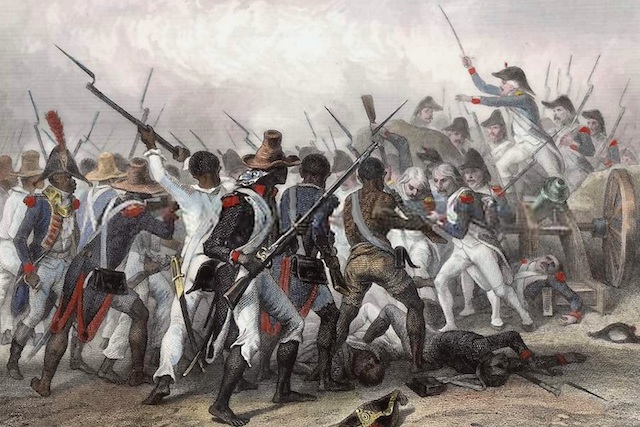
The Haitian Revolution remains the only slave rebellion in history to establish its own state. Known as Saint-Domingue under French rule, it was one of the most profitable colonies in the world at the time, accounting for nearly two-thirds of France's foreign trade. Beginning with an organized slave revolt in August 1791, the revolution took another twelve years to fully materialize, ultimately leading to the establishment of the independent Republic of Haiti.
Although the conflict was limited to Haiti, it involved numerous other actors pursuing their own interests in the region, including Spain and England. Even by the most conservative estimates, over 350,000 people died in the brutal conflict between France and the temporary alliances of other colonial powers with Haitian slaves.
At the turn of the century, many parts of Saint-Domingue were under the control of former slaves. While Napoleon Bonaparte made a final attempt to recapture the colony by sending an invasion force, it was defeated by rebel leaders such as Jean-Jacques Dessalines, who later became the first ruler of the new republic. The conflict officially ended with the Haitian Declaration of Independence on January 1, 1804, which abolished slavery and granted equal rights to all citizens.