









In the past, we've explored several aspects of Ancient Greece that still puzzle historians, scholars, and scientists. We don't need to travel far, as today we'll return to the time of the Romans and look at some of the mysterious goods they had to offer.
10. Sarcophagus «Burrito»

The first entry on our list shows us that there are still many mysteries of the ancient world to uncover. Back in 2010, archaeologists excavating the site of the Roman city of Gabii discovered a very unusual sarcophagus. It was approximately 1,700 years old, weighed approximately 1,000 pounds, and was made of lead.
This in itself was odd enough—we only know of a couple hundred Roman lead coffins—but this one was unique. Instead of being rectangular with a lid on top, the sides were curved over each other, making the sarcophagus look like a giant lead coffin. burrito.
The question arises: who is buried in it? Lead was a valuable commodity even during the Roman Empire; not everyone could afford a thousand pounds to make a coffin. Perhaps he was a priest, a dignitary, or a famous person. gladiator . Unfortunately, each side is an inch thick and has proven resistant to traditional non-invasive methods of analysis, such as X-rays and CT scans. However, using force to open it would likely damage the remains, so for now the sarcophagus remains closed, and we can only guess.
9. Roman dodecahedron
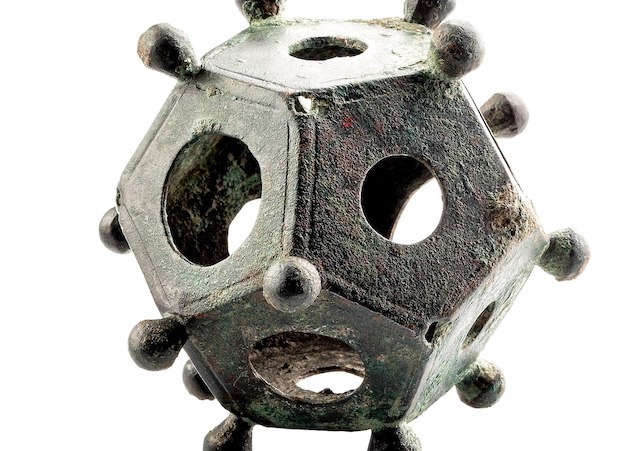
Back in 1739, people made a curious discovery in the English countryside of Hertfordshire. It was a metal dodecahedron—a three-dimensional geometric shape with 12 faces. The strange object also had tiny protrusions on each outer edge and round holes of varying sizes in the middle of each face. It was clearly a carefully crafted object, made even more intriguing by its Roman origin. Since then, over a hundred others have been discovered. Roman dodecahedrons They were found throughout Europe, but primarily in the Rhine basin, in what was then Gaul. But there's just one problem: we have no idea what they were used for.
Quite unusually for the Romans, they remained silent about the purpose of these small metal objects. Scholars have been unable to find any written references to dodecahedrons in the vast historical records, whether Roman, Greek, or otherwise. Of course, this has given way to dozens of ideas about their purpose. possible use , ranging from harmless jewelry or toys to useful measuring instruments or astronomical devices, mystical objects with ceremonial significance, and even weapons such as a mace head or some kind of projectile. But until we find some ancient text that helps us understand them, it's likely that the Roman dodecahedrons will remain a mystery.
8. Lost Legion

As we've already discussed, the Romans were quite good at keeping written history, so whenever we stumble across something that simply disappears from the historical record, scholars tend to raise eyebrows. A case in point: Legio IX Hispana , a legion of the Imperial Roman army that disappeared from written records sometime in the 2nd century AD, leaving historians to speculate about its ultimate fate.
Although its origins are unclear, the legion dates back to the Roman Republic and took part in Caesar's Gallic Wars. Since then, we have a fairly good idea of its activities, with its last documented assignment dating back to 109 AD, when it was sent to Britain's northern border to guard it from Scottish tribes.
During the reign of Marcus Aurelius, more than half a century later, the inscription listing all the Roman legions made no mention of Legio IX Hispana, so it is safe to assume that something happened to it during this period. It was long assumed that the legion was destroyed during the fight against the Picts in Scotland around 117 CE, but later research has found traces of it in Germania Inferior after 121 CE. A new idea suggests that the legion may have met its end in Judea during the Bar Kokhba revolt of 132 CE, but without hard evidence this remains only a hypothesis.
7. Mithraic Mysteries
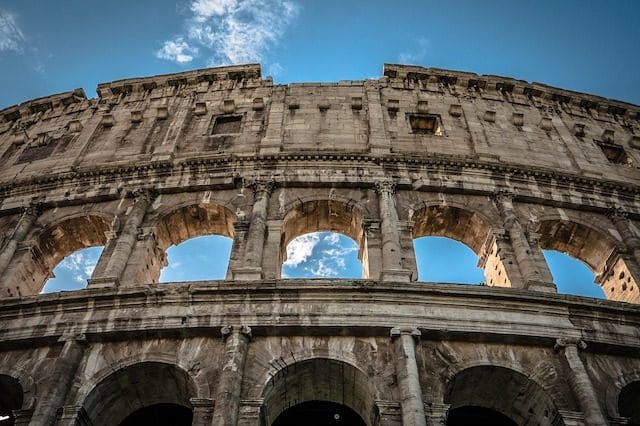
In ancient times, there were certain practices that were kept secret even from their own populations, making it virtually impossible for us to ever fully understand them. Mystery cults were particularly popular in the Greco-Roman world, and the true extent of their rituals and practices was revealed only to their initiates. Nothing was ever written down, so they took their secrets to the grave long ago.
The most popular example is the Eleusinian Mysteries, held in ancient Greece in honor of Demeter. Rome, however, had its own mystery religion centered around the god Mithras, who appears to have been inspired by the much older Zoroastrian god Mithra, although the extent of the connection, beyond the obvious similarity of name, is itself a matter of debate. .
Mithraism, It appears to have originated in Rome in the first century AD and quickly spread throughout the empire. Followers of the cult gathered in underground temples called mithraea. The ruins are more 400 such structures can still be found, demonstrating how widespread this pagan religion became in the Roman Empire. However, without surviving texts on the rituals and traditions of the cult, the Mithraic Mysteries are destined to remain just that—a mystery.
6. The Lost History of Livy

There is probably no ancient culture that we know better about than Rome, and this is largely due to a civilization that had a tradition of extensive record-keeping, as well as some of the most diligent historians of ancient history who recorded what happened for future generations.
Take, for example, Titus Livius, better known simply as Livy. He is the author of perhaps the most ambitious work on Roman history— Ab Urbe Condita , or "From the Foundation of the City," is a massive 142-volume chronicle written over the course of nearly four decades. As its title suggests, Livy's work covered the history of Rome from its founding to its period as a kingdom, then about 500 years as a republic, all the way to its rise to empire, which occurred during Livy's lifetime.
It's important to note that Livy wrote about a time period that's less well known than the imperial era, especially the Roman Empire, but unfortunately, much of his knowledge has been lost. Of his 142 volumes, only 35 have been restored in full. It seems Livy was a victim of his own zeal. His work was so extensive that others have made abridged copies of his books. The most famous of these is called «"Periochia » , and it eventually became more popular than Livy's original work because it was more accessible.
5. Siege of Dura-Europos

As early as 256 BC, the Romans fought the Sassanids at the siege of Dura-Europos, a border town between their two empires, located in what is now Syria. At the time, the settlement was in Roman hands, and during the siege, the Romans stationed a garrison there. The Sassanids decided to bypass the outer wall by tunneling underneath it, prompting the Romans to develop their own. countermines , to intercept them.
When the two sides inevitably met, the Sassanids prepared an unpleasant surprise for their enemies. They prepared braziers of resin and sulfur and lit them as the Romans approached. This created a toxic cloud of sulfur dioxide, which, in a confined space, caused coughing, burning, and shortness of breath., pulmonary edema and, ultimately, death.
Panic, darkness and claustrophobia prevented an orderly retreat, and 20 soldiers died in the attack, which may represent the first known use of chemical weapons . There are earlier written references to poisoned arrows or toxic smoke, but this may be the earliest instance where there is compelling archaeological evidence that this happened.
4. Baja Tunnels
In ancient times, the resort town of Baiae was popular place of rest The wealthy Roman elite came here to enjoy the soothing thermal baths provided by the hot springs located beneath the settlement. The resort experienced a gradual decline, literally, as it began to slowly sink into the sea due to underground volcanic activity. Today, Baia lies in ruins, half above ground and half underwater, and although much of it has been thoroughly explored and explained by archaeologists, the ancient city still contains one feature that puzzles scholars: the Baian Tunnels.
The tunnels certainly weren't eye-catching. The entrance itself was very difficult to spot—just a small, dark strip carved into the hillside. If you peered inside, there was nothing to suggest it was worth exploring. It was simply a stinking, hot, narrow passage, bathed in complete darkness.
In the 1960s, two amateur archaeologists named Robert Paget and Keith Jones became the first to explore these dark depths, hoping that they would discover a "cave sibyls »"," a mysterious and mystical place where the oracle delivered his divine prophecies. The duo discovered a network of tunnels, which Paget called Great Antrum , which included several flooded passages, as well as completely buried dead ends.
Paget concluded that the Baiae tunnels were built to symbolize a descent into the underworld, similar to that described by the poet Virgil in the Aeneid. » . In fact, Paget believed Virgil was an initiate of this secret cult and traveled through the tunnels for himself. Most scholars disagree with this idea. While it's quite likely that some ceremonial or religious activities took place in these tunnels, their true scope eludes us.
3. Mysterious Herb
What would you do if you lived in Ancient Rome and suffered from indigestion, fever, sore throat, or a host of other ailments? It's easy. You'd use a miracle herb known as silphium . If you could afford it, of course. Silphium was so popular among the Romans that it was once worth its weight in gold. It was used to treat many ailments, as an aphrodisiac and contraceptive, and in cooking and perfumery. Even sheep fed silphium were said to have the most tender and delicious meat. Every part of the plant was beneficial in its own way, from the roots to the stem, leaves, and even the sap. Yes, silphium can truly do everything, but the question arises: what is silphium?
Unfortunately, we can't answer this question with any degree of certainty for the simple reason that it no longer exists. It's generally believed that the Romans collected silphium before it disappeared, and we only know of its many miraculous properties from their writings. In fact, even Pliny wrote , that during his lifetime he heard of only one silphium stem being found, which was collected and sent to the Emperor Nero as a gift.
This was in the first century AD, so silphium died out nearly 2,000 years ago. Or maybe not. Some believe silphium may still be around, hiding in plain sight under a different name. Others believe the mysterious herb may have been a hybrid, and both groups still hold out hope that silphium may make a comeback.
2. Villa of Secrets
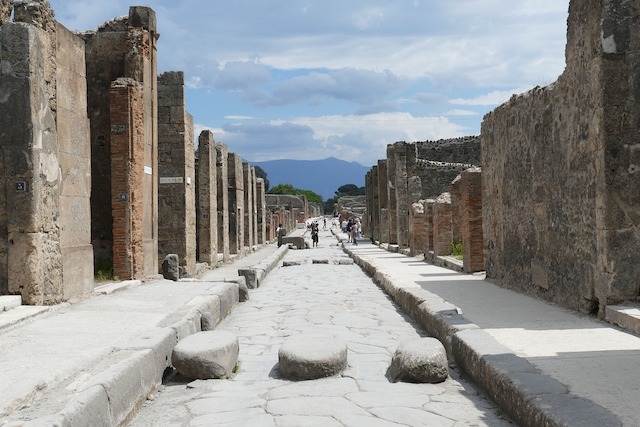
Outside the walls of Pompeii, on a hill that once towered over the city, lie the ruins of several villas, including one that's still in relatively good condition, considering it's over 2,000 years old, not to mention the eruption that destroyed the entire city. Not only is the structure largely still standing, but the real surprise lies inside, where many walls are still adorned with intricate and stunning frescoes.
The central element of the ancient house is a single room, approximately 15 by 15 feet, which was likely used as a dining room. Its three walls are divided by a single, gigantic, continuous fresco depicting dozens of figures engaged in various activities against a bright red background. This room gave the building its name— Villa of Mysteries .
Why is it called that? Well, because we're not entirely sure what they're supposed to represent. It's generally believed that the frescoes could depict a rare initiation into another of the Roman mystery cults about which we know so little... perhaps the cult of Dionysus . However, some scholars believe that the scenes could depict a bride on her wedding day or even simply scenes from a play.
1. Walbrook Skulls

Back in 2013, British workers were digging a tunnel on Liverpool Street Engineers working on London's Crossrail project discovered more than they bargained for when they uncovered 20 human skulls. While the discovery was gruesome, it wasn't entirely unexpected. The engineers knew they were excavating an old 17th-century burial ground, but they were then surprised to discover that the skulls were much older, dating back to the Roman period.
But even with this new discovery, the find was not entirely unique - back in the 1980s, archaeologists had found more 39 Roman skulls in the same area of London known as the Walbrook Valley. It is believed that all the remains were buried in the sediment of the River Walbrook, a tributary of the Thames, but this does not really explain where all these skulls came from or why exactly they were all separated from the rest of the body. .
It's a question archaeologists have been asking for decades, and there's still no definitive answer. One popular theory is that they were all victims of Boudicca, queen of the Iceni, who sacked Londinium back in 60 AD. Another, far more trivial, suggestion, as recently as the 17th century, is that the site also served as a cemetery in ancient times, which slowly deteriorated, causing the remains to be washed downstream. Or perhaps it was a sign that Roman Londoners were continuing...« cult of the head »" Iron Age and used decapitated heads for rituals and sacrifices. These are all plausible ideas that remain unproven.