









In the past, we've traveled from country to country, exploring some of the creepiest and strangest secrets hidden within their sordid histories. But now we're heading back in time, all the way to Ancient Greece, to explore some of the most unusual mysteries and riddles they have to offer.
10. Did Euxitheus kill Herod?
Classical Greece produced ten public orators so admired for their skill and eloquence that they became known as the Ten Attic Orators. The earliest of these was Antiphon of Rhamnus, a statesman of the fifth century BCE who applied his rhetorical skills in court, thus providing us with some of the first registered cases court cases brought before a democratic jury.
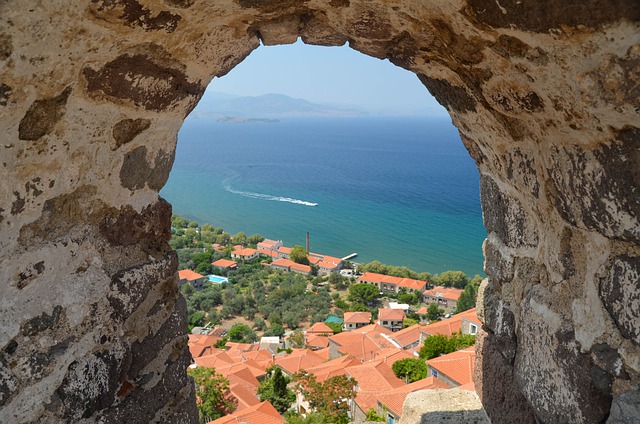
One of these speeches is called "On the Assassination of Herod" and reveals to us the mystery of the ancient Greek murder. One day, two men named Euxitheus and Herod went together on a ship from Mytilene In Enos. A storm forced the ship to moor in an unnamed harbor, and at that moment two men found shelter. It's unknown exactly how many people were in that shelter, but having nothing better to do, the men spent the night getting drunk. The next day, no Herod. He had vanished, and after two days of searching, he couldn't be found.
Eventually, when the weather cleared, Euxitheus continued his journey, but upon returning to Mytilene, he was accused of murder committed by Herod's relatives. He was brought to Athens to stand trial.
Unfortunately, Antiphon's speech does not contain a verdict, so we will never know how Herodes disappeared or whether Euxitheus was found guilty of his murder or not.
9. What happened to the Athena Parthenos?
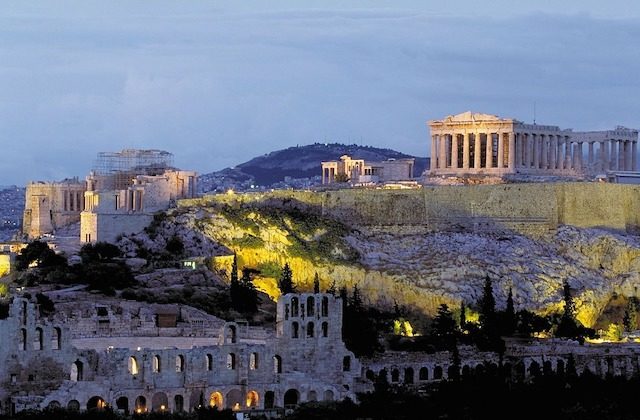
For hundreds of years, the statue of Athena Parthenos was one of the most treasured monuments in Athens, if not all of Greece, and occupied a place of honor in the inner hall of the Parthenon. It was a chryselephantine sculpture, meaning it was made of wood covered in gold and ivory, and stood nearly 40 feet tall. The construction of this marvelous statue is attributed to Phidias , who worked on it for nearly ten years before dedicating it somewhere around 438 BC.
Unfortunately, we don't know what happened to this masterpiece of classical Greek art. We do know that approximately 150 years after its construction, the Athenian tyrant Lachares was forced to remove some of the gold leaf to pay his soldiers. It is also known that around 165 BC, the statue was damaged in a fire but was later restored.
After this, the details become somewhat murky, and we have only hypotheses about what happened to it. Since the city was sacked several times by Germanic and Slavic tribes, it's entirely possible that the statue was destroyed during one of these incidents. However, since the worship of Athena had also declined in popularity by this time, it's possible that the Athenians themselves looted the sculpture for its valuable materials.
There is one later report that mentions its existence in the 10th century AD, claiming that it was transported to Constantinople . If this is true, the statue of Athena Parthenos could have survived until the 15th century, when the Ottoman Empire conquered Constantinople.
8. Why was the Atlantis trilogy never finished?
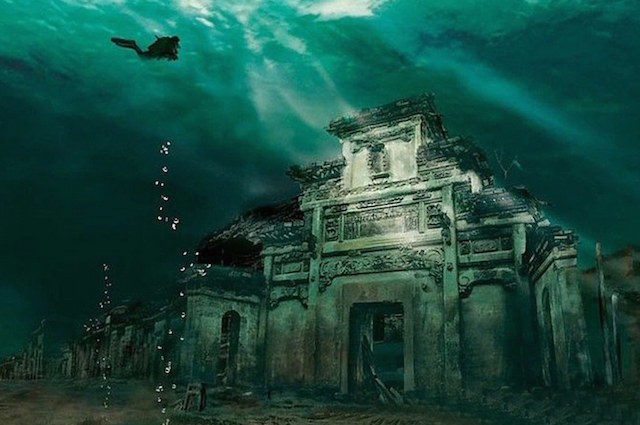
Most people have probably heard of Atlantis, the mythical island that sank into the ocean, but they may not know that the source of this story was Plato, the Athenian philosopher. According to Plato, thousands and thousands of years before him, Atlantis was this gigantic island, rich and powerful, with a mighty navy unlike anything the world had ever seen. With this fleet, Atlantis conquered all its neighbors, then North Africa, and reached the Mediterranean Sea as far as Italy.
But Atlantean armada proved no match for Athens, which fought them alone, soundly defeated them, and then liberated all the territories enslaved by their enemies. Following this defeat, Atlantis lost the favor of the gods and experienced a powerful earthquake, followed by floods that submerged the entire island in the ocean.
Obviously, no one assumes that any of this actually happened. The mystery here lies not in what Plato wrote, but in what he didn't write. He announced that he would make a whole trilogy about Atlantis, but he never did, even though he had plenty of time. Plato wrote the first book on the subject, "« Timaeus» around 360 BC, and then he had 12-13 years to complete his trilogy. Then he wrote the second book, «Critias» , which never ends and breaks off mid-sentence. This raises the question: why...
7. Was there a real labyrinth?
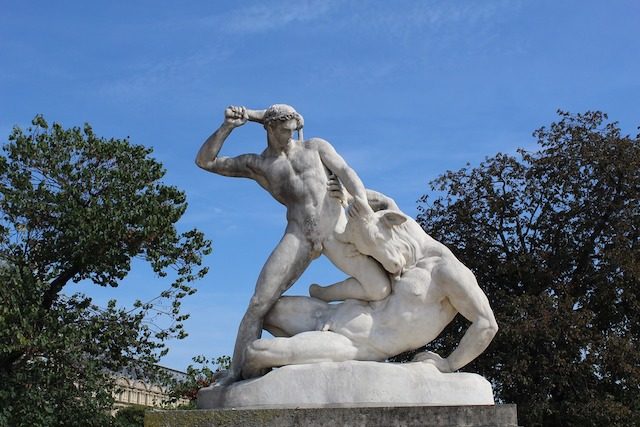
Speaking of famous Greek myths, let's move on to the legend of the labyrinth and the deadly Minotaur who lurked within. Here's a quick refresher course in case you've forgotten the story. Tsar Minos of Crete ordered Daedalus to build a complex labyrinthine structure called the Labyrinth, which housed a half-bull, half-man monster known as the Minotaur. Every nine years, Minos forced the king of Athens, Aegeus, to hand over seven boys and seven girls to the Labyrinth to be devoured by the Minotaur. This continued for decades until the story's hero, Theseus, entered the Labyrinth and slew the Minotaur.
We're going to go out on a limb and say the Minotaur wasn't real, but the same can't be said for the labyrinth, at least not definitively. Although no real evidence of its existence has been discovered, it seems that every few centuries interest in the labyrinth is renewed by people who believe the legend may have been inspired by a real structure, most likely located near Knossos. In ancient times, both Roman and Ptolemaic Egyptian writers believed the labyrinth to be real. Then, nearly 1,500 years later, a Byzantine historian Nicephorus Gregoras wrote that the labyrinth was a vast artificial cave system carved out of limestone, but located near the ancient city of Gortyn, not Knossos.
In the late 19th century, British archaeologist Sir Arthur Evans conducted major excavations on the island of Crete and discovered the long-lost Minoan civilization. Although initially skeptical, he concluded that the labyrinth was real and relocated it near Knossos. And just ten years ago, a new team of archaeologists discovered underground tunnels in an old quarry, this time not far from Gortyn, once again sparking debate about the existence of the labyrinth.
6. What is Socrates' problem?
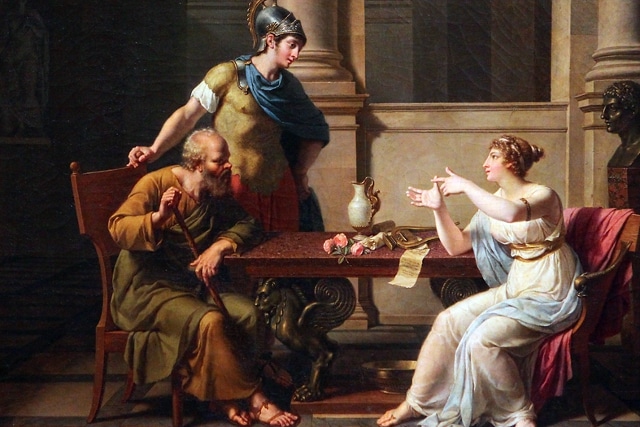
You've probably all heard of Socrates. Today, this guy is considered the father of Western philosophy, but it's good that people even remember his name, let alone his achievements. That's because Socrates never bothered to write anything down. He would undoubtedly have faded into obscurity just a few decades after his death if not for his students, who continued and expounded his ideas, paying tribute to the man who started it all. However, since he is known only indirectly, it's difficult to distinguish between "Socrates the character" and "Socrates the actual historical figure." Sometimes, the various descriptions of the philosopher are not only incompatible but even directly contradict each other.
This gave rise to what scientists call "« Socrates' problem »"People like Plato, Xenophon, and Aristophanes are our primary sources of Socrates, but each offers their own interpretation of the philosopher, not an accurate picture. When it comes to the real Socrates, the only thing we know is that we we don't know anything .
5. What did the Delphic epsilon mean?
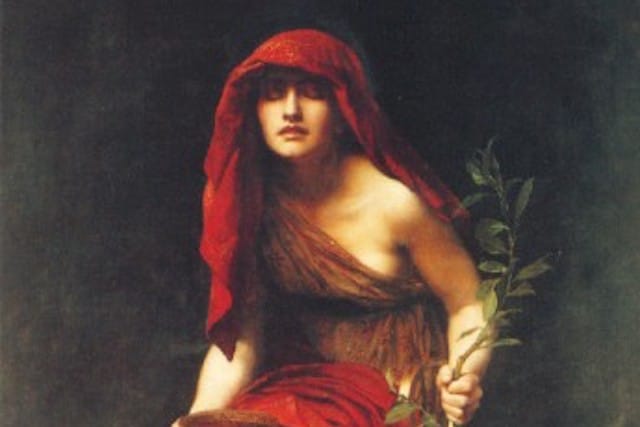
In ancient times, Delphi was a sacred site that attracted countless visitors from around the world, who traveled far and wide to hear the prophecies of the Pythia, the Oracle of Delphi. The priestess served her clients in the most magnificent temple of Apollo at Delphi. Upon approaching the temple, visitors noticed an unexpected symbol appearing on the building's pediment—the letter E, or epsilon. But what does it mean?
This question has puzzled historians and philosophers since ancient times, demonstrating that the true meaning of the Delphic epsilon has never been generally known. Plutarch was the first to address this issue, writing an entire treatise under the title "« About the letter "E" in Delphi"« . He suggested several possible explanations , although he remained unsure of their meaning. He provided us with a story symbol . The earliest of these dates back to the 6th century BC and was made of wood. That burned down and was replaced by a bronze one, which in turn was replaced by a gold one, which still existed in Plutarch's time, nearly 700 years later. The fact that the symbol was constantly replaced and updated, as well as its location above the entrance, suggest it had some important meaning, but we simply don't know what it was.
This symbol is currently used by conspiracy theorists, who associate it with aliens, secret societies, and alien secret societies. But in truth, much about the Oracle of Delphi has been kept secret, and it seems Delphic E is destined to remain a mystery.
4. Did the wife poison her husband?

We're back to Antiphon and his speeches to investigate another ancient Greek murder mystery, this time suspected of poisoning. The names of the victim and the suspected killer are not mentioned in the case, but they were husband and wife. One day, this man was dining with a friend named Philoneos , and soon both fell ill. They died within days of each other, but not before the man managed to tell his son from his first marriage that he had been poisoned and order him to punish the killer.
It was the son who accused his stepmother of murder. The speech indicates that this occurred years after the poisoning, suggesting that the son was still a small boy at the time.
As the prosecution presented the case, the wife had not actually poisoned him herself, but had instead tricked Philoneus's mistress into doing so. The other woman believed she was administering a love potion to restore his desire for her. Because this woman was a slave, she did not receive the same fair trial as the wife. Instead, she was tortured until she confessed, and then executed. As for the accused, the verdict was again missing from the speech, so her fate was lost to history.
3. What happened to the statue of Zeus?
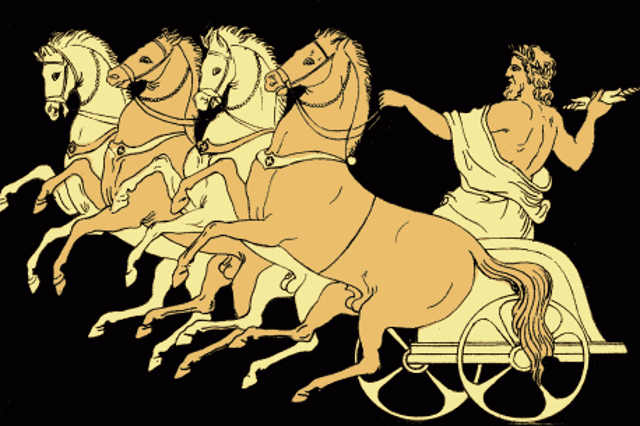
When it comes to Greek sculptures, there is nothing better than Statue of Zeus at Olympia. After all, it was one of the Seven Wonders of the Ancient World. Standing 40 feet tall, it depicted the king of the gods seated on a throne, holding a scepter in one hand and a statue of Nike in the other, with an olive garland crowning his head. Like the Athena Parthenos, it was a chryselephantine statue covered in ebony and gold leaf, which is unsurprising, as they were both made by the same artist—Phidias.
Unfortunately, as with the Athena statue, its final fate remains a mystery, as the Zeus statue simply disappears from the historical record. According to the Roman historian Suetonius, Caligula wanted the statue brought to Rome so he could cut off Zeus's head and replace her his own. The Emperor was killed before he could do this, but it is unknown whether the statue was moved.
Assuming that the statue survived Caligula's plan, it could have been destroyed during his reign. Feodosia I or II. They were both Christian emperors who rebelled against old traditions and ordered the closure and even destruction of many pagan temples. Many believe that one of them ordered the statue of Zeus transported to Constantinople for burning. If it somehow survived, it likely met its end in the 6th century, when the temple at Olympia was destroyed by earthquakes.
2. Was Homer real?
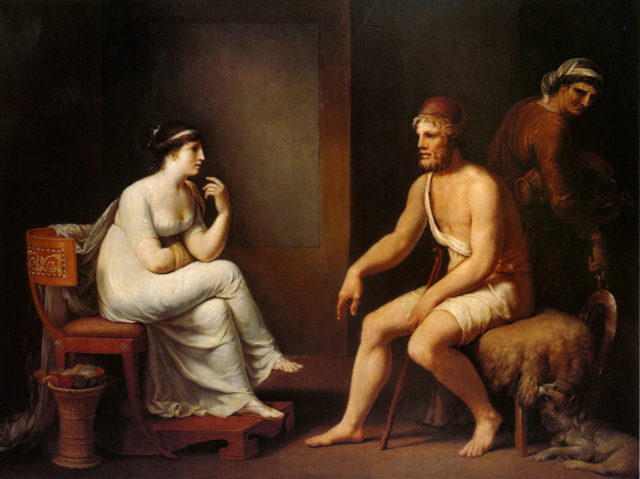
The name "Homer" will be familiar to many, and we're not talking about the guy who works in Sector 7G at the Springfield Nuclear Power Plant. No, we're talking about the original Homer, considered the founder of ancient Greek literature, primarily thanks to his two epics, the Iliad« и « Odyssey"» . However, debate continues about whether Homer even existed.
This is known as Homeric question , and it stems from the fact that he lived much earlier than people think, and that almost nothing is known about his real life. If a real Homer existed, he would have lived in the 8th century BC, hundreds of years before Greece became the cultural center of the world and produced great poets and playwrights like Sophocles, Euripides, and Aeschylus. Even in his own time, Homer was an ancient figure from a bygone era.
The Homeric question is actually twofold. The first part is whether Homer was real or not, and the second is whether he actually wrote the epic poems for which he is known. He would have lived during a time when Greek writing was still in its infancy and stories were mostly passed down orally, so he could have simply been a bard retelling tales that had existed for centuries. Many scholars believe that« Iliad» и «"Odyssey"» by hundreds, or even for a thousand years older than we think.
And then, of course, there are those who don't consider Homer a real person. They see him as either a collection of real writers or a symbolic figure. spirit , which the Greeks gave to their most beloved literary works, the real author of which was unknown.
1. What happened during the Eleusinian Mysteries?
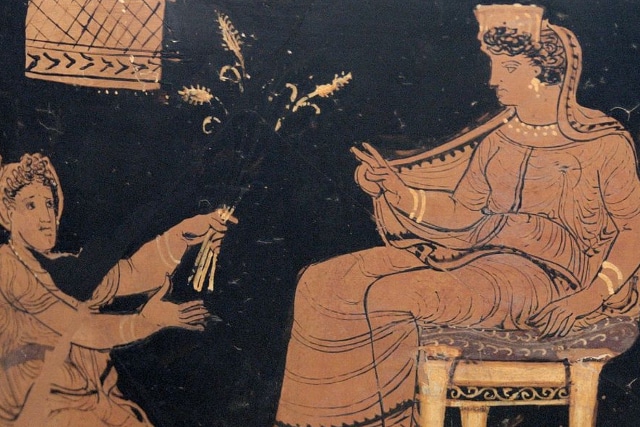
The Greeks were extremely fond of their secret rituals, and perhaps none were more famous than the Eleusinian Mysteries, rites observed for nearly 2,000 years in honor of Demeter, the goddess of agriculture.
According to the myth, Hades fell in love with Persephone , Demeter's daughter, so he kidnapped her and took her to the underworld. In her grief, the goddess stopped tending the crops, causing widespread drought and famine across the world. Eventually, Zeus forced Hades to return Persephone to Demeter, but the agreement was that she would return to the underworld annually and spend part of the year with Hades. During this time, the earth became cold and hard, and nothing grew, thus creating the seasons.
While searching for her daughter, Demeter arrived in the city of Eleusis. Disguised as an old woman, she served as a nursemaid to the queen's son. Eventually, she revealed her true identity, and the people of Eleusis built a temple to Demeter and began performing mysteries there to celebrate the reunion of mother and daughter, which caused the harvest to grow again.
This is the mythological side of the ritual, which is much better known than the real side, since the people who participated in it took their vows of secrecy very seriously. Two mysteries were held annually: the Lesser Mysteries in the spring and the Greater Mysteries in September. The tradition began with dedicated They walked from Athens to Eleusis. Everyone could observe the procession, but what happened inside the temple was strictly classified.
There will be fasting, purification rites, sacrifices, and offerings. This is standard, but some scholars believe the ritual may even have included human sacrifice , since the maiden was to be killed to symbolize Persephone's plight. The true scope of the Eleusinian Mysteries will forever remain hidden.