








CRISPR-Cas9 is a gene editing mechanism based on a naturally occurring set of DNA sequences found in bacteria . While this technology is still in its infancy, it has gained a lot of attention in the last few years due to its accuracy and flexibility, as well as its relatively low cost. You can even buy your own own a CRISPR-Cas9 kit for a few hundred dollars and use it to modify DNA in almost any way possible.
From pest-resistant crops to designer babies and permanent cures for diseases like cancer, one can only imagine what could be done with such technology, especially in the hands of experienced researchers who know what they are doing.
10. Change your food

Increasing the yield and nutritional value of existing food crops is a major future challenge due to factors such as climate change and an ever-growing population. While CRISPR is not the only method aimed at solving this problem, it is one of the most promising, as it makes gene editing accessible to small, independent producers worldwide.
While it will be some time before you see entirely new fruits and vegetables made with CRISPR in your local supermarket, it's not that far in the future. Some varieties of fruits and vegetables , modified with CRISPR , you can already buy it in some places around the world, and many more experimental varieties are expected to appear in the near future.
There are still some ethical concerns about what should and shouldn't be edited, especially with more complex food sources like animals. To address these, countries around the world are working on various types of rules , to control gene editing of foods, which should make them safer and more reliable for mass production and consumption.
9. Eradicate malaria

Malaria is one of the most deadly insect-borne diseases worldwide, from which on average annually hundreds of thousands die people , especially in high-risk tropical and subtropical regions of Africa. CRISPR provides one of many permanent solutions to the problem, as it can be used to develop something called gene drive , which can then alter the entire gene pool of mosquitoes to completely eliminate the disease.
Clearly, this isn't as simple as it sounds, although early experiments have been promising. In a recent study, researchers from various institutions in the UK and Italy did something similar in a population Anopheles gambiae — the mosquito species responsible for the largest number of cases of the disease in sub-Saharan Africa. Modification CRISPR The experiment resulted in the complete eradication of the target group within a year, proving that it is possible. While the disease is still far from being completely eradicated, as that would require repeating the experiment on a much larger scale, it is certainly a step in the right direction.
8. Biofuels

Coming up with clean, sustainable ways to produce energy will be a major challenge in the future, if it isn't already. Biofuel is a promising solution because it occurs naturally and leaves a minimal environmental footprint. However, it is difficult to mass-produce, especially at the scale we're talking about.
CRISPR offers a potential solution, allowing researchers to devise new ways to modify the genome of natural biofuels. This is a growing area of research, with several teams exploring various ways to implement the CRISPR protocol in the biofuel production process. Early experiments with some biofuels, such as microalgae, have been successful, with researchers able to modify DNA several known species of microalgae using CRISPR-Cas9 editing.
7. CAMERA 1

CAMERA1 is a new technology created by the group scientists from Harvard and MIT. Using the CRISPR sequence, it transforms cells into a kind of "black box" that can record changes at the DNA level, which can then be used to trace the origins of a range of genetic traits. Recording these variations in real time may one day allow us to understand the root causes of chronic diseases like cancer, as CAMERA 1 may be the first technology that gives us a real-time window into a cell's entire life cycle.
The possibilities are endless, although, like all other CRISPR technologies, CAMERA1 It's still in its early stages. Like CRISPR, it could also be used as a basis for other future applications.
6. DETECTOR
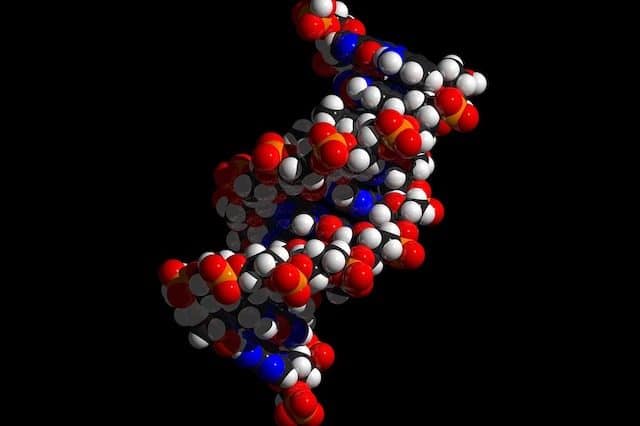
Like CAMERA, DETECTR uses CRISPR technology to create a completely new app. Designed to detect any genetic information you enter into it, DETECTR could soon become a revolutionary tool for the early detection of serious diseases.
In one experiment, DETECTR was used to detect HPV virus — a known possible cause of cervical cancer — among other random types of viral strains, and it turned out to be quite good at it. This same method could be refined to detect early signs of diseases like Alzheimer's or even cancer. DETECTR has also been successfully used to develop a precise detection method. Covid , which may be useful during future outbreaks.
5. Correct chronic pain

According to the CDC, about 50 million People in the United States alone suffer from chronic pain, and it typically worsens with age. Surprisingly, modern medicine offers few reliable treatments for it, even though it is a serious, everyday problem for those who suffer from it.
CRISPR offers a possible long-term solution, as it can be used to alter the genetic makeup of the affected area and permanently reduce pain. Several researchers at the University of Utah have devised a way to turn specific genes on and off, using them to disable the inflammatory mechanism that causes chronic pain in cases of disc deformity. This method is still in its early stages, and there are numerous regulatory hurdles before it can be fully implemented, although the researchers are confident it will be no more than 10-15 years , before it was widely used to treat debilitating conditions that cause long-term chronic pain.
4. Cure HIV/AIDS

The HIV epidemic is by far one of the longest-running disease outbreaks of all time, with an estimated death toll to date is about 40 million people . The pathogen—a type of retrovirus—has proven resistant to all treatments. In fact, we don't even understand how the HIV virus functions, especially the mechanism it uses to infect and spread among human cells.
It seems like an incurable disease, although CRISPR offers one possible way to eradicate it. One team of researchers from Northwestern University in Illinois used the technology to identify genes associated with HIV infection that could eventually be turn off , to permanently reduce the worst effects of the virus.
The team plans to eventually isolate all the cellular and genetic factors responsible for HIV infection, hoping to one day eradicate the disease, which still affects more than 1.5 million people worldwide.
3. Antibiotic resistance

Antibiotic resistance is a serious concern for healthcare professionals. With the proliferation of nearly every conceivable type of antibiotic, pathogens are becoming increasingly resistant to known drugs, as antibiotics transform them into superspecies of everyday diseases. report Lancet , In 2019 alone, antibiotic-resistant diseases could have led to more than 5 million deaths worldwide, making them one of the leading causes of death overall.
While there are no quick fixes to the multifaceted, growing problem of antibiotic-resistant pathogens, CRISPR may offer some long-term solutions. For example, a team of Canadian scientists recently disabled antibiotic-resistant genes within certain types of bacteria during one of their studies, only this was done on mice , and not on people. Other efforts in the same direction are related to the so-called bacteriophages — a type of virus that infects bacteria — that can be modified using CRISPR to attack antibiotic-resistant regions of harmful pathogens and render them harmless.
2. Resurrection of extinct animals

Bringing animals back from the dead may not always be as cool as it seems. the franchise proves it enough «Jurassic Park» , although it may have its uses. If possible, this idea would allow us to study—and perhaps even repopulate the planet—long-extinct species, and could even open the door to further research into the advanced arts of human resurrection.
Many teams are working on this, although none have yet succeeded in resurrecting a dead species. A major challenge is the availability of the species' complete genome, which is necessary for any CRISPR editing. One American geneticist, George Church , is confident that his team will be able to resurrect the woolly mammoth by In 2027 , since they currently define all the traits that distinguish the mammoth species from the elephants we have today, and which could then be used to reproduce them on Earth at the DNA level.
1. Hack human DNA

For the first time, CRISPR has allowed independent researchers to tinker with the building blocks of life itself, raising numerous ethical and moral questions along the way. It's clear that once this technology gets out of control, it will inevitably be used for the unthinkable—to modify the human genome itself.
It is quite possible that in our lifetime, scientists will be able to control a wide range of human genetic expressions using CRISPR , including resistance to certain diseases, facial features, athleticism, intelligence, or any other characteristic we consider natural. At this point, this is a question of ethics, as the technology largely already exists. In China, in particular, several experiments have proven the viability modifications human genome using CRISPR, and the results were also promising.