








Sudanese architecture, which originated in Sudan, a country located south of Egypt in North Africa, has a rich and varied architectural history, reflecting the country's ethnic and topographic diversity. Excavations indicate that the first active Neolithic communities in the Nile Valley date back to at least 8000 BCE.
These communities built fortifications to protect themselves from external threats, and their members hunted, fished, gathered food, and raised livestock. However, not a single building or structure from these communities has survived to this day. Prehistoric building materials in this African country date back to 1860 BC.
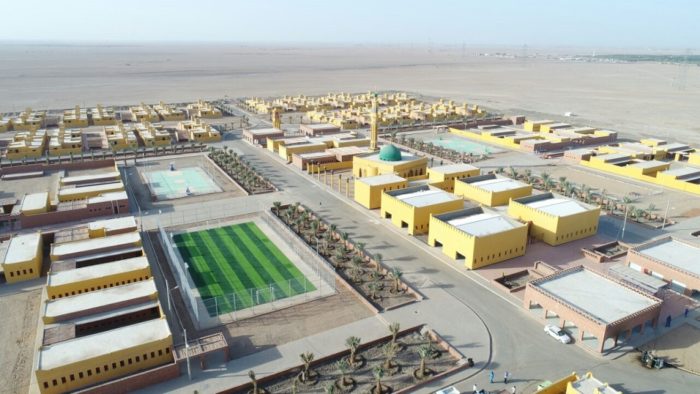
Rofaka village in Sudan.
What is Sudanese architectural style?
Modern Sudan is replete with historical sites and buildings. European colonial influence can be seen in institutional and residential structures. The brief Mahdiyya period left behind military and religious structures, while the Ottoman Turkish period left behind several ancient structures, the most famous of which can be found in the abandoned Red Sea port city of Suakin. Let's take a closer look at the various Sudanese building styles.
1) Prehistoric architecture of Sudan
The ancient city and fortification of Buhen were likely built around the mid-nineteenth century BC in what is now the northern Sudanese state of Wadi Halfa. It featured drawbridges, bastions, buttresses, ramparts, battlements, and embrasures, as well as a three-meter-deep canal. Only through historical images and renderings can Buhen Castle be seen from its current location beneath the waters of Lake Nasser.
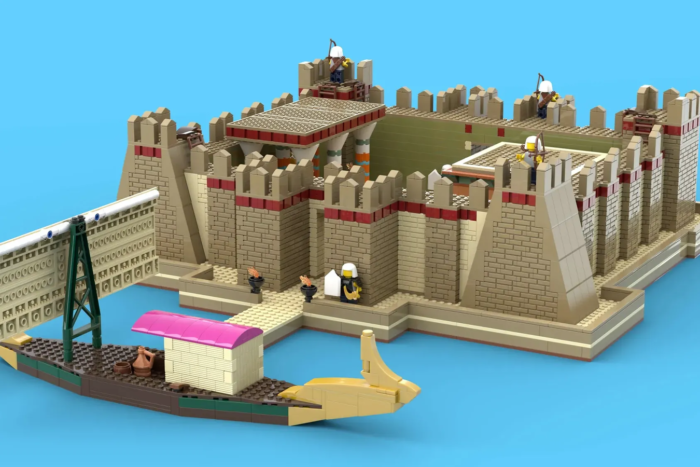
A Lego illustration showing what Buchen Fortress looked like. ©Lego Ideas
2) Ancient building technologies of Kush
The next significant change in Sudanese architecture occurred between 950 and 350 BC, when ancient Nubia was divided into the northern Wawat and the southern Kush region.
During this time, the Kingdom of Kush grew and flourished. This kingdom was the center of a fierce conflict between the Egyptians and Nubians over its natural resources and gold wealth. In fact, numerous kings from the Kingdom of Kush ruled Egypt for over a century. Thus, Egyptian inspiration is clearly evident in surviving examples of architecture from this era.
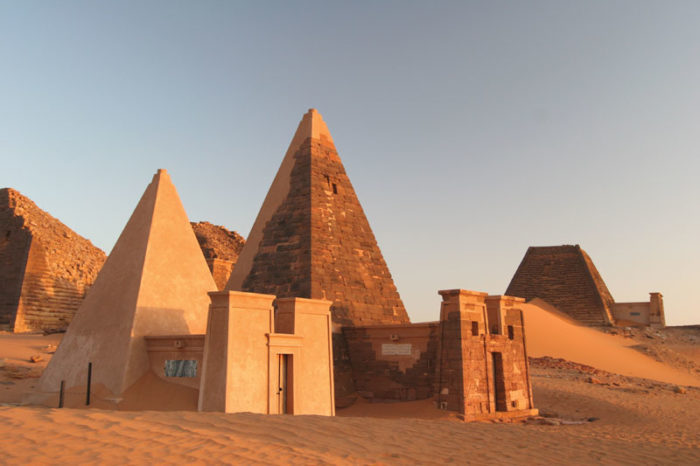
The pyramids of Meroe, capital of the Kingdom of Kush. ©Encyclopedia Britannica
3) Medieval Sudanese construction
Makuria, Nobadia, and Alodia were three Christian kingdoms that rose and fell during the Middle Ages (500-1500 CE). The Faras Cathedral exemplifies this architectural style with its ornate carvings and wall art. Clay bricks have been found to be a common building material in Sudan. Before their final sinking in Lake Nasser, most relics from these eras were recovered and documented.

Construction drawing of the Faras Cathedral and its surrounding complex. ©P. Klimovich
4) Sudanese Islamic architecture
By the late 16th and 17th centuries, Islamic kingdoms were established in southern and western Sudan, and the locals began speaking Arabic. Mosques and Islamic academies were established during this time. From 1821 to 1885, Turkey and Egypt ruled the country. This allowed the current capital, Khartoum, to transform from a fortified city into a bustling metropolis with brick houses, government buildings, new mosques, and tombs of prominent religious figures.
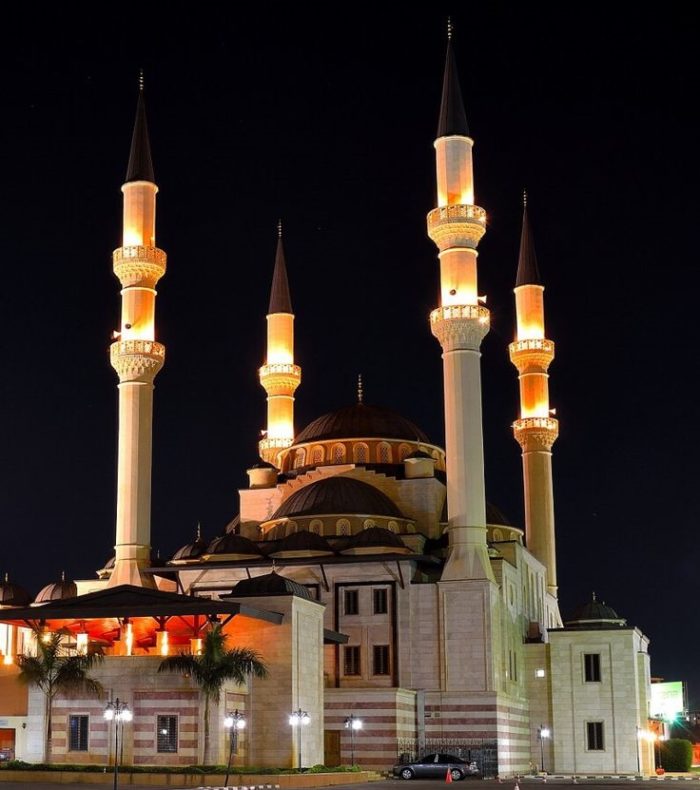
El Noor Mosque, Khartoum
5) Vernacular architecture appropriate to the climate
Historically, Sudanese people relied on readily available resources like wood and stone to build their homes and other civil structures. As we've seen, adobe brick is a material that has been around for a long time.
However, other materials were also used, such as cow dung, stone, and wood from local trees and plants. Walls in Sudanese vernacular architecture are often elaborately painted with traditional patterns. They are square or rectangular, with flat roofs and terraces, ideal for spending the hottest nights of the year under cover.
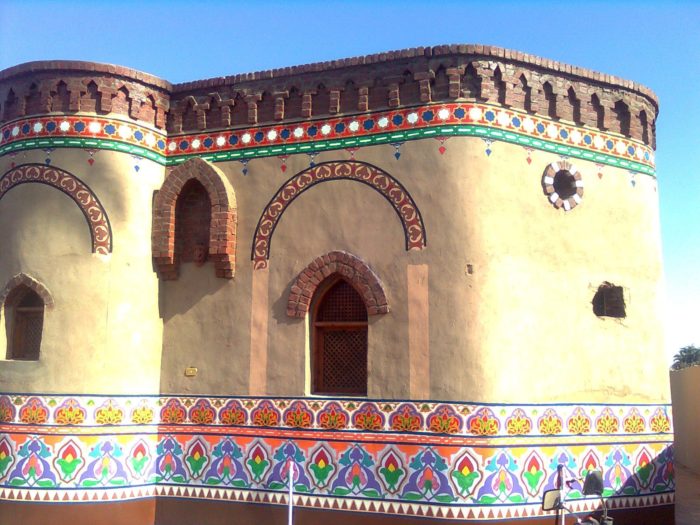
Flat roofs are the norm in most of Sudan, but in the south and southeast, where rainfall is more frequent, pitched roofs are preferred. Thus, round houses with cylindrical thatched roofs have become the standard form of vernacular architecture in these regions.

African vernacular architecture
Sudanese buildings
The following ten structures each highlight different aspects of Sudanese architecture. These aspects include architectural forms, materials, and construction methods.
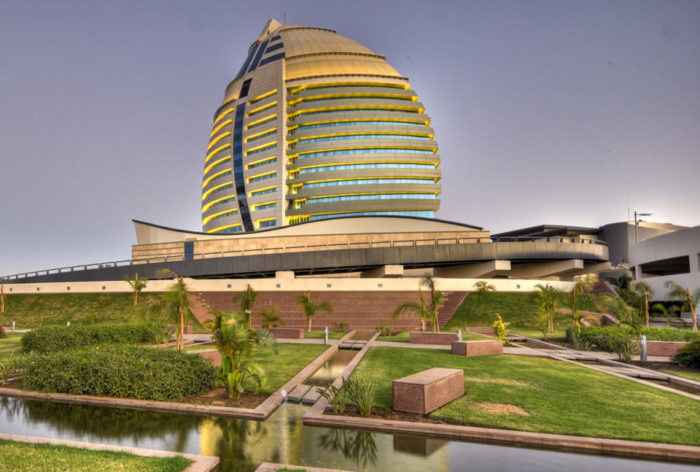
1. Hotel Corinthia«
A five-star high-rise hotel and one of the tallest buildings in Khartoum, built in 2008.
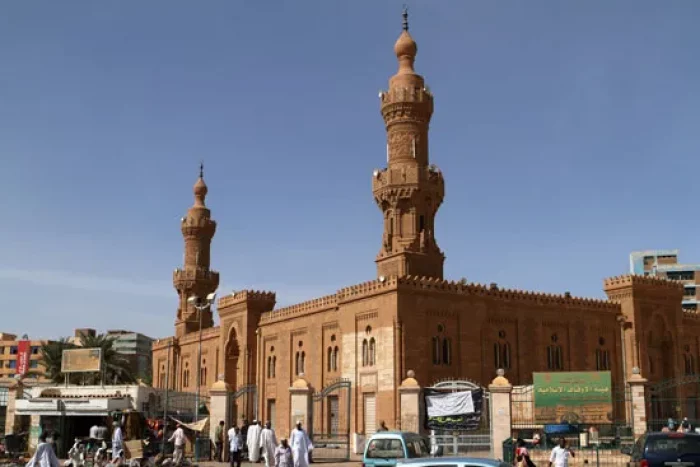
2. Farouk Mosque
«"The sandstone building is skillfully decorated with Islamic motifs that reflect the mosque's religious symbolism," says Mohamed Abdelaziz, a young Sudanese architect.
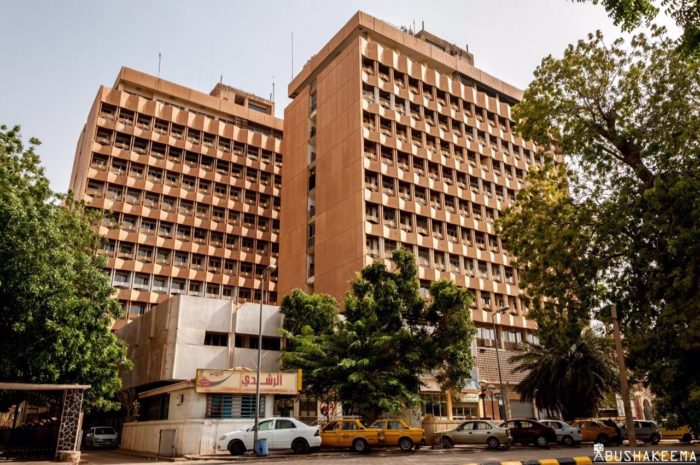
3. Sudanese Kuwait Center
The precast concrete high-rise building, the first of its kind, was completed in 1973. The façade creates a contrasting pattern with light and shadow passing through the same element, repeated at different angles, creating a pattern.
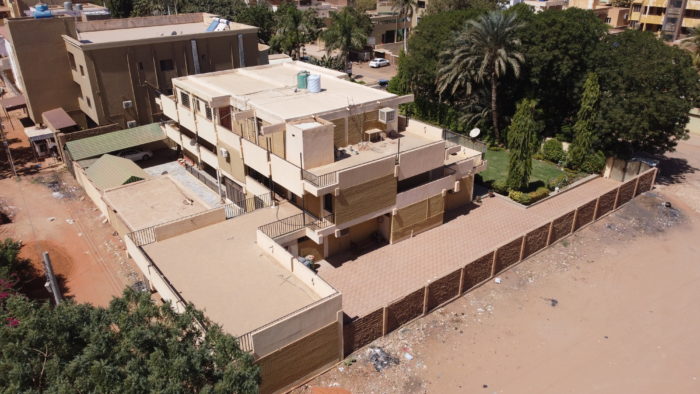
4. Mahjoub Residence
Winner of the 2013-2014 African Property Awards for Best Multi-Residential Architecture in Africa, renowned for its unique, non-local materials and contemporary design.
5. Al-Nailin Mosque
A unique contemporary design with meticulous attention to detail, where air conditioners are elegantly concealed within the ornamental forms, showcasing a magnificent blend of Nubian Islamic and Egyptian architecture.

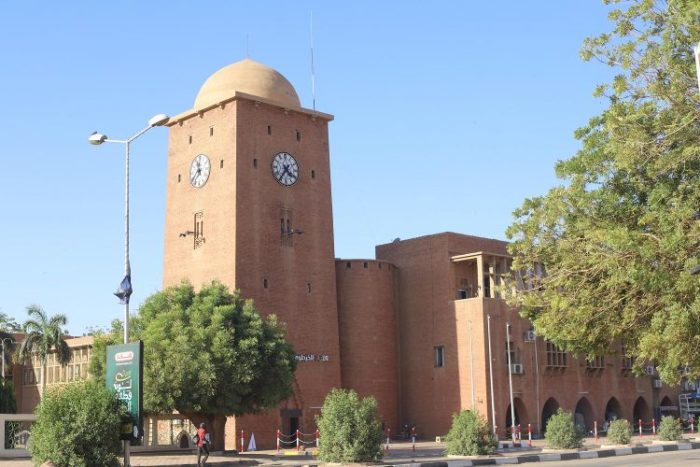
6. Omdurman Municipality
Built in 1952 using local materials and reinforced concrete, it is one of the first complex buildings in Khartoum with beautiful red brick facades.
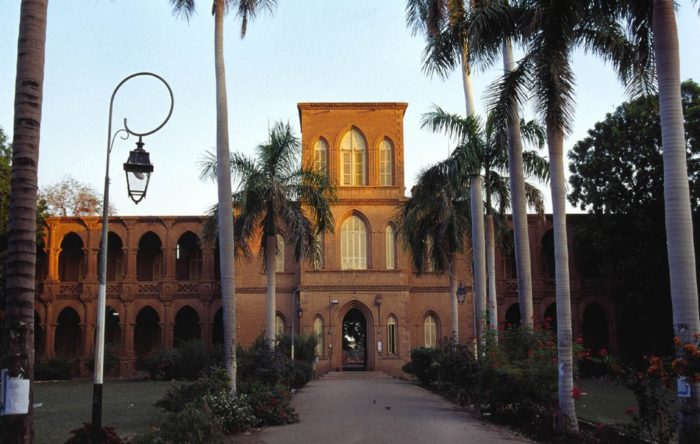
7. Main Library of the University of Khartoum
The building was completed in 1988, with shaded arcades used as a local environmental solution to create air movement and shade for the building, and beautifully crafted arches creating a beautiful façade.
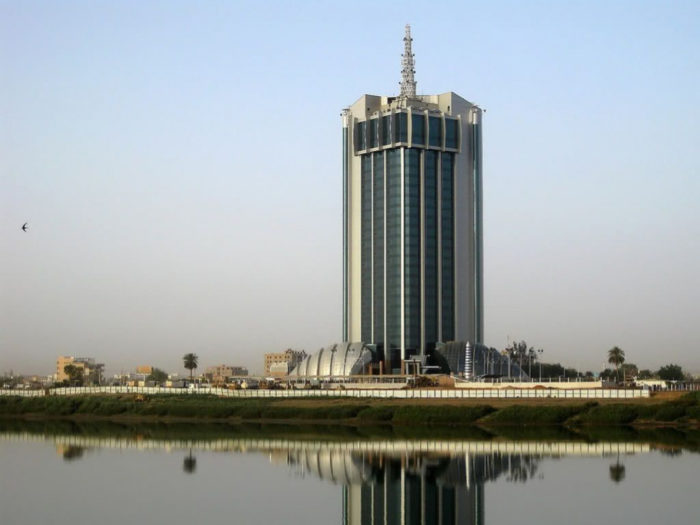
8. NTC Tower
Completed in 2009, the National Telecom Corporation Tower is the tallest building in Khartoum: 29 stories, 110 meters high, and famous for its photovoltaic facade.
9. Presidential Palace
One example of colonial architecture, constructed of adobe load-bearing walls, demonstrates outstanding evidence of the quality of the local material and still stands today, more than 100 years later.

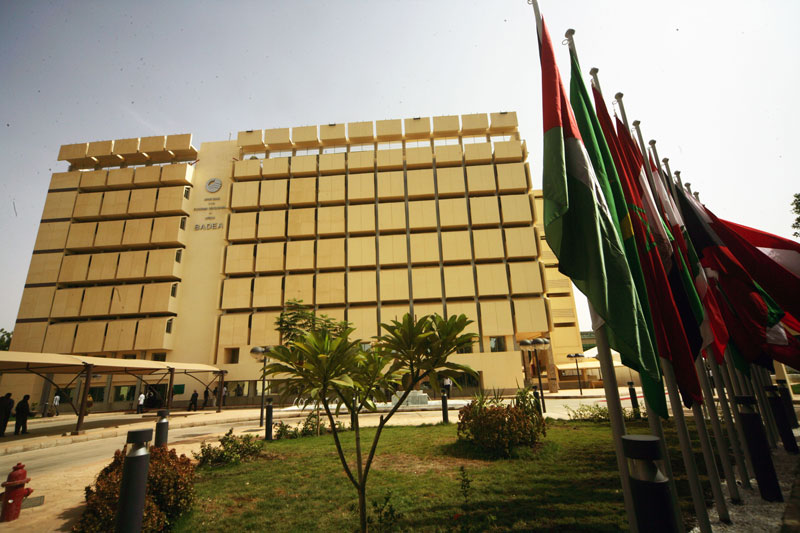
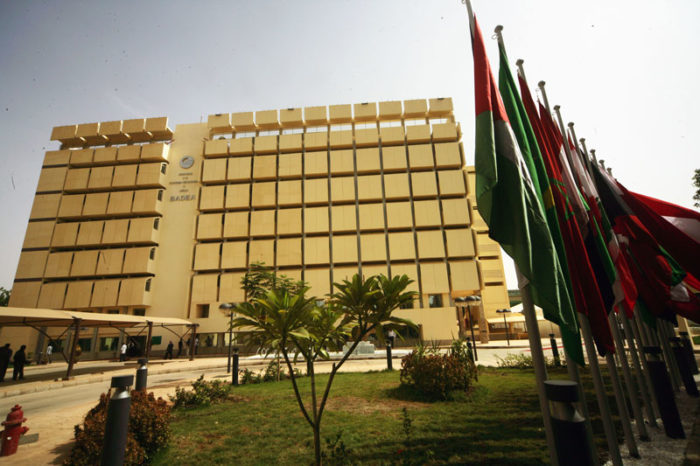
10. BADEA building
The Arab Bank for Economic Development in Africa, designed by Abdel-Monie Mustafa, one of the first Sudanese architects. Completed in the early 1970s.
Frequently Asked Questions:
What is the largest building in Sudan?
At 130 metres (427 ft), the NTC Tower is the largest and tallest structure in Sudan.
What is the oldest building in Sudan?
The Dongola Throne Hall has existed longer than any other structure in Sudan. It was built by Makurian Christians in the eighth century. The fall of the Makurian Empire led to it being converted into a mosque in 1317. In 1969, it was converted into a monument. It is also widely considered the oldest mosque in Sudan.
What are Sudanese houses made of?
Traditional houses in Sudan are often built from locally sourced, unprocessed materials. Ninety percent of dwellings are mud houses covered with thatch.