








It is common knowledge that the cheetah is a fast, ferocious, and formidable animal. The word "cheetah" comes from the Sanskrit word "« read »", which, in turn, comes from the word"« chitra »" meaning "spotted, painted, or marked." Kublai Khan is believed to have owned thousands of cheetahs and was fascinated by them. Here's an interesting fact about these wild cats: a group of cheetahs is called a "coalition." And another: they are the only cats that cannot fully retract their claws. Read on to learn a few more little-known facts about cheetahs.
1. Nearly exterminated by the last Ice Age, all modern cheetahs are descended from a small portion of their ancestors that interbred with each other. This means that living cheetahs are virtually genetic clones of each other.
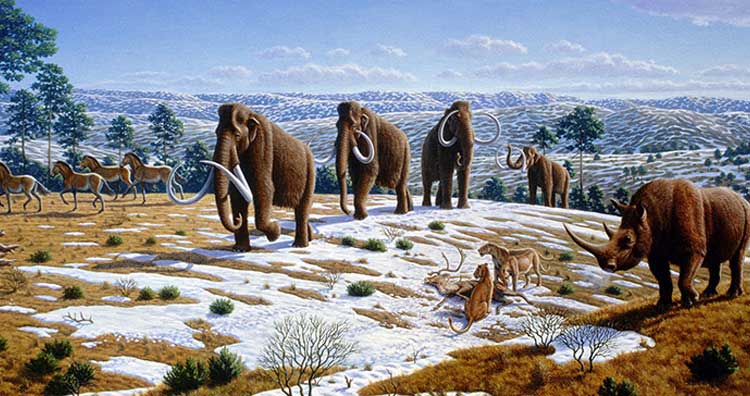
Approximately 12,000 years ago, the cheetah population survived the last ice age, a period when cold temperatures led to the extinction of several animal species, such as saber-toothed cats, and a sharp decline in the cheetah population on Earth. Only a few individuals remained, which then mated with each other, producing a nearly identical population. This was confirmed by research conducted in the 20th century.
Due to human activity, the cheetah population declined from 100,000 in 1900 to 30,000 in 1970. They rapidly disappeared from Africa, were almost nonexistent in Iran, and disappeared from Asia. The situation worsened, prompting researchers in 1980 to conduct the first-ever study of cheetah DNA and reproduction. The studies revealed that not only were their sperm counts shockingly low, but also that 70% of them were defective.
In 2015, Stephen O'Brien of the National Institutes of Health analyzed blood samples from the animals and, after examining 52 genes, discovered that their blood enzymes were identical (95% homozygous). This distinguishes them from other cats, whose enzymes differed by at least 20-50%. Their immune systems were also identical. They were like genetic clones of each other. (source)
2. The ancient peoples of the Middle East and India domesticated wild cats and trained them to hunt and ride. The ancient Egyptians domesticated them as house cats.

History shows that cheetahs are easily tamed, despite their tendency to display some aggression toward humans. In ancient times, around 1500 BC, they were called "panthers of the north," and historical texts depict them on leashes. From the 11th to 16th centuries BC, they were pets of royalty and used for hunting in ancient Mesopotamia.
By the 7th century CE, they had become more common as hunting animals. In the Middle East, they were trained to mount horses by enticing them with food. Special saddle seats were made for them, where nobles would sit. Around the 10th century CE, Chinese emperors used them as gifts. (1, 2)
3. Almost half of the cubs born to female cheetahs have multiple fathers living in distant countries. In the wild, only 30% cheetah cubs survive. In captivity, this figure reaches 80%.

With only a few thousand cheetahs remaining in the wild, research has shown that only 30% cubs survive to adulthood, while in human care, such as at the Smithsonian Conservation Biology Institute, up to 80% can survive. First-time mothers often abandoned their cubs; wildfires or other natural disasters could kill them; untreated injuries could occur; or the mother cheetah was killed by poachers, leaving the cubs vulnerable to attack. These are just a few of the reasons for the high mortality rate. Only 5% cheetah cubs can survive without their mothers.
Nine years of research conducted in Tanzania's Serengeti National Park revealed that cheetahs are serial cheaters. DNA samples from 176 cheetahs revealed that 47 litters of 43% cubs had multiple fathers. Female cheetahs can mate with multiple males, producing a new egg each time through artificial ovulation. These "fathers" were not all from the same region; they were found to be dispersed across remote areas. (1, 2, 3)
4. According to research, most female cheetahs live their entire lives without raising a single cub to adulthood. Cheetahs depend on "supermoms." One supermom mothered 10% adult cheetahs in the southern Serengeti.

A study conducted in Serengeti National Park has shown that, over the past period, most female cheetahs are unable to raise the cubs they give birth to. This means that only a few female cheetahs are true "supermothers" of all cubs that survive to adulthood.
Being a mother is challenging even for cheetahs, and young mothers typically need time to master the necessary skills (finding a den, hunting prey, defending themselves from predators, etc.), so only experienced middle-aged mothers can safely raise a cub. Eleanor, an experienced mother, raised 10% adult cheetahs in the southern Serengeti. Asti is another "supermom" in the Serengeti National Park in Tanzania. (1, 2)
5. Cheetahs can't roar. They meow like cats, chirp like birds, bark like dogs, and even hiss like snakes.
Unlike the four main species of wild cats that can roar—lions, tigers, jaguars, and leopards—cheetahs cannot roar due to the lack of the two-part hyoid bone in their throat that enables roaring in other cats. Wild cats that can roar have a loose ligament in their larynx, which stretches to produce lower-pitched sounds when air passes through it.
Cheetahs have a fixed vocal apparatus, more similar to that of domestic cats. They can hiss, bleat, bark, purr, growl, and chirp, which is a unique feature of this animal. (source)