








The article "Our Living Seas: Crisis in Marine Ecosystems and How the World Responds" first appeared on the AZ Animals website.
I live on the Dutch Caribbean island of Bonaire, a place boasting a shallow coastal reef just a few steps from the shoreline. This island is a mecca for divers and snorkelers from all over the world.
Bonaire's reefs regularly host schools of colorful tropical fish, extensive areas of hard and soft corals, sea turtles, and pelagics such as sharks, rays, and even whales. For decades, the island has boasted one of the healthiest reef ecosystems in the world.
It's a problem facing coral reefs around the world, and it's one reason why this year's World Oceans Day is dedicated to rethinking how we care for the waters that cover 71 percent of the Earth's surface.
World Oceans Day 2026
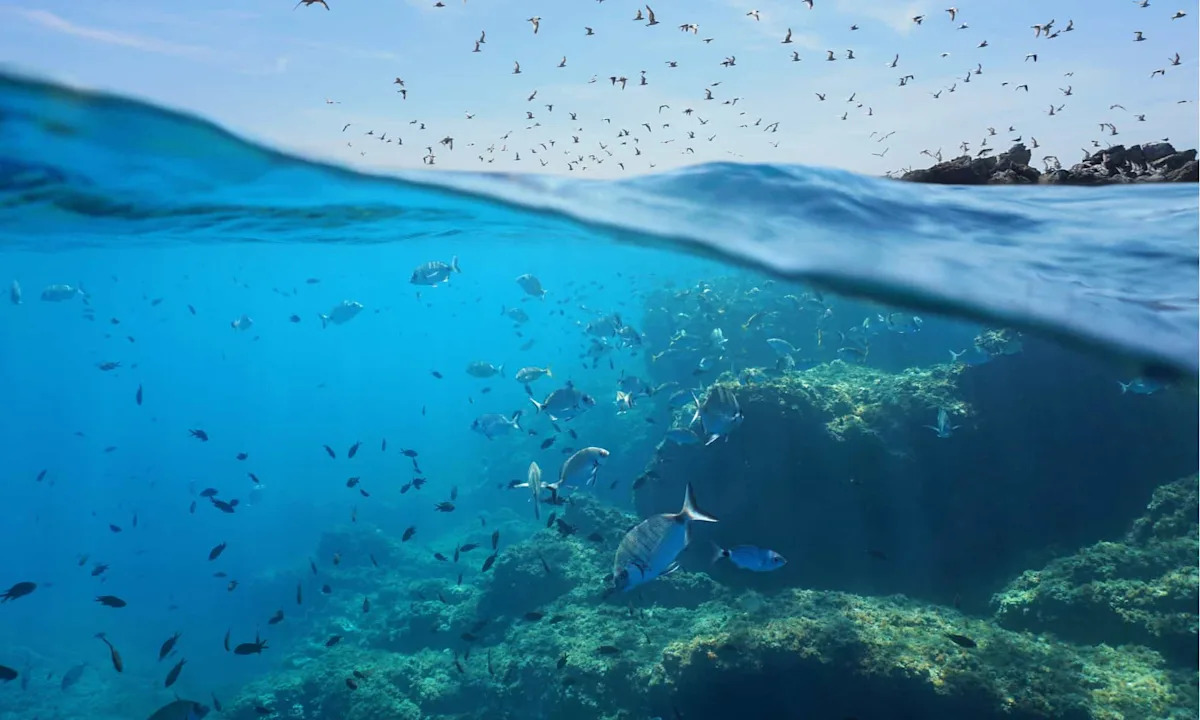
This year, World Oceans Day is celebrated on June 8. It honors one of the planet's most precious resources. The idea was first proposed at the 1992 Earth Summit in Rio de Janeiro, Brazil. The day was officially recognized by the United Nations in 2008.
World Oceans Day is celebrated on June 8.
©RomoloTavani/iStock via Getty Images
This year's theme is "Rethink." It's an opportunity and an invitation to recognize that the world's oceans are more than just vast bodies of water, removed from the daily lives of most people. Our oceans are the source of the air we breathe, the food we eat, and the climate regulator that ensures the sustainability of life on Earth.
Now is the time to celebrate this unique feature of our blue planet. But this celebration is marred by the fact that humans continue to endanger our oceans.
The biggest threats
Today, the world's oceans are threatened by three main dangers.
Overfishing. Overfishing not only depletes marine life and disrupts fragile marine ecosystems, but also threatens the lives of millions of people who depend on seafood for food and livelihoods. According to the Marine Stewardship Council, overfishing levels are now three times higher than they were in 1970.
Overfishing is a serious threat to the marine ecosystem.
©Andrea Izzotti/Shutterstock.com
The Food and Agriculture Organization of the United Nations (UNESCO), which monitors global fish stocks, estimates that approximately 35.51 TP3T of these stocks were overfished in 2024. Overfishing was the cause of the collapse of Canada's Grand Banks cod fishery in 1992, leading to the loss of jobs for tens of thousands of fishing workers.
Estimates of scale plastic pollution While estimates vary widely, millions of tons of plastic end up in the world's oceans every year, with some studies suggesting between 19 and 23 million tons enter aquatic ecosystems annually. Plastic accounts for 85 percent of marine debris. One study estimates that there are over 170 trillion plastic particles floating in the world's oceans.
While these statistics may seem incredible, I believe them. Every day, plastic debris washes up on Bonaire's windward coast. Volunteers spend countless hours collecting and removing it. The next day, even more appears. A similar situation is observed in island and coastal communities throughout the Caribbean and around the world.
Ocean warming and acidification. The world's oceans act like a sponge, absorbing carbon dioxide from the atmosphere. Scientists estimate that approximately 30 percent of human-caused CO2 emissions have been absorbed by the world's oceans. This has helped stabilize the planet's climate. However, as ocean surface temperatures rise, this absorption decreases. One study found that in 2023, the world's oceans absorbed approximately 10 percent less CO2 than expected, thanks to rising ocean temperatures.
Coral bleaching is a result of rising ocean temperatures.
©Sabangvideo/Shutterstock.com
Acidification is another threat. When seawater absorbs CO2, it produces a byproduct called carbonic acid. This lowers the water's pH and reduces the amount of carbonate ions, a key component required by shell- and reef-building organisms. One negative consequence is coral bleaching, which ultimately leads to massive coral mortality. When corals die, reefs become weakened and can eventually collapse.
How World Oceans Day is responding to the situation
This year's World Oceans Day theme is "Building Strong Marine Protected Areas for Our Blue Planet." The goal is to guide global action in the coming years, aiming to protect 30 percent of the planet's land, water, and oceans by 2030.
This initiative is part of the "30x30" agreement on climate and nature conservation, adopted within the framework of the Global Biodiversity Framework in Kunming-Montreal in December 2022. More than 190 countries signed this agreement at the 15th meeting of the Conference of the Parties (COP 15).
Bonaire is one of many countries that have marine protected areas (MPAs).
©bcampbell65/Shutterstock.com
One of the main goals of this year's World Oceans Day theme is to establish more marine protected areas (MPAs) around the world. Protecting these fragile ecosystems is the first step to achieving measurable conservation results. Through such protection, critical fish stocks can recover and biodiversity can return to normal.
Another initiative by World Oceans Day organizers is to continue pressuring world leaders to maintain focus on the 30x30 commitment. However, more can be done—not just on World Oceans Day, but every day.
Other strategies that have an impact
Various effective local efforts are currently underway to combat threats to the world's oceans. One such model is community-led conservation. These include indigenous land and water management, local marine protected area management, and ocean cleanups such as the annual Waterway Cleanup sponsored by the South Florida Marine Industries Association.
Consumers can also make a difference. Two ways to do this are by supporting climate action and choosing sustainable seafood. Technology is also being used, such as underwater monitoring and artificial intelligence-powered reef research.
The article "Our Living Seas: Crisis in Marine Ecosystems and How the World Responds" first appeared on the AZ Animals website.