








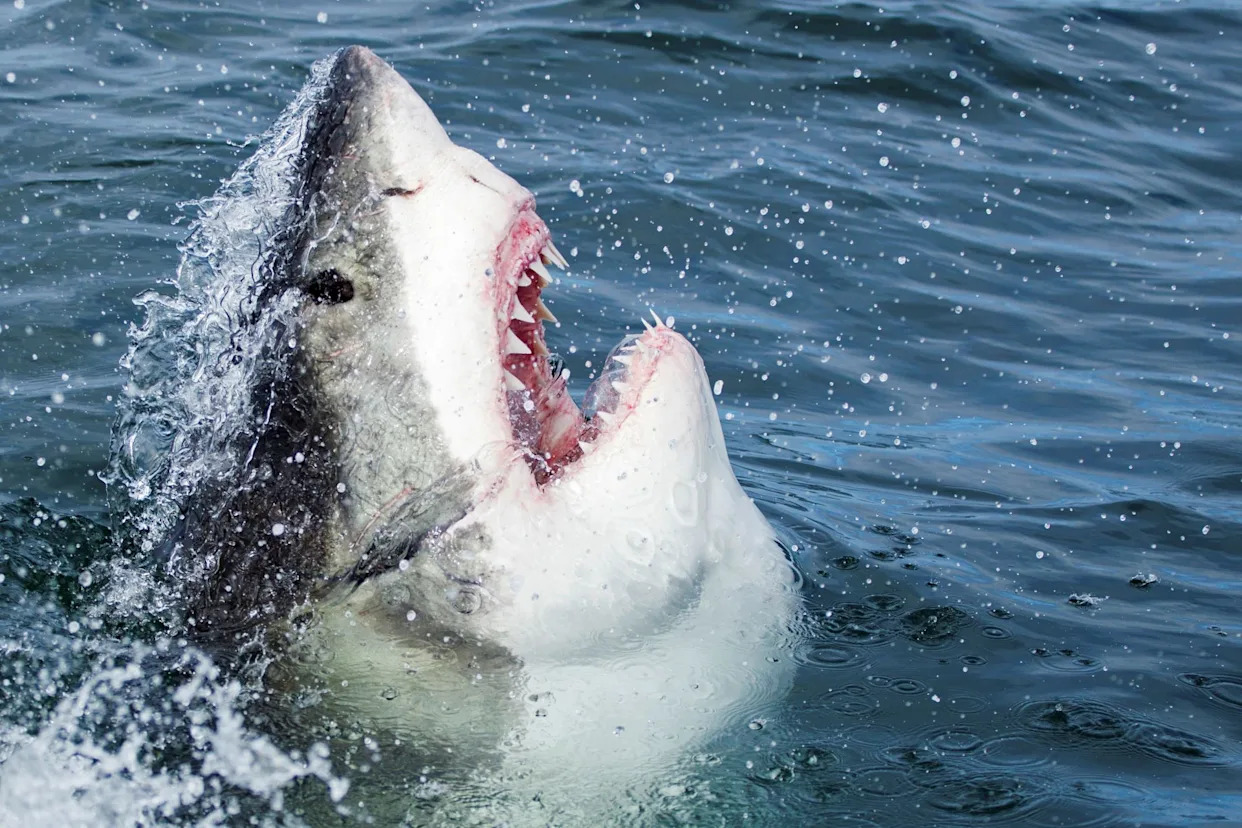
It takes a pretty good reason to attract a great white shark's attention, but a dead whale certainly qualifies.
Marine researchers have captured incredibly clear images of a great white shark devouring a whale carcass off the coast of Rhode Island, Newport Buzz reports.
What's happened?
According to the publication, the shark was spotted near Coxes Ledge, located east-southeast of Block Island. The Atlantic Shark Institute posted shocking footage from the scene on its Instagram account (@atlantic_shark), identifying Ian Shilosky as the photographer.
The video shows the animal feeding during a whale fall, a rare opportunity for the whale to forage for food in the ocean.
«"There are great white sharks, and then there are very great white sharks," the Atlantic Shark Institute assessed. "Well, this is the latter.".
As reported by Newport Buzz, John Dodd of the Institute and Sarah Callan of the Mystic Aquarium searched a roughly 50-square-mile area after receiving reports of a floating whale carcass. Upon locating it, they found a massive white whale actively feeding in the area.
Dodd and Callan spotted one great white shark feeding on the carcass, and the institute reported that a second great white shark was also circling the whale.
The Revolution Wind offshore wind farm is also located in this area.
Why is this important?
A whale carcass can serve as food for many different species, including sharks, fish, seabirds, and deeper-sea organisms. As researchers reported to Newport Buzz, encounters with great white whales off the coast of Rhode Island are typically rare, but a dead whale can attract them from afar.
Marine experts have long warned that whales face serious threats from human activities, including ship strikes, entanglement in fishing nets, pollution, and climate change affecting food access and migration patterns.
When an animal carcass appears near a busy coastline, it can temporarily attract large predators to areas frequented by boaters and coastal communities.
In many cases, changes in animal behavior reflect increasing human impact on the ocean.
What do people say?
Instagram users were shocked by what they saw.
«"Just from the proportions of the head, you can tell it's a truly great white shark," one user wrote, before adding a second observation: "From the feeding videos, they seem to overeat to the point of catatonia!"»
Many commentators wondered about the shark's size.
«"Based on the size of the head and the bite mark, the shark's track is at least 14 feet long," the institute said. "Truly impressive.".
Another question raised by commenters concerned the whale's cause of death and its species. The institute reported that it was a humpback whale, but the cause of death is still unknown.
Subscribe to TCD's free newsletters to receive helpful tips, actionable advice, and a chance to win $5,000 toward your home improvement. To see more stories like this, change your Google preferences here.