








A new study shows that air pollution caused by climate-driven wildfires, fossil fuel power plants, artificial intelligence-generating data centers, and gas-guzzling cars may be causing forgetfulness.
Researchers from UC Davis Health and Kaiser Permanente reported Wednesday that people exposed to the highest levels of microscopic particles for nearly 20 years performed worse on memory tests that asked them to recall facts, words and general knowledge than those exposed to lower levels of pollution.
The results were similar to what the researchers would expect from 10 years of normal aging, and impacted semantic memory: the most important type of memory for everyday life.
«"Semantic memory is essential for communication, understanding, and navigating everyday life," said lead study author Katherine Conlon, an assistant professor in the Department of Population Health Sciences at the University of California, Davis, in a statement.
«"Our findings suggest that long-term exposure to air pollution not only impacts physical health, but may also influence the brain aging process, particularly in areas that matter for independence and quality of life," she said.
Researchers say exposure to fine particulate matter emitted by wildfires and fossil fuel power plants may impact memory. Adults who inhaled the highest amounts of PM2.5 particles performed lower on tests of fact, vocabulary, and knowledge (Getty Images).
The impact on all memory types was not the same.
Tests of verbal episodic memory, or the ability to recall specific events and experiences, and executive function, which helps people focus and remember instructions, found no effect of PM2.5 pollution, which is emitted by coal-fired power plants, vehicles, and industrial sources.
The researchers argue that this indicates a decrease in activity in specific and well-defined areas of memory, rather than a person's overall level of intelligence.
Data for the study came from the 2017 Kaiser Permanente Healthy Aging Study of African Americans, which included most of the 750 adult study participants living in the San Francisco Bay Area in California.
The researchers determined the participants' level of pollution exposure by identifying the approximate pollution levels in their homes over 17 years.
Their cognitive abilities were assessed using tests administered at the ages of five, ten and seventeen.
Disproportionate disease
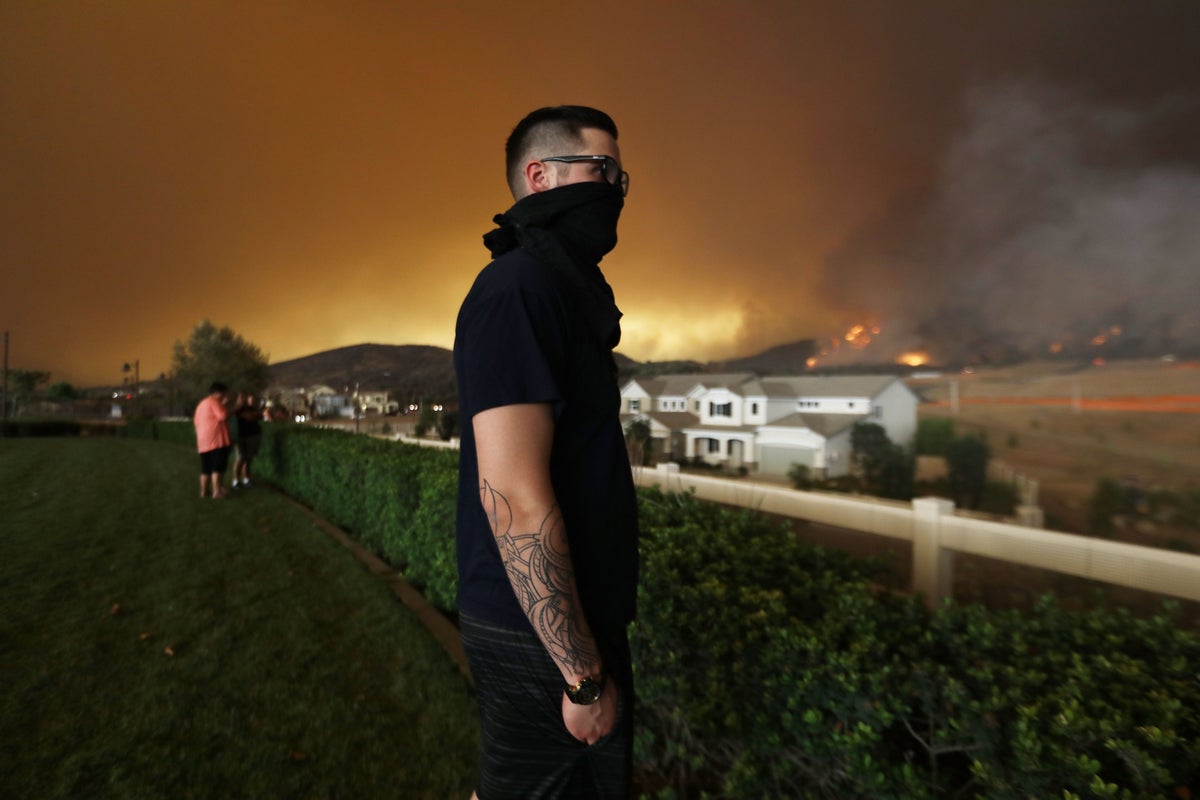
A young man looks out at the destruction from his family's home after it burned during the Eaton Fire in Altadena, California, in January 2025. African Americans are at higher risk of developing dementia (AFP via Getty Images).
According to the Alzheimer's Foundation, African Americans are twice as likely to develop Alzheimer's disease and other forms of dementia as white Americans.
Previous research shows that this group has more risk factors for disease, such as diabetes and high blood pressure, and that people with dark skin are disproportionately likely to live in areas most affected by environmental pollution.
According to the American Lung Association, African Americans in these communities have a higher risk of premature death and exhibit higher rates of cognitive impairment, likely because they don't seek treatment until the disease has progressed, explains the Alzheimers.gov website.
«"Many older Black adults tend to seek medical help for neuropsychiatric symptoms such as hallucinations, delusions, and personality changes, but delay seeking help for memory problems, which are often viewed as a normal part of aging," the website says.
Long-term harm that needs to be corrected
Exposure to PM2.5 particles also increases the risk of cancer and cardiovascular disease. People can avoid this exposure by exercising in areas away from busy roads (Getty Images).
The new study also builds on years of previous research showing possible harm from PM2.5 particles, including an increased risk of premature death, cancer, and cardiovascular disease.
Previous studies have also linked air pollution to increased cases of dementia and worsening of Alzheimer's disease. Some studies have found a moderate association between exposure to wildfire smoke and dementia.
A study earlier this year found that air pollution increases the risk of amyloid plaques—clumps of proteins that are a hallmark of Alzheimer's disease—in older Americans with cognitive impairment.
«"Understanding the environmental factors that influence cognitive decline is critical to addressing disparities in dementia risk," said Rachel Witmer, co-author of the new study and co-director of the Alzheimer's Disease Research Center at the University of California, Davis. "Air pollution is a modifiable factor. This makes it a powerful target for prevention—both at the individual level and through public policy.".
You can reduce your risk of exposure to pollutants by limiting your time outdoors on days with high air pollution, using air filters indoors, keeping windows closed, and avoiding exercise near busy roads.