








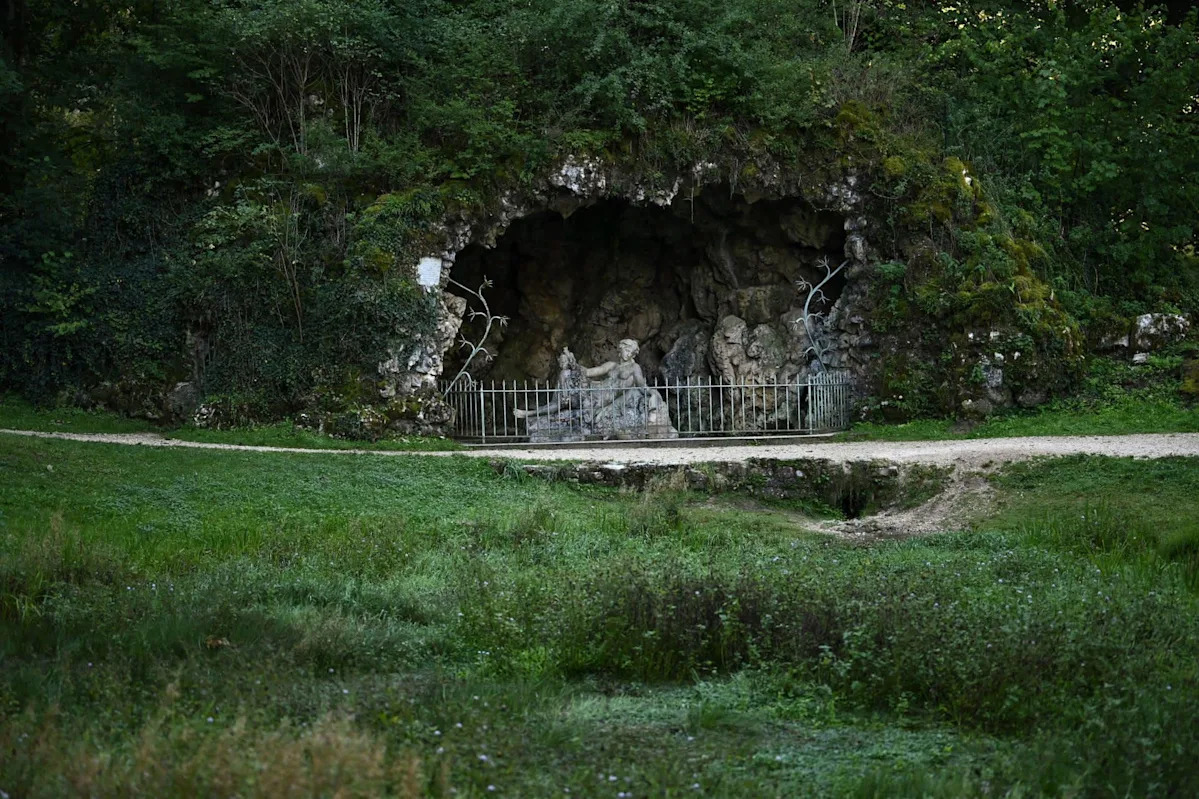
Archaeologists are re-examining a spring at the source of the Seine, which could change scholars' interpretation of one of France's most important ancient religious sites.
In Burgundy, four years of excavations have brought renewed attention to the Gallo-Roman sanctuary of Source-Saint, where people once came to pray to the goddess Secoine for healing.
What's happened?
For the first time in over 60 years, the sanctuary at the source of the Seine has become the subject of a large-scale study by the French National Institute of Preventive Archaeology. The project, scheduled to run from 2026 to 2029, focuses on the Spring of Burgundy, long considered the source of the Seine.
According to Heritage Daily, the sanctuary was dedicated to Sequana, a deity associated with healing waters. During the Roman era, pilgrims came here to pray and then left offerings in gratitude for healing or other beneficial outcomes.
Previous excavations have uncovered over 1,000 votive objects made of bronze, wood, and stone, including human and animal figures, as well as offerings in the form of body parts and internal organs. However, researchers note that the site has never been studied as thoroughly as it deserves.
«"This is a nationally significant reserve, but much of our knowledge is based on research conducted nearly a century ago," the team said in a statement.
Why is this important?
The artifacts found there have already become a key reference point for the study of Gallo-Roman religious life in France, and new research may help answer long-standing questions about how the sanctuary functioned and developed over time.
Erosion, frost, and simple ageing have severely damaged the site, and the remains discovered in the early 20th century were in a state of considerable disrepair.
The sacred spring channel, once stretching nearly 15 metres, has largely disappeared, and the important pool connected to the spring is now described as "a pile of unmortared stones.".
What is being done?
To re-examine the sanctuary using new methods, researchers are combining archival research, geophysical surveys, and new excavations. They are searching for buried structures that may still be preserved underground and studying how the environment around the sacred springs evolved over time.
To date, the work has identified ancient walls, stairs, thresholds, and water pipes left over from excavations conducted between the 1920s and 1950s. These objects are currently being digitized, allowing archaeologists to obtain much more accurate data than previous generations could provide.
The project could also help shape future conservation plans for the site, which currently combines archaeological remains with a 19th-century park created after Baron Haussmann commissioned the city of Paris to purchase the land in 1864.
Subscribe to TCD's free newsletters to receive helpful tips, actionable advice, and a chance to win $5,000 toward your home improvement. To see more stories like this, change your Google preferences here.