








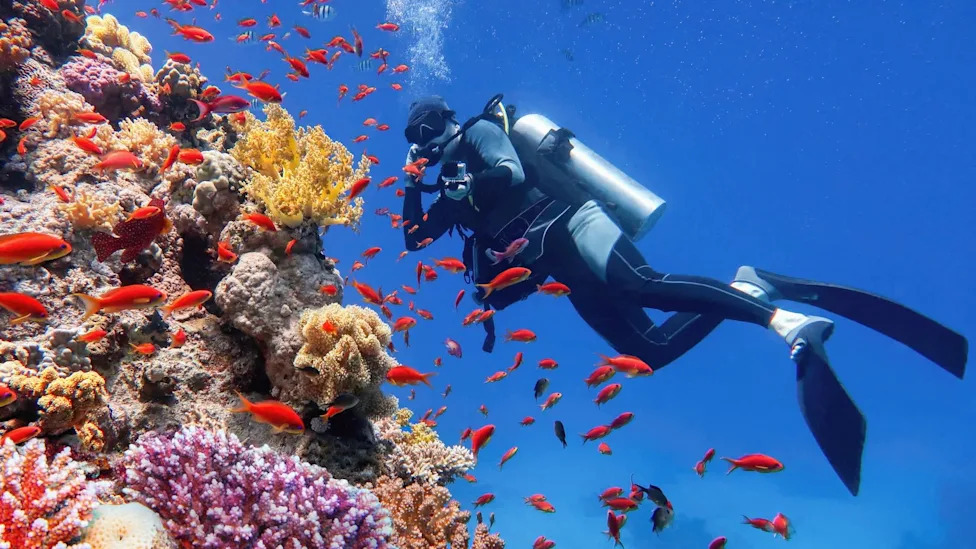
Diving tourism is often promoted as a means of contributing to reef conservation and coastal livelihoods, as well as providing visitors with first-hand experience of coral ecosystems.
However, research shows that this activity can also harm reefs, and many divers may not realize the damage they are causing.
What's happening?
According to a new study discussed in The Conversation, a team of scientists tracked the activities of 732 scuba divers on reefs in Indonesia and the Philippines, comparing what the divers believed they were doing underwater with what trained observers actually recorded.
As The Conversation notes, the research team found that divers made contact with the reef on average about every four minutes, and more than 40% of these incidents resulted in visible damage, including coral debris or sediment deposited on the surface of living reefs.
What the divers thought they were doing often differed dramatically from what observers observed. Participants estimated that they encountered the reef only about five times less often than they actually did, despite considering themselves better than average at avoiding both intentional and accidental contact.
The problem also appeared to be social. One diver's contact with the reef seemed to increase the likelihood of similar encounters among nearby divers. Encounters with charismatic marine animals such as sharks, turtles, and manta rays increased the likelihood of both accidental and intentional reef encounters.
Why is this important?
Tourism-related environmental impacts on coral reefs place additional stress on coral ecosystems already suffering from ocean warming, pollution, and acidification. This additional physical damage could further hinder recovery.
Healthy reefs help protect coastlines from storm surges, support fisheries, and sustain tourism jobs in communities dependent on ocean-based tourism. If reef-based ecotourism gradually leads to the degradation of the reefs themselves, this could undermine an important source of income for local families and businesses.
Diving is often seen as a way to instill a love of the ocean, but this study shows that admiration alone is not enough to foster compassionate behavior. The experiences that most inspire divers may coincide with times when reefs are particularly vulnerable.
Reef protection isn't just about large-scale scientific research and policymaking. It also depends on small, iterative decisions people make underwater.
What is being done?
Researchers stated that diving-related harm can be mitigated. They cited improved buoyancy control skills, clearer pre-dive briefings, and more effective guide guidance as ways to limit reef exposure.
Diving centers can also reduce risk by keeping groups small and maintaining appropriate distances for close observation of marine life. This is especially important, as exciting encounters with wildlife can reduce divers' awareness of the movement of their fins, hands, or equipment.
Equipment may also be a problem. The use of items such as underwater cameras, gloves, and silt sticks has been linked to increased reef contact. Some dive sites have already implemented regulations restricting the use of these items, although these restrictions are not always popular.
One practical step is choosing operators with high sustainability standards. Green Fins certification, an international program focused on responsible marine tourism, has shown a reduction in intentional reef contact, especially at dive centers with higher standards. Divers can also help by asking for honest feedback, practicing buoyancy, and giving reefs and wildlife more space.
As the researchers wrote in an article for The Conversation, "People may not change their behavior unless they recognize they are part of the problem." They added, "The best way to enjoy marine life is to keep their distance and be respectful.".
Subscribe to TCD's free newsletters to receive helpful tips, actionable advice, and a chance to win $5,000 toward your home improvement. To see more stories like this, change your Google preferences here.