








What makes an insect dangerous? Is it their powerful bites, their venom, or something else? For most of these insects, it's the fact that they work in teams rather than alone, but some are truly deadly on their own. So, take care as we navigate the world of highly dangerous insects...
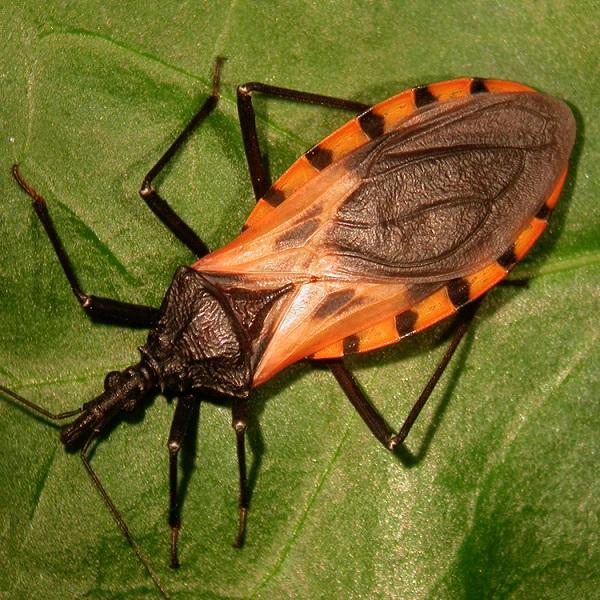
10. Hemiptera – Kissing Beetles
A distinctive feature of Hemiptera is the presence of a mouthpart in which the mandibles have been modified into a proboscis, enclosed within a modified labium to form a "beak" or "rostrum," which is capable of piercing tissue (usually plant tissue) and sucking out liquids—usually sap.
The forewings of Hemiptera are either completely membranous, as in Sternorrhyncha and Auchenorrhyncha, or partially hardened, as in most Heteroptera. The name "hemipteran" comes from the Greek ἡμι- (half) and πτερόν (pteron, "wing") and refers to the forewings of many Heteroptera, which are hardened at the base but membranous at the tips. Wings modified in this way are called hemelytra (singular: hemelytron) by analogy with the completely hardened elytra of beetles and are found only in the suborder Heteroptera. The forewings may be carried "roof-like" over the body (typical of Sternorrhyncha and Auchenorrhyncha) or carried flat on the back with overlapping tips (typical of Heteroptera). In all suborders the hind wings, if present at all, are entirely membranous and usually shorter than the forewings.
9. Siafu (African ants)
The army ant genus Dorylus, also known as driver ants, safari ants, or siafu, is found primarily in central and eastern Africa, although its range also extends into tropical Asia. The term siafu is a Swahili loanword and is one of many similar words from regional Bantu languages used by indigenous peoples to describe various species of these ants. Unlike members of the New World subfamily Ecitoninae, members of this genus actually form temporary colonies, lasting from a few days to three months. Each colony can contain over 20 million individuals. As with their New World counterparts, the workers include a class of soldiers, which are larger, with a very large head and pincer-like jaws. They are capable of stinging, but do so very rarely, instead relying on their powerful cutting jaws.
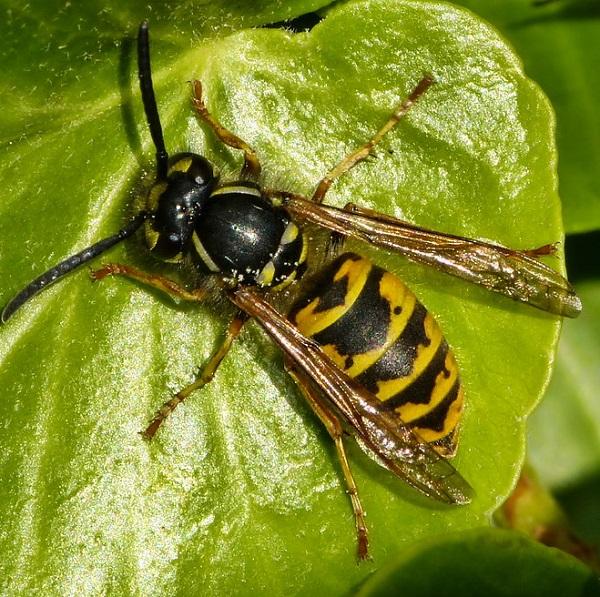
8. Wasps
The term "wasp" is generally defined as any insect from the order Hymenoptera and suborder Apocrita that is neither a bee nor an ant. Nearly every insect pest has at least one species of wasp that preys on it or parasitizes it, making wasps critically important in natural population control or natural biological control. Parasitic wasps are increasingly used in agricultural pest control, as they primarily prey on insect pests and have little impact on crops.
7. Locusts
Locusts are the swarming stage of short-horned grasshoppers of the family Acrididae. These species can reproduce rapidly under favorable conditions and subsequently become gregarious and migratory. They form groups as nymphs and swarms as adults, which can travel long distances, quickly devastating fields and causing extensive damage to crops.
The origin and apparent extinction of some species of locusts, some of which reached 6 inches (15 cm) in length, is unclear.
Locusts are edible insects that have been considered a delicacy in some countries and throughout history.
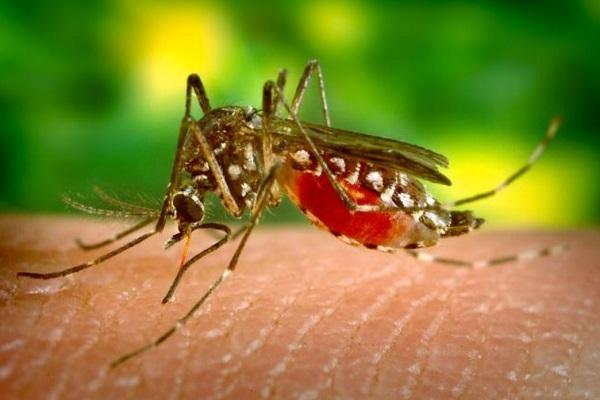
6. Anopheles mosquito
Anopheles (pronounced /əˈnɒfɨliːz/) is a genus of mosquitoes. There are approximately 460 recognized species: although more than 100 can transmit malaria to humans, only 30–40 typically transmit parasites of the genus Plasmodium, which cause malaria in humans in endemic areas. Anopheles gambiae is one of the best known due to its predominant role in transmitting the most dangerous species of malaria parasite (for humans), Plasmodium falciparum.
The name comes from the Greek αν, meaning "no", and όφελος, óphelos, meaning "profit" and translates as "useless".
Some Anopheles species can also transmit the canine heartworm Dirofilaria immitis, the filariasis-causing species Wuchereria bancrofti and Brugia malayi, and the viruses that cause O'nyong'nyong fever. A link between brain tumor incidence and malaria suggests that Anopheles may transmit a virus or other agent that can cause brain tumors.
5. Fire ants
The body of fire ants, like all insects, is divided into three sections: the head, thorax, and abdomen, with three pairs of legs and a pair of antennae. Fire ants can be distinguished from other ants by their copper-brown head and body with a darker abdomen. Worker ants range in color from blackish to reddish, and their size ranges from 2 to 6 mm (0.12 to 0.24 in). Ants of varying sizes can coexist in a single nest.
Solenopsis spp. ants can be identified by three body features: a peduncle with two nodes, an unarmed propodeum, and antennae with 10 segments and a two-segmented club.
4. Giant Japanese or Asian hornet
The Asian giant hornet (Vespa mandarinia), including the subspecies Japanese giant hornet (Vespa mandarinia japonica), colloquially known as the yak killer hornet, is the world's largest hornet, native to temperate and tropical East Asia. Its body length is approximately 50 mm (2 in), its wingspan is approximately 76 mm (3 in), and its sting, 6 mm (0.2 in) in diameter, injects a large amount of potent venom.
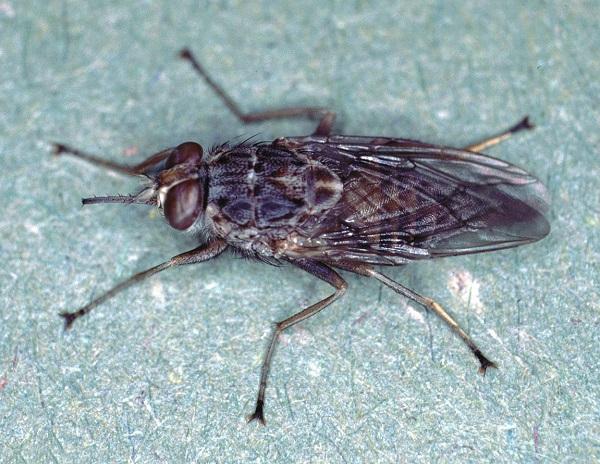
3. Tsetse Fly
The tsetse fly, sometimes spelled tsetse and also known as the tik-tik, is a large biting fly native to much of central continental Africa between the Sahara and Kalahari deserts. They feed on the blood of vertebrates and are the primary biological vectors of infectious diseases. These include Wuchereria bancrofti, which causes elephantiasis, and trypanosomes, which cause sleeping sickness in humans and trypanosomiasis in animals, also known as nagana. Tsetse flies include all species of the genus Glossina, which are usually classified in a separate family, Glossinidae.
Tsetse flies have been extensively studied for their disease transmission. These flies are multivoltine, typically producing about four generations per year and up to 31 generations in their lifetime.
2. Bees
Bees are flying insects closely related to wasps and ants, known for their role in pollination and the production of honey and beeswax. Bees constitute a monophyletic lineage within the superfamily Apoidea, currently classified under the unranked taxon Anthophila. There are approximately 20,000 known bee species in seven to nine recognized families [although many remain undescribed, and the actual number is likely higher]. They are found on every continent except Antarctica, in every habitat on the planet where insect-pollinated flowering plants are found.
Bees are adapted to feeding on nectar and pollen, using the former primarily as an energy source and the latter primarily as a source of protein and other nutrients. Most pollen is used as food for the larvae.
Bees have a long proboscis (a complex "tongue") that allows them to extract nectar from flowers. Their antennae almost always consist of 13 segments in males and 12 in females, which is typical for the superfamily. All bees have two pairs of wings, with the hind pair being the smaller of the two; in a very few species, one sex or caste has relatively short wings that make flight difficult or impossible, but none are wingless.
1. Fleas
Fleas are insects that form the order Siphonaptera. They are wingless and have mouthparts adapted for piercing skin and sucking blood. Fleas are external parasites that survive by hematophagy, feeding on the blood of mammals and birds.