







Four years ago, I was faced with a choice: which compact crossover to buy for an active life outside the city, fishing trips, and family outings. I needed a vehicle with true all-wheel drive, reliable technology, and without an exorbitant price tag. My choice fell on the second-generation Ford Kuga, assembled in Yelabuga. Now, with over 120,000 kilometers on the odometer, having covered off-road, asphalt, and harsh winters, I'm ready to give a detailed, honest, and at times stern review. This isn't a sales pitch, but the experience of a real owner who maintains and repairs his own car.
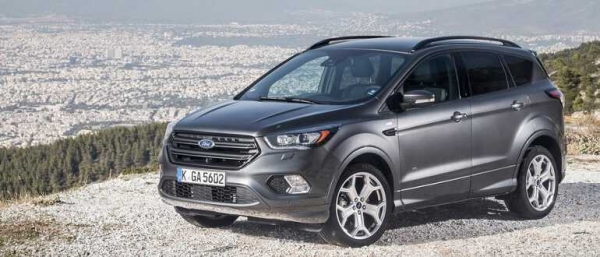
The first thing to understand about the Kuga is that it's a very technologically advanced car for its time, with American roots and European adaptations. Assembly at the Russian Ford Sollers plant initially raised skepticism, but in practice, it turned out to be quite reliable. The body hasn't given any cause for concern in four years: the welds are smooth, the paint holds up well, and the factory anti-corrosion coating holds up well with regular washing. Suspension components and component mounts don't rust catastrophically. In the cabin, only one minor creaking sound has appeared in the dashboard area during severe frosts, which is generally forgivable.
The heart of my car is a 2.0-liter EcoBoost turbocharged gasoline engine (240 hp) paired with a 6-speed Aisin automatic and all-wheel drive with a Haldex clutch. This powertrain proved itself in two ways. On the one hand, the performance is simply superb: 0-60 mph in 7.5 seconds, and overtaking is confident at any speed. The engine is very torquey, the turbo is barely noticeable, and there's plenty of kick from low revs. On the other hand, it's not the most fuel-efficient unit. In the city, with a vigorous right foot, I easily get 13-14 liters, and on the highway, 9-10. But you pay for the drive. The engine's reliability is excellent: for 120,000 km, only scheduled maintenance is required. The key is to use good oil (I use Liqui Moly 5W-30 synthetic) and change it at least every 10-15,000 km.
All-wheel drive, off-roading, and winter use: truth and myths
The Kuge's all-wheel drive is selectable, via a fifth-generation Haldex multi-plate clutch. It's not the permanent all-wheel drive of the Land Cruiser, but its capabilities are more than adequate for light off-roading, snow, mud, and slippery climbs. I've driven it on numerous fishing trips on muddy dirt roads and through snowdrifts, and felt confident. The system operates automatically, engaging the rear axle when the front wheels slip. It responds very quickly. There's also a push-button locking mechanism, which is useful when starting in mud or ice.
But there are important nuances. The Haldex clutch requires regular maintenance! Every 60,000 km, the oil in the rear axle differential and the clutch itself needs to be changed. I do this strictly according to the schedule. Ignoring this procedure is a surefire way to expensive repairs. In winter, the all-wheel drive is a huge advantage. When combined with high-quality winter tires (I use Bridgestone Blizzak), the car becomes practically all-weather capable. The stability control and hill descent control systems work adequately. Fuel consumption naturally increases in winter, especially on short trips with a cold engine.

As for ground clearance, 197 mm is sufficient for most tasks. I installed additional engine protection (steel) because I did hit a tree stump once. Without it, the consequences would have been more serious. The Kuga, of course, isn't designed for serious rocky off-roading—it's a crossover, after all. But for getting to remote forest lakes or recreation centers on a packed dirt road, it's ideal. As a practical tip: if you frequently drive in mud, be sure to install additional mudguards (skis) on the ball joints and CV joints. They will protect these components from rapid failure.
- Haldex coupling: requires regular oil changes, ignoring it leads to breakdown.
- Winter tires: mandatory, studded tires are preferred in icy areas.
- Engine protection: I recommend installing it immediately; it will protect the crankcase and suspension components.
- Driving modes: there is a «snow/mud» mode, which changes the operating logic of the automatic transmission and all-wheel drive.
- Towbar: factory prepared for installation, a very useful option for active recreation.
Interior, comfort, and famous features: what's worth the money?
The second-generation Kuga's interior is designed in a typical American-European style: lots of plastic, but it's high-quality and doesn't creak. My Titanium trim has leather-trimmed seats that haven't cracked or worn out in four years. The front seats are power-adjustable and heated/ventilated—a must-have. The steering wheel is also heated. The dual-zone climate control works flawlessly. The SYNC 2 touchscreen multimedia system is a bit dated by today's standards, but it still serves its primary purpose: music, navigation, and phone functions. Apple CarPlay and Android Auto are missing, which is a downside.
The interior is incredibly practical. There's a huge number of storage compartments, a large glove compartment, and cupholders. The rear bench splits 60/40, creating a flat floor. The trunk is huge, with a height-adjustable floor and a net. The legendary foot-operated trunk release actually works and is very convenient when your hands are full of bags. Among the technology options, I also note cruise control with a speed limiter, front and rear parking sensors, a rearview camera, and LED headlights (in my configuration). These aren't just toys; they're truly useful for everyday use.

But there are some weak points. First, the soundproofing. On the highway at high speeds, there's noticeable tire and wind noise. I partially solved the problem by adding additional soundproofing to the doors and floor—it's now significantly quieter. Second, some electronic components (for example, the windshield wiper control module) are poorly positioned and can become flooded if the drain pipes become clogged. You need to keep the drain pipes under the hood clean. Third, the original batteries don't have a long lifespan—mine lasted three years.
Maintenance and repairs: what broke and how much it cost
Over the course of 120,000 km, I've had to go through several repairs typical for this model. This doesn't mean the car is unreliable; rather, it's just the way it operates in our conditions. Here's a short list and approximate prices for labor and parts (prices from 2021-2023, based on my own service center):
- Thermostat (stuck open at 95,000 km) - replacement, original part + antifreeze = 12,000 rubles.
- Cooling system pump (started leaking at 100,000 km) - replacement, original part = 9,000 rubles.
- Rear wheel bearings (started humming at 110,000 km) - replacing a pair, good quality non-original = 15,000 rubles.
- Windshield wipers - I change them every winter, Bosch = 2,500 rubles.
- Brake discs and pads - complete set for all axles, replaced at 80 thousand km = 25,000 rubles.
- Automatic transmission oil - complete change with filter at 60 and 120 thousand km = 15,000 rubles per change.
Scheduled maintenance (oil, filters) costs 7,000-10,000 rubles if you do it yourself or have an independent mechanic do it. Genuine parts are expensive, but there are good alternatives from top-tier manufacturers (for example, Bosch, Febi Bilstein, Lemforder). I try to use them. The most important thing is to find a qualified mechanic who specializes in Fords. Diagnostics are your best friend. Every six months, I connect a scanner and check for errors, even if there are no symptoms.
Bottom Line: Who is this car for and is it worth buying now?
The second-generation Ford Kuga is a car for an active, practical, and tech-savvy person. It's not for those who just want to get in and drive without a care in the world. It requires attention to maintenance, especially the all-wheel drive system and engine. But in return, it delivers a wealth of excitement, genuine off-road capability, excellent performance, and a high level of practicality for a relatively low price (on the used market).

Who would I recommend the 2018-2019 Kuga to? Young families who enjoy active recreation outside the city. Drivers who value dynamics and handling, not just a high seating position. Those who aren't afraid to understand their car's technical features and do some maintenance themselves. Who shouldn't buy it? Those looking for the most reliable Japanese car with minimal repair costs. Those who only drive in the city and for whom all-wheel drive is a useless option. Those who can't live with increased fuel consumption.
My personal conclusion: I don't regret my choice one bit. Over the past four years, the Kuga has become more than just a means of transportation for me; it's become a true companion on trips and vacations. It's never left me in trouble, always reaching my destination, even in challenging conditions. Yes, it required investment and attention, but that's the price for its character and capabilities. If you're considering a used Kuga of this generation, approach the selection carefully, check the service history, especially the clutch and engine, and have a full diagnostic done. And if you do buy it, love it, maintain it on time, and it will serve you faithfully for many years to come. I plan to drive mine for at least that long.