








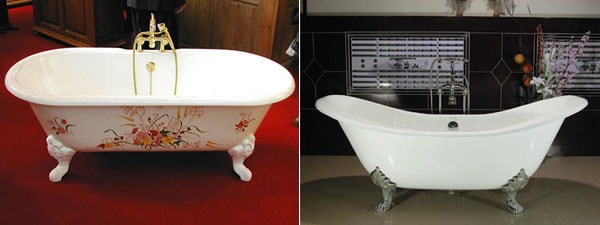
Choosing a bathtub is an investment in long-term comfort. Among the wide variety of plumbing fixtures, cast iron models remain the benchmark for reliability, durability, and long-lasting heat retention. A size of 180 x 80 centimeters is considered the golden mean: it's spacious enough for an adult to comfortably bathe without taking up too much space in a standard bathroom. However, not all cast iron bathtubs are created equal. Their quality, service life, and ease of use depend on a variety of factors: from the composition of the cast iron and the casting technology to the quality of the enamel coating and the design of the legs. Understanding these details will help you navigate the store and choose a bathtub that will delight you for decades.
The first thing you need to decide is the installation type. Cast iron bathtubs come in freestanding (installed flush against the wall), island (freestanding), and built-in styles, often built into a frame or decorative podium. A freestanding model is a classic and the most common option for typical apartments. An island bathtub will make a chic accent in a spacious bathroom, but requires clear access from all sides. A built-in model is ideal if you plan to tile or panel the sides, creating a harmonious whole. Consider this in advance, based on your bathroom design.

The next key step is quality control. Cast iron is a heavy material and brittle when struck, so a thorough inspection is essential. Start with the outside of the bowl. The surface of untreated cast iron should be relatively smooth, free of large burrs, voids, and deep pores. Severe casting defects indicate a manufacturing error, which can lead to internal stress in the material and future cracks. Reputable factories carefully sand the outer walls before applying a protective coating (usually powder enamel or primer).
Pay special attention to the interior enamel surface. This is the "face" of the bathtub, constantly visible and in contact with water and detergents. The quality of the enamel determines not only aesthetics but also hygiene and durability. The surface should be perfectly smooth, glossy, and free of any defects.
- Enamel drips and runs: Visible as uneven stripes that can be felt to the touch. This is a defect that can lead to peeling of the coating over time.
- Bubbles and craters (pits): These occur when air or contaminants get into the enamel before firing. They become breeding grounds for dirt accumulation and the onset of corrosion.
- Foreign inclusions (fly spot): Small dark spots on the surface are particles of dust or dirt trapped in the enamel. They significantly spoil the appearance.
- Scratches and chips: are unacceptable for a new bathtub. Even a small scratch will expose the cast iron, and rust will begin in that area.
Check for uniform color. The white shade should be consistent across the entire surface, with no yellow, gray, or bluish spots, which indicate uneven firing or poor-quality raw materials. Lean over and look along the edge at an acute angle—this will best reveal any unevenness or imperfections.
Design features and ergonomics: what to look for besides enamel
A high-quality bathtub isn't just a flawless surface; it's also a well-designed shape that ensures comfort. Pay attention to the bowl's configuration. Rectangular models with a flat bottom are the most common and economical option. However, there are bathtubs with anatomically contoured bottoms: typically, there's a slight depression under the lower back and a gentle rise at the feet. This shape ensures a more comfortable and relaxed posture. It's difficult to verify this in a store, but you can read reviews or focus on brands that specialize in ergonomic solutions.
Another important parameter is the depth of the tub (the height of the rim). Standard models have a rim height of 40-45 cm. Deeper tubs (50-55 cm) allow you to immerse yourself in water up to your shoulders, which improves comfort but also increases water consumption. Consider the height of the users. A deep tub is preferable for tall people. Also, check the width of the rim—it's often used to place shampoos, candles, and glasses. A narrow or sloping rim is less convenient for this purpose.

The legs are an often overlooked element, but they are crucial to the stability of the entire structure. They should be solid, cast (often cast as a single piece with the bathtub), and have a wide support platform. Adjustable legs are a huge plus. They allow you to precisely level the bathtub on uneven floors, which is critical for proper drainage. Check that the adjustment bolts are included and that they turn easily. Make sure the bathtub is equipped with a siphon and overflow system. It's better to choose familiar, serviceable systems from trusted manufacturers (e.g., Geberit, Viega) rather than a no-name kit.
Don't forget about additional options that can be integrated into the design or offered as accessories:
- Entry/Exit Handles: They can be fixed (cast) or removable (bolted). They are indispensable for the elderly and families with children.
- Anti-slip bottom coating: It can be in the form of a relief pattern applied to the enamel or special stickers. It increases safety.
- Armrests and headrests: These are usually accessories made from the same material that are attached to the sides, creating additional comfort.
- Place for mixer: A wide edge can be provided with a flat area (called a "shelf") for installing a faucet. This is convenient, but it reduces the usable width of the edge.
Brands, Manufacturers, and Price Ranges: How to Find Your Way Around
The cast iron bathtub market is divided into several segments. Domestic manufacturers (for example, those from the Likinsky or Kirovsky factories) offer the most affordable models. These are solid, simple bathtubs without frills, often with basic enamel. Their main advantages are their low cost and adaptability to our conditions (water quality, typical bathroom sizes). If your budget is limited and you want a reliable, long-lasting bathtub, this is a worthy choice.
The mid-price segment is occupied by European brands with production in Eastern Europe, Turkey, or China. This segment includes many lines from renowned brands such as Roca, Ideal Standard, and Villeroy & Boch. Here, you can expect higher-quality casting, excellent enamel, sophisticated ergonomics, and modern designs. This segment often features models with anatomical shapes and additional amenities. This represents the optimal balance of price and quality for most buyers.

The premium segment features bathtubs from historic European manufacturers, crafted in factories in Germany, France, and the Czech Republic. These are the epitome of quality. The cast iron used here is of the highest quality, and the enamel is applied in multiple layers with intermediate firings, guaranteeing phenomenal wear resistance and a surface smoothness comparable to glass. The design is often unique, and custom shapes and colors are possible. These bathtubs last for generations, and their price is justified. They are worth purchasing if you're renovating to last and view your bathroom as a work of art.
When choosing, be sure to ask the seller for certificates of conformity and hygiene reports. A high-quality bathtub should have documents confirming the safety of its materials. Pay attention to the warranty. A reputable manufacturer will provide a warranty of at least 5-10 years on the enamel coating, and 25 years or more on the cast iron itself. Don't hesitate to ask questions about the manufacturing technology, enamel thickness, and the country of origin of the components. A seller who knows and loves their product will always be able to answer them.
Delivery, lifting, and installation: technical details you need to know
A cast-iron bathtub weighing 100-120 kg is a significant load. Arranging delivery and lifting it to the floor requires special planning. Check with the seller whether delivery "to the apartment" is included in the price or is a "to the entrance" service. The latter option means you'll have to handle the heavy and fragile structure up the stairs yourself. This will require at least two strong people, soft slings (to avoid scratching the enamel), and possibly a special trolley for climbing the stairs. Lifting the bathtub by elevator is often impossible due to the packaging's size.
Before installation, prepare the site. The floor must be level, durable, and clean. It's best to remove the old bathtub immediately before installing the new one to avoid being left without a bathroom for a long time. Installation begins with placing the bathtub on its legs. Using a spirit level, adjust the height of each leg so that the bathtub sides are perfectly horizontal and the slope toward the drain hole is approximately 1-2 degrees. This ensures complete and rapid drainage. An incorrect slope will cause water to stagnate at the far side.
Once leveled, the bathtub needs to be secured. It is often secured to the wall with special brackets, which are included in the kit. This prevents possible shifting and creaking. Next, connect the bathtub to the sewer system via a trap. All connections must be watertight. It is recommended to use not just rubber seals, but also seal the joints with silicone plumbing sealant. Pay particular attention to the joint where the bathtub edge meets the wall. After tiling or paneling, this joint must be thoroughly filled with the same sealant to prevent water from seeping under the bathtub.
The final stage is the first test. Don't rush into a bath. First, turn on the water and check for leaks at the siphon connections. Then, fill the tub to the overflow level and let it sit for several hours. This checks not only for leaks but also for heat retention—a high-quality cast iron bathtub will cool slowly. Afterward, drain the water and inspect the surface for any hidden defects that may have surfaced under load. Only after successfully completing all these steps is your new cast iron beauty ready for long and faithful service.