






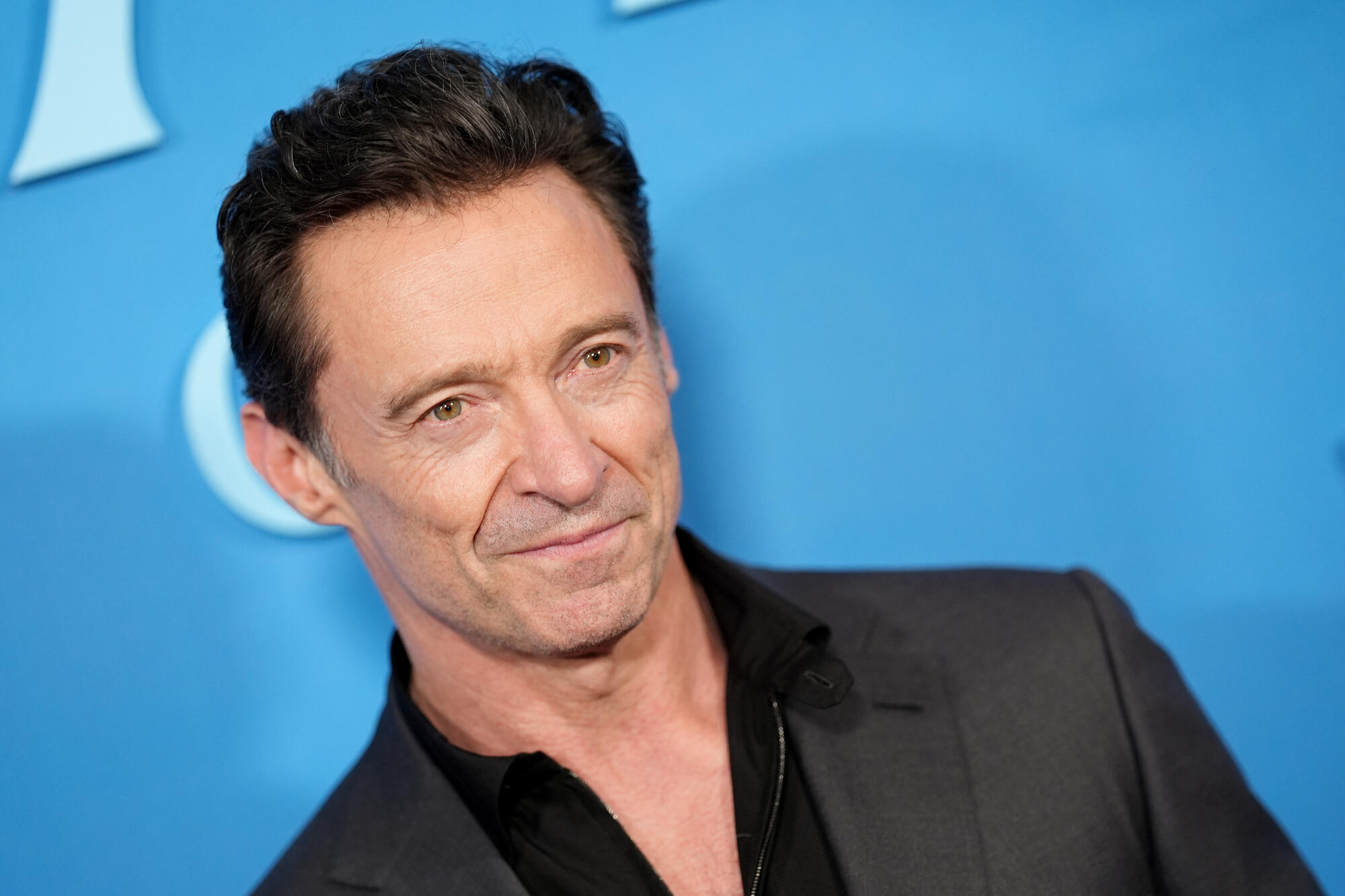
Few modern Hollywood stars possess such a diverse skill set as Hugh Jackman. This singer and dancer can dazzle in a Broadway musical (Oklahoma, The Music Man), host the Oscars, star in a rousing romantic musical (The Greatest Showman, Song of Songs Blue), and embody the Marvel action hero Wolverine for decades, from his beginnings (X-Men) to his grisly end (Logan), and then bring him back to life (Deadpool and Wolverine).
And Jackman has gotten away with violent indie action films like the myth-reimagining Death of Robin Hood, another film in which he gets killed, and the surprise summer release The Sheep Detectives, in which he gets killed in the first 15 minutes.
Related articles
Girls Love Girls Review: Hayley Kiyoko Gives Tumblr Lesbians a Perfect Reason to Kiss on Film.
«The Chair Company is Tim Robinson's world, but his co-stars are thrilled to be living in it.
«"I've made three films in the last six months where I die," he told me at the Whitby Hotel in New York, "so I'm not sure what that means. I don't want to die; I just want to do it fictionally, if that's okay.".
The idea for "The Death of Robin Hood" came to him when producer Aaron Ryder sent him Michael Sarnoski's script. He liked it and watched the director's first feature film, "Pig," starring Nicolas Cage. "I watched "Pig" within 10 minutes, and from the first frame you sense his voice, his confidence," Jackman said. "He's only 30!"«
Nevertheless, Jackman happily agreed to participate in this nihilistic, brutal, and dark film to help finance and produce it. He spent hours applying makeup and prosthetics to make him look ten years older. He suffered from shivering in the mud while filming outdoors in Northern Ireland. And he loved it.
The interview below has been edited and condensed for brevity and conciseness.
Anne Thompson: I loved this film. It's dark, brutal, disgusting, and terrifying. Is this your "Unforgiven"?
Hugh Jackman: That film was definitely one of the most powerful for me. There was something beautiful and contemplative about "The Death of Robin Hood," and that relationship with the woman [Jodie Comer], and the meeting of their minds, or souls. There was something beautiful and redemptive and cautionary about that. I love the idea of a mythical hero, a cultural hero.
The film tells the story of Robin Hood's final days. How well do you know this historical figure?
I've read a lot of books about it. If you wanted to believe he was real, you could find evidence for it. There are records of people for centuries, starting in the 1100s. And it changed: up until the 1500s, he was just a robber, a terrible person, a cautionary tale. Then, as political changes began to happen in England, there was a sense of the serfs rebelling against the aristocracy and the landowners, and this cultural hero began to emerge, rocking the boat and robbing the rich to give to the poor. Even in the beginning, if you look at him, he was a bad guy with some noble traits; he had rules, like, "Don't harm women," so his robbers never touched women, or he gave second chances to those who lied to him, so gradually he became a hero. These myths arise for a purpose, out of a pre-existing need.
What is the message of the film?
Be careful what stories you believe. We're fed stories on so many different levels, from the moment we're born. We get them from the media, from our parents, from religion, from everywhere. Does it seem believable to you? Because these stories have been used to cause so much harm throughout history. What if this story or legend about him was actually his own creation, to get people to do terrible things, to follow him? Oh, what if it was all a lie? What if, maybe, he stole from a couple of rich people, but never gave to the poor? What if he was just a brutal killer? Even at the end of the film, we're not entirely sure.
It was not an easy shoot.
In Northern Ireland, in Belfast, on the island, we shot almost entirely on location, but it was amazing. The first scene in the mud, the fight scene… I was completely prepared, but I’ve never been more irritated than I was that night. I was close to saying, «That’s it.» It was a night shoot, and I was so exhausted. I still have mud stains in places you’d rather not know. There was a moment before I pounced on this Australian actor to kill him when I was so exhausted that I just needed to rest, and I was lying on top of him. When you’re fighting to the death and you have fingers in your eyes and you’re fighting, there’s a strange closeness, an intimacy; I was just lying there to rest. I thought there was something cool about that moment.
What did Sarnoski help you discover?
I've been very lucky. I've worked with amazing directors, and he gives me the same feeling as Aronofsky, Nolan, Villeneuve, Luhrmann: they have something special. There's a confidence in their voices. They have something to say. Michael helped me open up, and my performance became less reserved. I trusted him. He shaped and honed my performance.
Are you one of those people who can bring almost any idea to life? Was it easy to promote this project as an action film with recognizable intellectual property, and with your participation?
I hope I can do it. I hope I've helped, but I don't know what the chances are. There are probably other actors who can do it faster or who can get a bigger budget. We got it done. But we wanted to shoot on film and on an island; that made the project more expensive, and the budget is probably not as big as you think, and that's okay.
Did your attitude start to change after The Greatest Showman, when you took a risk on something that not everyone would have, and it went more than well?
I'm lucky that I can do what I really want. The film did great, albeit with the second-worst opening weekend in history. The development of Logan started with a lot of resistance to this version, which is understandable: we were working with existing intellectual property, and it wasn't The Wolverine, and it was rated R. People were like, "Why are you doing this?" They were like, "You know what, let's give it a try. Let's just take a risk and trust our instincts." And those two factors exceeded all expectations, which gave me confidence.
«"Son Son Blue" too. It's hardly your average everyday musical drama.
But this was another project, and I felt like, "I have to do this!" It had to be something that people would love. And then I read the script—"Oh, I'm getting that feeling again"—it's "Treasure Island," and I play Long John Silver. I've never read "Treasure Island," I've never seen it. So I'm the only person on the planet who has no idea what it's about, but I read this script from Jack Thorne [showrunner of "Adolescence"]: "I absolutely have to do it.".
Let's talk about your wild, long, Robin Hood-esque hair and makeup by Pam Westmore and Sean Flanigan.
Pam's great-grandfather [George Westmore] was the first film makeup artist. The actors, since they all came from the theater, did their own makeup. Then he came in to do the hair of some famous silent film actress, and it became iconic. From there, Westmore did Douglas Fairbanks's hair for Robin Hood in 1922, and then her grandfather, his son, did Errol Flynn's hair. And now my granddaughter does my hair. We were in the makeup trailer, experimenting with ideas. And here you have long hair and a beard, and we thought, "Oh my God, this is it!"«
You're ready to do something dark and not necessarily aimed at a general audience. You're ready to challenge your audience.
I watch this film, and I find it beautiful in a human way. It makes me enjoy the complexity of life and the human element.
Do you have any projects that you would like to implement but haven’t been able to yet?
There was one thing I tried to do that I couldn't do. "The Forest Above" is a book by Richard Powers. It's wonderful, it won the Pulitzer Prize. It's about trees.
Does the Tony Awards make you want to return to Broadway?
I was literally just relaxing on Broadway that night. I just finished a play yesterday. I started a theater company. I'm doing what I want. It's called Together, and we're performing at the Audible Minetta Lane Theatre. This is our second season. We've been playing for three months, I've been in two shows, and we're putting on new plays where half the tickets are $35, so we make them accessible, trying to take a minimalist approach: minimal sets, minimal sound, no microphones, and just putting on new works.
The hardest thing now is getting up. You're doing us a huge favor.
I work on myself because I love acting, I want to create great work and great material, I want to challenge myself, and these works aren't always intended for a general audience. They're thoughtful and provoking.
The Death of Robin Hood hits theaters Friday, June 19, from A24.