








WhatsAppRedditShareEmailTweetPin0 Shares
In fiction, a zombie is a dead creature that isn't technically dead. This contradicts science, as it's impossible to be dead and walking at the same time, so we have to suspend skepticism and embrace the idea that something somehow reanimated the corpse and allowed it to function.
In real life, the lines between life and death are blurred. We've all heard of zombie ants and other insects infected with a fungus that kills them but allows them to continue moving. But that's not the only thing to be aware of. Cryptobiosis teeters on the brink of life and death, and it can be very confusing if you have too many preconceived notions about what life and death mean.
A team of scientists drilling near Antarctica discovered ancient moss dating back 1,500 years in the ice they were sampling. Anything that's been in ice for 1,500 years is dead, right? Not everything.
Single-celled organisms, such as bacteria, have been discovered in ice deposits between 100,000 and 8 million years old. These bacteria have revived and continued to grow, although perhaps not as vigorously as more recent ones.
But the moss they found turned out to be much more complex than bacteria. It was a multicellular organism. Nevertheless, the team managed to revive it. It began growing again, raising hope that even more ancient mosses, some up to 6,000 years old, can be revived.
This is an example of cryptobiosis. A state of extreme inactivity or suspended animation in which virtually all metabolic functions cease. This typically occurs under extremely unfavorable conditions, such as freezing in Antarctica, and is a last-ditch attempt to preserve life. In some cases, it can persist even in the most extreme conditions for very long periods.
How does this work?
As we've already mentioned, freezing can potentially lead to cryptobiosis, but it's far from the only cause. For example, have you ever tried sea monkeys? Sea monkeys are brine shrimp, and that little packet of powder you add to water and stir to turn them into sea monkeys is actually dehydrated brine shrimp eggs.
Artemia eggs are extremely resilient and can survive cryptobiosis when desiccated, in extremely salty environments, or in environments completely devoid of oxygen.
Organisms such as rotifers, tardigrades, seeds, some types of fish eggs, and yeast are subject to cryptobiosis in one form or another. Even some insects can survive it.
Normally, any living organism has some kind of metabolism necessary for survival. It needs to produce energy chemically: through photosynthesis, digestion, or something similar. But in cryptobiosis, metabolism essentially ceases, so the organism no longer needs this energy for survival until conditions become more favorable for life and it can be reborn.
For an organism to recover, ideal conditions must be met, like when you place brine shrimp eggs in water to hatch sea monkeys. If conditions never improve, the organism may die. Not all of them can live as long as that moss in the ice. Some can live for months, some even several years, but rarely do complex organisms survive longer than that. For example, greyhound shrimp can live for 25 years in cryptobiosis. And tardigrades? They're even more amazing.
Survival of Tardigrades

Tardigrades are among the most amazing creatures on Earth. They are capable of surviving in the most extreme conditions, and crobiosis is part of the secret to their survival.
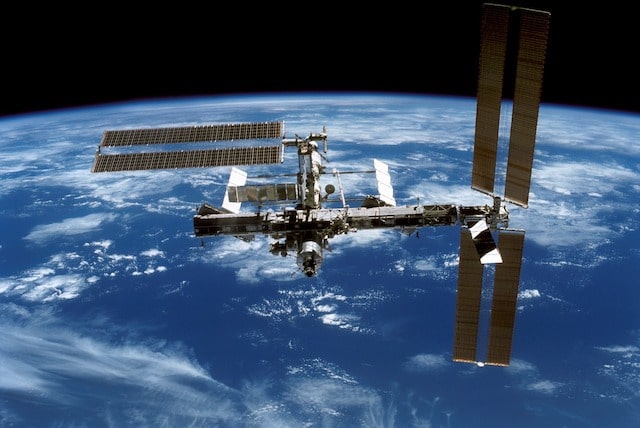
Tardigrades can survive in the vacuum of space. In 2007, Russia launched 3,000 of them into space and then left them outside for 10 days. Of these, 68% survived the oxygen-free environment and exposure to cosmic radiation, and all gave birth to healthy offspring.
Other tardigrades were exposed to doses 1,000 times greater than the lethal dose for humans. These tiny creatures produced pigments called betalains, which neutralized radiation damage. When injected into humans, these betalains also provided them with greater resistance to radiation.
Regarding extreme temperatures, tardigrades were exposed to temperatures as low as 0.05 Kelvin, barely above absolute zero (-272.95 degrees Celsius), and as high as 150 degrees Celsius. They spent 30 years in a freezer and withstood pressures of 40,000 kilopascals.
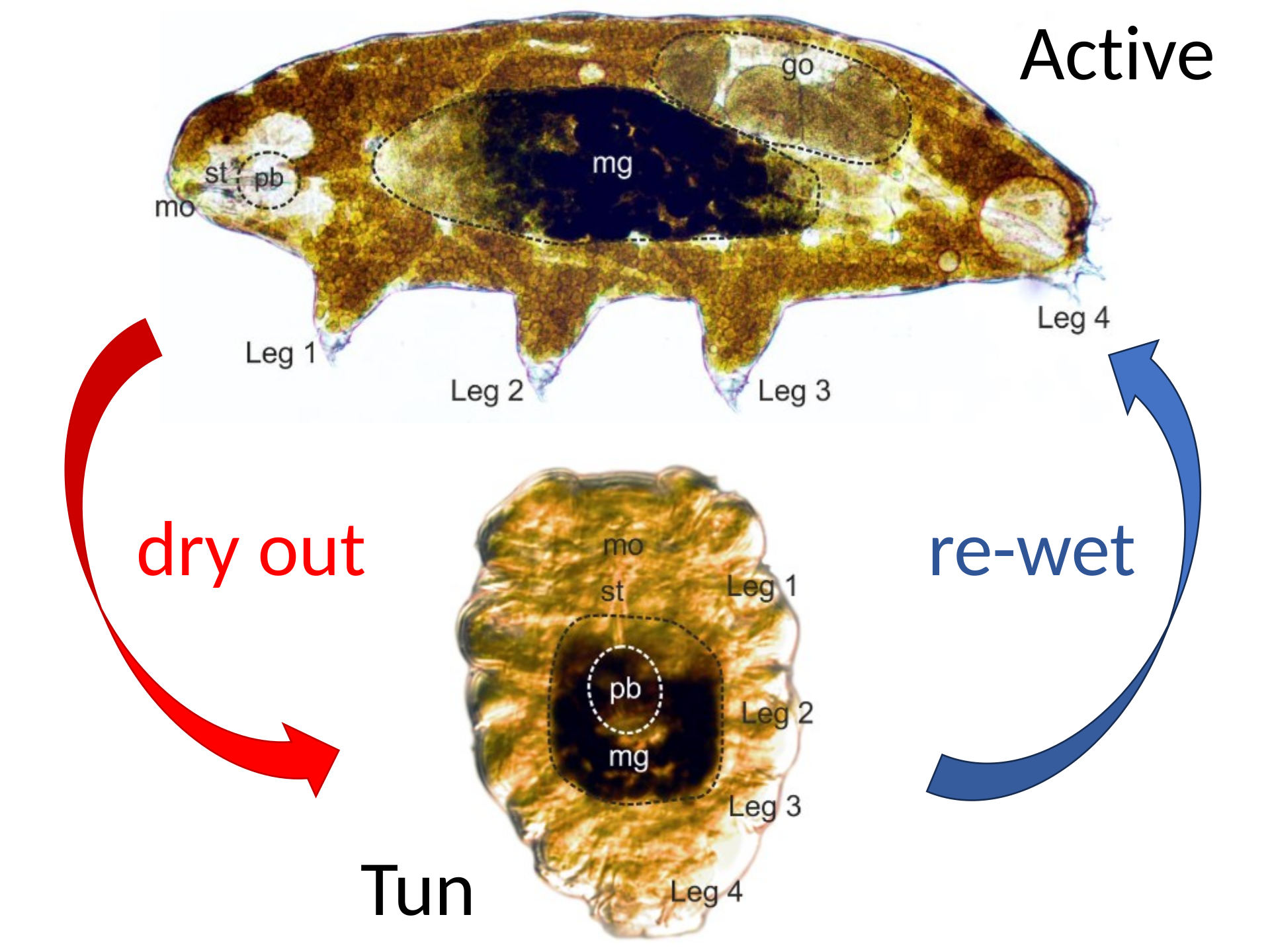
Despite the apparent resilience of these tiny creatures, they require water to survive. If removed from water, they desiccate and transform into a so-called tun, their cryptobiotic state. This state allows them to survive extreme cold, heat, pressure, radiation, and even time.
In a normal, healthy state, a tardigrade can live from 8 months to several years. But in cryptobiosis, it can live for over a century.
Scientists previously believed that tardigrades survived cryptobiotic conditions thanks to the sugar trehalose. When other organisms dry out, they produce trehalose to stay alive. But tardigrades produce very little or none at all. Instead, tardigrades have specific genes and proteins that allow them to withstand the extreme conditions they encounter in cryptobiotic conditions. These proteins essentially form a glassy substance inside tardigrade cells to keep them alive in a dehydrated state. The full mechanism remains somewhat mysterious, but this is only part of the explanation.
Tardigrades are unique in that they survive in different extreme conditions in different ways. Cryptobiosis is a general term. For example, when exposed to extreme cold, a tardigrade survives through cryobiosis. When there's no water? That's anhydrobiosis. What if they were exposed to an extremely salty environment? That's osmobiosis.
Different types of cryptobiosis affect tardigrades differently, meaning that different mechanisms involve different functions. Each must be studied individually to understand how it works. While bioglass structures may support their viability during anhydrobiosis, cryobiosis may involve the production of a kind of biological antifreeze, a substance that prevents cytoplasm from freezing or perhaps even alters the type of ice crystals formed in the cells, allowing them to adopt a state that allows the tardigrade to recover safely.
Considering what tardigrades can survive, it's reasonable to wonder whether anything can kill a creature in a state of cryptobiosis, or whether these organisms are effectively immortal?
Immortality

Rotifers are microscopic organisms that live in freshwater. They are also surprisingly resilient, though not quite as hardy as tardigrades. However, a rotifer that had survived 24,000 years of cryptobiosis was once brought back to life. Despite their small size, they possess a brain, muscles, and numerous cells. Before this rotifer's discovery, it was thought that they could only survive for about ten years under cryptobiosis.
Nematodes are a type of roundworm. More than 30,000 species have been identified, but it's thought there may be millions. At least one nematode species was frozen in Arctic ice during the Pleistocene epoch and then revived in the present day, 46,000 years later. How did it do it? The same way we once thought tardigrades did it.
The nematode regulates the production of a sugar called trehalose. It protects cell membranes and allows the organism to survive in extreme cold conditions virtually indefinitely.
Essentially, sugar replaces the water in any membrane, making it appear hydrated because its shape is maintained even though there is no more water in it.
Tardigrades can live for about a century in cryptobiosis. We've heard of moss that lived for 1,500 years, but the current record for longevity belongs to nematodes.
Forty-six thousand years is certainly a long time for anything to survive. But remember, a nematode is quite a complex organism compared to single-celled bacteria. And we've already seen that some bacteria can potentially survive for millions of years. If you're wondering which bacteria we've discovered are the longest-lived, you might want to consider the humble bee.
Scientists have discovered a bee preserved in amber, in style «Jurassic Park» . The bee is estimated to be between 25 and 40 million years old. No, the bee didn't come back to life, but its stomach contained bacteria that survived the ordeal thanks to cryptobiosis. Scientists managed to revive it, making it the oldest living organism on Earth.
Under favorable conditions, these organisms can survive in cryptobiosis for extremely long periods, but they are by no means immortal. More than 30% tardigrades abandoned in space have died. When exposed to extreme temperatures, many of the cryptobiotic Artemia eggs die.
It's worth remembering that cryptobiosis is never an ideal state for a living organism. It's survival in its most extreme form. It's the body's last desperate attempt to cling to life, awaiting the return of favorable conditions. But if the situation worsens, the organism will die.
This is all very interesting, but does it have any relevance to humanity? We've seen that tardigrades' radiation resistance could potentially benefit humanity, but is there anything about cryptobiosis that could help us? Clearly, we're too complex to replicate anything like cryptobiosis. If we were exposed to extreme temperatures, extreme radiation, and severe dehydration, we'd simply die. But is there a way we can adapt what we know about these organisms to help us?
Impact on humans
Harvard researchers are studying the proteins that tardigrades use to survive in extreme conditions. The ultimate goal is to apply this knowledge to humans to see if we can benefit from similar resilience. If we could engineer a cell whose metabolism slows down, similar to how tardigrades enter cryptobiosis, we could prevent damage such as inflammation or even cell death.
If the proteins used by tardigrades can be adapted for humans, then diseases such as strokes, heart attacks, sepsis, and others can be prevented at an early stage.
Other research is focusing on radiation resistance and how it could be used to assist astronauts on long-duration space missions. Furthermore, with the potential development of new and faster space travel, cryptobiotic species are being considered as new astronaut candidates—organisms that we could send into space over vast distances for long periods, preserving them in pristine form, to study how they withstand the harsh conditions of space travel. We could then apply this knowledge to future human missions to improve human survival as we explore space further and navigate harsher environments.
Anhydrobiosis is being studied as a means of improving crop cultivation and food storage conditions. We could prevent crop spoilage and ensure their growth in harsher conditions if we could adapt these methods to our food supply system.
Trehalose, a sugar used not only by tardigrades but also by other organisms, is also used in medicine. It can be used to preserve platelets and vaccines, which need to be transported around the world in emergency situations. While it doesn't affect the entire organism, it performs the same function, maintaining its viability. This approach is based on the study of cryptobiosis.
Trehalose was first used in the 1980s to preserve medications used to treat fungal infections. They were preserved with this sugar, and then adding water activated it, making it usable.
Various forms of cryptobiosis could offer a wide range of applications. These include space travel, advances in medicine, potential adaptation to climate change, and food production. There are likely many other applications that haven't yet been considered but that could become relevant once the process is better understood. The good news is that time isn't necessarily an issue. What's another 46,000 years?
Other articles that may interest you