








Inventors spend an incredible amount of time developing their products. This process typically involves brainstorming solutions to a problem. Once an idea is formed, they embark on countless experiments, trial and error, and persistence. Finally, the product is invented and brought to market. Often, the initial idea evolves over time, becoming more concrete and practical. However, history is replete with inventions created by accident, each with its own unique story. The following list will make you question the adage "necessity is the mother of invention.".
1. Gunpowder
Chinese alchemists attempted to discover the elixir of immortality and experimented with various combinations of saltpeter, charcoal, and sulfur. Ultimately, however, they created the world's first physical explosive—gunpowder.
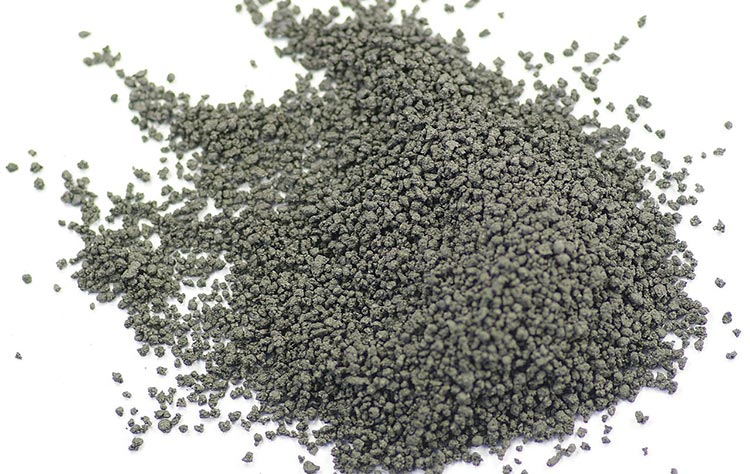
Today, most historians attribute the invention of gunpowder to China. The first possible mention of gunpowder appears in a Taoist text dating back to 142 CE, which describes a substance with the same properties as gunpowder. Numerous archaeological finds dating back to the period after 142 CE indicate that Chinese alchemists were searching for a potion that could prolong human life.
To this end, they conducted several alchemical experiments with saltpeter, sulfur, and charcoal. Eventually, an anonymous alchemist accidentally invented gunpowder, which became the basis for almost all weapons used in warfare since. Most sources place the invention of gunpowder around 850 CE. The Chinese term for this accidental byproduct is "« huoyao »", which means "fiery medicine.". (1,2,3)
2. Potato chips
An irate chef named George Crum tried to anger his disgruntled customer by making his French fries too thin and invented the potato chip instead.

The invention of the potato chip was a happy accident. George Crum was an American chef working at the famous Moon Lake Lodge in Saratoga Springs, New York. One of the restaurant's signature dishes was thick French fries, eaten with a fork. However, one summer day in 1853, a customer remarked that Crum's fries were too thick and lacked salt. So the chef prepared a new, thinner batch of fries to satisfy the customer, but the customer continued to grumble.
Angered and frustrated, Crum intentionally made a serving of french fries so thin they couldn't be eaten with a fork. To his surprise, the customer happily ate the "fries." Thus, potato chips were born, and a new dish appeared on the Moon Lake Lodge menu: "Saratoga Chips.". (1,2)
3. Cornflakes
John Harvey Kellogg hoped to make long sheets of dough from stale wheat, but without realizing it, he invented breakfast cereal.

Seventh-day Adventists attempted to develop new, healthful foods for patients at the Battle Creek Sanitarium. This health center followed the Seventh-day Adventist Church's health principles, which advocated a strict vegetarian diet. The church favored bland foods, as it was believed that spicy and sweet foods increased passions, which Seventh-day Adventists considered a violation.
On August 8, 1894, John Kellogg and his brother, Will Kellogg, left boiled wheat out for a long time, and it went stale. However, due to a limited budget, the brothers decided to process it in a rolling mill. Amazingly, the processed wheat turned into tiny flakes instead of dough. The Kellogg brothers toasted the flakes and served them to the patients of the sanatorium, who greatly enjoyed the new food. In 1896, John Kellogg received a patent for "Cereal Flakes and Method for Preparing Them.". (1,2)
4. Laminated safety glass
In 1903, French chemist Édouard Bénédict witnessed a laboratory accident: a glass flask coated with cellulose nitrate plastic fell to the floor without breaking into pieces. This incident inspired Bénédict to invent safety glass.

Laminated safety glass is used in automobile windshields, roof window glazing, and other protective barriers. Another application is improved window soundproofing. The invention was invented by French chemist Edouard Bénédict.
One day in 1903, a glass flask in his laboratory fell to the floor, and Benedict discovered that although the glass broke, it retained its shape and did not shatter into pieces. Upon further investigation, he discovered that the inner surface of the glass flask was coated with an adhesive film of cellulose nitrate. This film prevented the glass from breaking or cracking.
This incident prompted the Frenchman to create shock-resistant glass, and after improving the invention, he applied for a patent in 1909. . (1,2)
5. Eskimo
An eleven-year-old boy, Frank Epperson, left the mixture to freeze overnight, turning it into what we today call a "popsicle stick.".

In 1905, 11-year-old Frank Epperson of California inadvertently left a mixture of powdered soft drink flavoring in water with a wooden stirrer on his porch overnight. When he awoke the next morning, he discovered that the freezing temperatures had transformed the mixture into a frozen treat. Soon, Frank began making the same treat and sharing it with his neighbors.
In 1923, Frank decided to expand sales beyond his local area and began selling a treat called "Epsicle" at the Neptune Beach amusement park. The "frozen drink on a stick" was instantly popular, prompting Frank to file for a patent for the "Epsicle lollipop," which he received the following year. He later renamed his creation "Popsicle," reportedly at the urging of his children. He eventually sold the rights to Popsicle to New York-based J. Low in 1925. (1,2)