








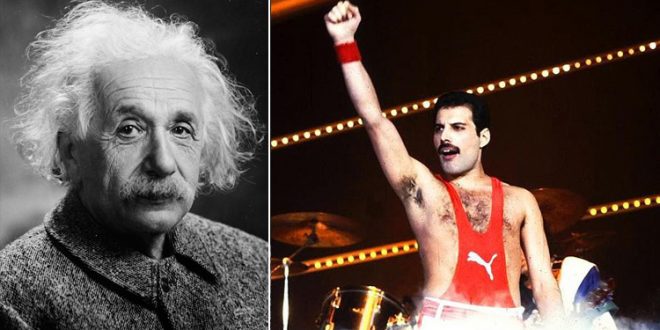
Achieving success in your profession or calling requires extraordinary persistence. Imagine being expelled from your country or forced to flee, as happens with refugees. There have been people who, having overcome difficult circumstances, have achieved international fame. And there have been those who were already well-known and did not allow circumstances to break them. You may have heard of some of them, but many names will strike a chord with you. Read on to learn more about these ten people who were refugees and are now world-famous figures.
1. Peter Carl Fabergé , Fabergé, creator of the famous Fabergé egg, was a renowned jeweler at the Russian imperial court. After his business was nationalized in 1918, he fled the country and died in exile two years later. The value of a single Fabergé egg is now in the millions.

In 1885, Peter Fabergé created the first Easter egg from precious metals and stones, which he presented to the Tsar, who in turn gave it to his wife. They were so pleased with the craftsmanship that he was awarded the title of "Special Jeweler to the Imperial Crown." His House of Fabergé had five branches and 500 craftsmen, who created between 150,000 and 200,000 pieces between 1882 and 1917.
The company was valued at three million rubles. After the outbreak of the October Revolution, his business was seized and nationalized in 1918. That same year, he fled Russia and went to Riga, Germany, and then Switzerland, where he died. His family believed that the grief caused by the revolution had irreparably broken his heart, leading to his death. (1,2)
2. Béla Bartók was a Hungarian pianist and composer who opposed Nazi rule and Hungary's alliance with them. He refused to give concerts in Germany and was forced to emigrate to the United States in 1940 due to his anti-fascist views.

Bartók is one of those musical geniuses who was revered more in death than in life. Born in 1881, he began performing at just 11 years old. In the years leading up to World War I, he traveled, collecting the folk music of his country. During the rise of Nazism, he remained a staunch opponent of their treatment of Jews and the ban on their work, despite not being Jewish himself. He even declared that he would convert to Judaism in protest against their oppression.
In 1940, as World War II raged across Europe, he reluctantly left for the United States. His research in folk music continued as a visiting assistant at Columbia University, where he was also awarded an honorary doctorate. He died in 1945, just as the war ended. His remains were returned to Hungary in 1988, 43 years after his death in exile, and he was given a state funeral. (source)
3. Freddie Mercury, the lead singer and songwriter of Queen, was born Farrokh Bulasara in 1946 in Zanzibar to Parsi parents of Indian descent. His full name was Farrokh Bulasara. His family fled the country and moved to the UK in 1964, fearing persecution due to the Zanzibar Revolution, during which thousands of Arabs and South Asians were killed.

You probably know him as the guy who performed hits like "We Are the Champions" and "Bohemian Rhapsody." However, few people know that Freddie Mercury was actually of Gujarati Parsi descent and spent most of his childhood in India before returning to live with his parents in Zanzibar.
They moved there for work and continued to live there until they were forced to leave due to the threat of revolution in 1964, when Freddie was only 17. Freddie Mercury had a successful career in the music industry. Sadly, he died at the relatively young age of 45 in 1991 from an AIDS-related illness.
As a member of Queen, he was posthumously inducted into the Rock and Roll Hall of Fame in 2001 and was ranked 58th in the 2002 poll of the 100 Greatest Britons. . (source)
4. Karl Marx was a renowned philosopher who formulated the idea of communism and wrote one of the most important political texts, The Communist Manifesto. Because of his explosive political views, he was ostracized in various countries and eventually left for London in 1849, where he lived out the rest of his life as a stateless person.

Karl Marx, born in 1818, is one of the world's most famous political thinkers. Marxist theory and his works are still studied and revered, more than a century after his death. Unfortunately, he was forced to spend most of his adult life in exile. In 1885, he was expelled from Paris, after which he lived in Brussels until he was forced to renounce his Prussian citizenship. Then, in 1849, he moved to London, where he lived until his death in 1883.
Marx is often called "one of the principal architects of modern social science," and his works influenced economic thought, leftist politics, trade unions, and even other philosophers and artists. Although he has also been criticized, his contribution to the world is undeniable. (source)
5. Sigmund Freud, the founder of psychoanalysis, was voted the refugee who made the most significant contribution to British life in a 2013 survey. He was also Jewish. In 1933, his books were burned by the Nazis. Nevertheless, he continued to hope for an improvement in his situation. But when the Gestapo interrogated his wife, he was forced to rethink his life and leave Austria in 1938 at the age of 79 to escape Nazi persecution.

His works sparked some of the most heated debates in psychology. He paved the way for modern psychology by introducing communication between patient and therapist. He developed therapeutic techniques such as transference and free association, and introduced concepts such as sexuality, dream analysis, and the theory of the unconscious into mainstream psychology.
In 1930, he received the Goethe Prize for his contributions to psychology and literature. In 1938, when it became clear that the Nazis would continue to persecute Jews, he was forced to abandon his practice and home. A year later, he died in the UK. (1, 2)