








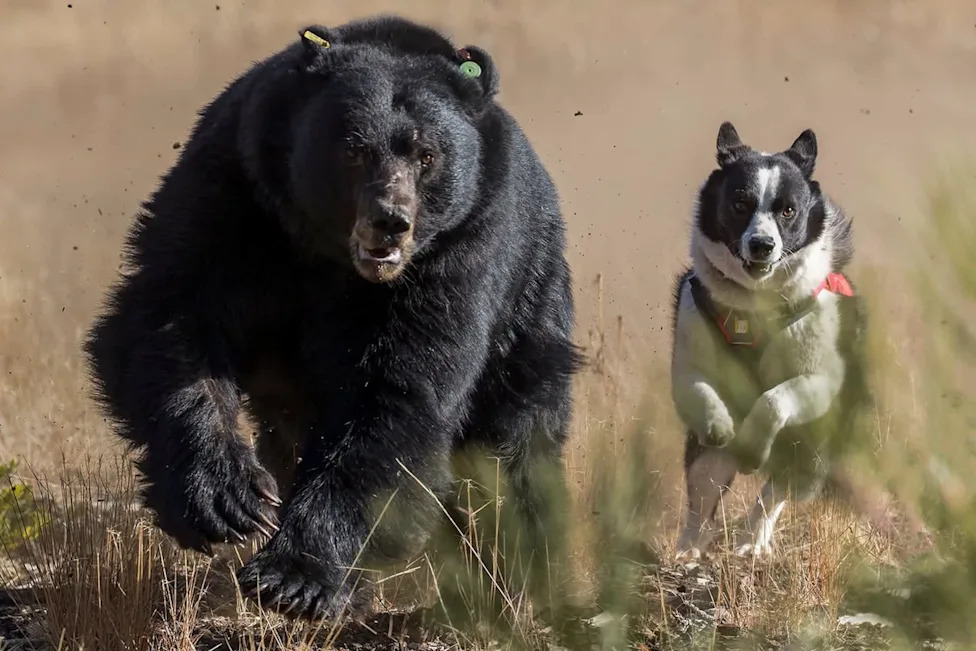
Two shaggy Nevada conservationists are helping to address a growing problem in bear habitats: black bears have become overly accustomed to humans. Badger and Banjo, a pair of Karelian bear dogs, are trained to stalk, corner, and intimidate bears so the animals can relearn a crucial survival skill: keeping their distance from people.
What's happening?
The Nevada Independent reported that the Nevada Department of Wildlife uses Karelian bear dogs when black bears hide under houses, enter buildings, or begin connecting residential areas in search of easy prey.
The dogs assist bear biologists Carl Lackey and Becca Carniello by flushing bears out of cramped shelters, locating injured animals, and helping to scare bears off when releasing them back into the wild.
The goal is not to harm animals, but to make being around people unpleasant, not pleasant.
As Lackey explained, "Most of the time, bears' interactions with people have been positive. We're just trying to create negative experiences for them with people.".
Nevada's black bear population has made a significant recovery. Habitat destruction and illegal hunting reduced the state's population to approximately 30 individuals by the 1980s, but conservation efforts have helped increase that number to approximately 600-700 bears in western Nevada.
Nine-year-old Banjo and four-year-old Badger now help state authorities handle dozens of bear-related incidents each year without having to remove the animals entirely.
Why is this important?
When bears lose their fear of people, the danger increases for everyone involved.
For Nevada officials, this program offers a way to keep bears in the area while reducing the risk to nearby communities. Instead of treating every new bear as a problem animal, the department is working to modify their behavior, reducing the likelihood of more serious encounters and their dependence on human food.
In addition, dogs make close-range work safer for conservation officers.
Carniello said, "They really provide us with extra comfort and safety in situations like this where we're in close proximity to each other.".
Black bears generally don't harm people, and while there have been some injuries reported in Nevada, there have been no bear-related fatalities. More often than not, the more serious problem is unsecured trash, a lack of food, or shelter, which attract the animals.
What is being done?
According to The Nevada Independent, Nevada is one of the few government agencies using Karelian Bear Dogs in this role, and the initiative has been in the works for many years.
Before retiring after nearly 33 years with the department, Lackey made significant contributions to shaping the state's conflict resolution, tracking, and bear release practices near capture sites.
Previously, conservationists sometimes drove bears much further away, but many still returned. Releasing a bear near its capture site and then scaring it away with dogs like Badger and Banjo is intended to create a sense of danger in the animal's surroundings while allowing it to remain within its natural habitat.
The use of dogs also reduced the need for more powerful deterrents such as rubber bullets or shotgun pellets.
Authorities also continue to conduct public education, urging residents to use bear-resistant trash cans and eliminate other bear-attracting factors around their homes.
As Lackey said, "We're trying to change the status quo.".
Carniello added: "The only permanent long-term solution is for people to ensure they have access to their attractions.".
Subscribe to TCD's free newsletters to receive helpful tips, actionable advice, and a chance to win $5,000 toward your home improvement. To see more stories like this, change your Google preferences here.